
Elf on the Shelf: Origin, Rules, and the Big Debate
A self-published children's book from 2005 turned into one of the most polarizing Christmas traditions of the 21st century. Here's how a Georgia family's kitchen-table idea conquered December.
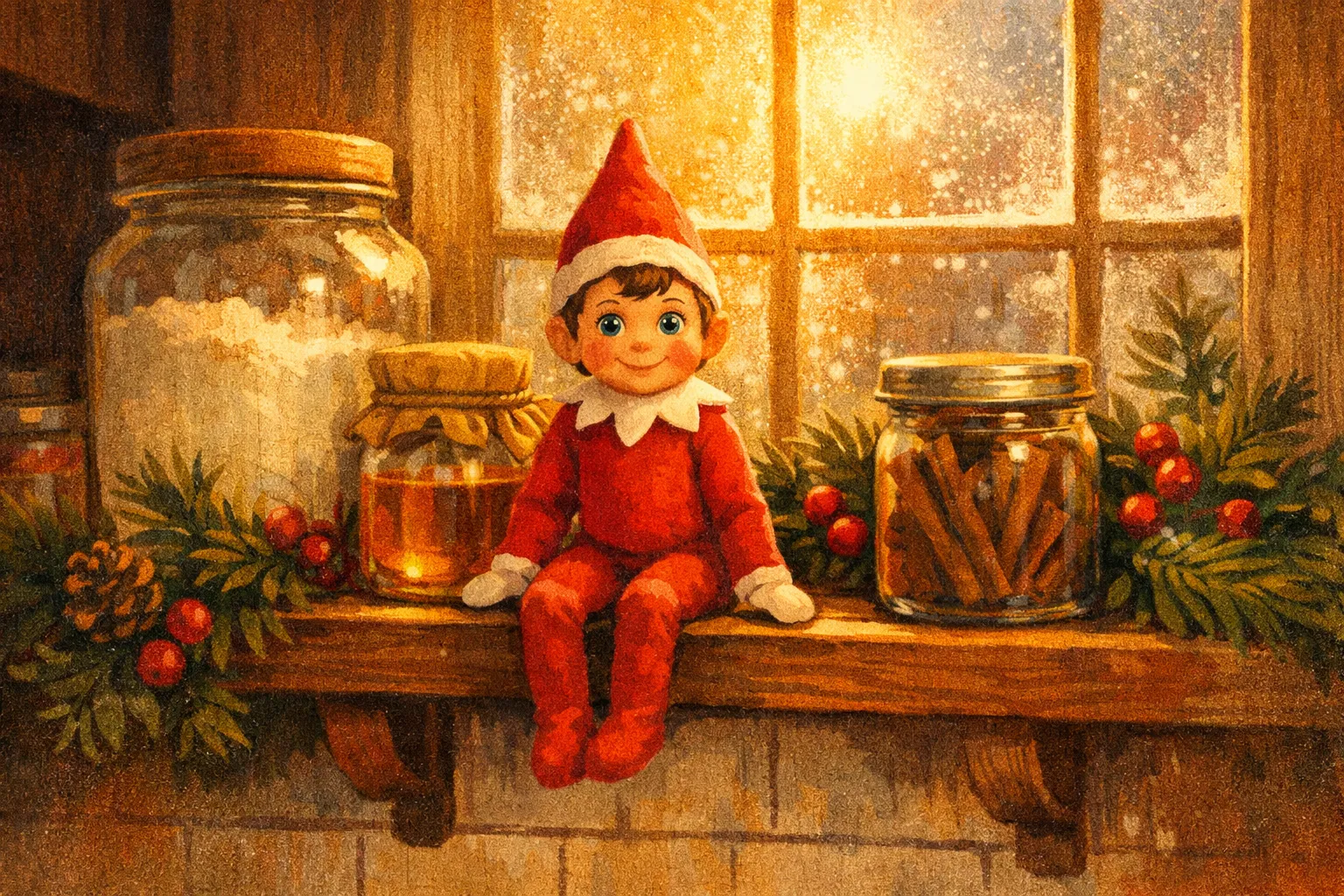
The Elf on the Shelf is a Christmas tradition built on a simple premise: a small scout elf arrives at your home each December, watches your children during the day, and flies back to the North Pole every night to report their behavior to Santa. By morning, the elf has returned and landed in a new spot for kids to find. The tradition comes packaged as a hardcover picture book and a soft elf doll, sold together in a keepsake box.
Contents
What started as a self-published book by a mother-daughter team in Atlanta has sold more than 31 million units worldwide, spawned an animated TV special, a licensing empire, and one of the most heated parenting debates of the last two decades. It's also only been around since 2005, which means most adults who grew up without it are now raising children who can't imagine Christmas without it.
Who Created the Elf on the Shelf?
Carol Aebersold, a stay-at-home mom in Marietta, Georgia, had a pixie elf doll named Fisbee that she'd owned since childhood. Starting around 1974, she told her twin daughters, Chanda Bell and Christa Pitts, that Fisbee was watching them on Santa's behalf and flying back to the North Pole each night to deliver his report. Every morning the elf would be somewhere new in the house. The twins grew up with this as a normal part of their December.
Decades later, Bell was working as a reading teacher and mentioned the family's elf tradition to her students. Their excitement convinced her there was something worth sharing. In 2004, she drafted a rhyming children's book based on the tradition, with her mother as co-author. Christa Pitts, who had experience in sales from working at QVC, came on board to handle the business side.
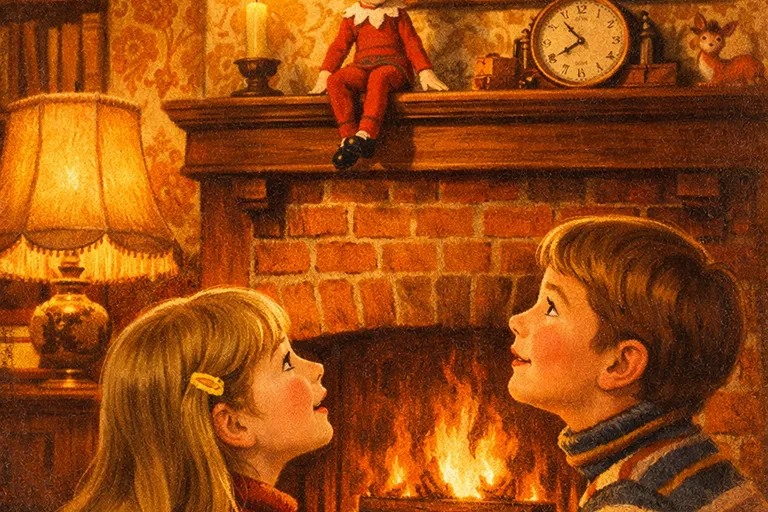
The financial gamble to launch it was significant. Bell took out a line of credit. Pitts sold her house in Pennsylvania and moved back in with her parents. Aebersold emptied her retirement account. Together they founded Creatively Classic Activities and Books and self-published 5,000 copies of "The Elf on the Shelf: A Christmas Tradition," illustrated by Atlanta watercolor artist Coe Steinwart.
When Did Elf on the Shelf Start Taking Off?
The first year was a grind. Bell and Pitts loaded boxes of books and elves into their cars and drove to local craft fairs, book signings, and gift shops across Georgia. Bookstores largely ignored them. Major publishers had already passed on the manuscript.
The turning point came when the book landed on a few mom-blogger radar screens around 2007 and 2008. Social media did the rest. Parents began posting photos of their elves in creative and increasingly elaborate scenarios, turning the daily repositioning into a competitive art form. By 2008, the book hit bestseller lists. By 2012, it had sold over 6 million copies.
Today, the family's company, rebranded as The Lumistella Company, generates an estimated $100 million in annual revenue, according to Forbes. The brand has expanded into Elf Pets, an animated Netflix special called "Elf Buddy's Musical Christmas," clothing lines, games, and confections. They operate in over 24 countries through more than 75 licensing partners.
How Does the Elf on the Shelf Work?
The concept is straightforward. On the first day of December (or any day before Christmas, though most families start around Thanksgiving weekend), parents introduce the elf and read the storybook to their children. The book explains that Santa has sent the elf to observe and report back each night.
Each family names their elf, which according to the story is what gives it its magic. After the children go to bed, the elf "flies" to the North Pole to tell Santa what happened that day. The parent then moves the elf to a different location in the house before morning, so children wake up to find it somewhere new.
The tradition runs nightly from the elf's arrival until Christmas Eve, when the elf makes its final trip to the North Pole and doesn't return until the following year.
The Three Official Rules
The Elf on the Shelf operates under three rules, all established in the original book:
- Children must not touch the elf. Physical contact causes the elf to lose its Christmas magic. If a child accidentally touches it, the book suggests sprinkling cinnamon next to the elf overnight, which supposedly restores its power.
- The elf cannot move or speak while children are awake. It sits completely still during the day, only coming alive after everyone has gone to sleep.
- The elf reports to Santa every night. Good behavior gets reported favorably. Bad behavior gets noted too. The elf doesn't punish or reward directly; it's a messenger.
The no-touching rule is doing heavy practical lifting here. Without it, the elf becomes just another stuffed toy. With it, the elf maintains an uncanny, almost sacred status in the household, something to be observed rather than played with. It's a clever design choice that parents who've watched their children approach the elf with reverent fascination will recognize.
The Meaning Behind the Elf on the Shelf
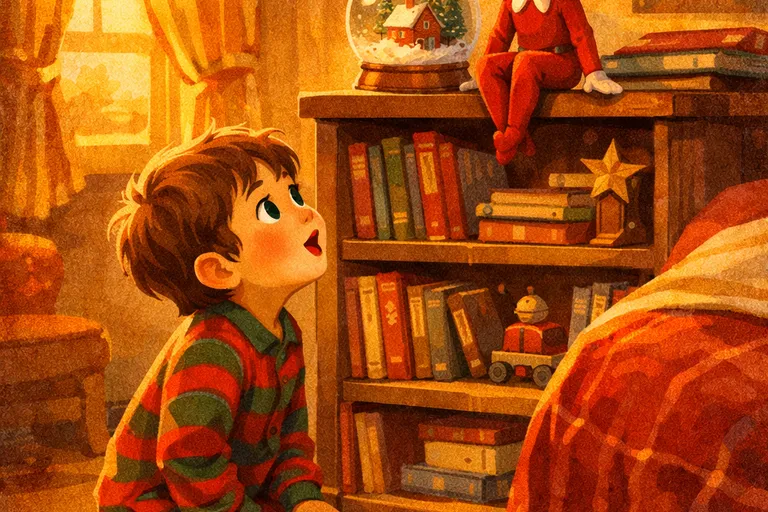
At face value, the Elf on the Shelf is a behavior management tool wrapped in Christmas magic. The implied deal is clear: behave well, and the elf's report will put you on the Nice List. Act up, and Santa hears about it. It's the same "He sees you when you're sleeping" logic from "Santa Claus Is Coming to Town," made physical and present in the living room.
But the tradition has taken on meaning beyond behavior modification. For many families, it's become a creative ritual. Parents stage the elf in funny or absurd situations: sitting in a bag of marshmallows, zip-lining across the kitchen on a string, drawing on family photos. The creative scenes have become the actual tradition for a lot of households, with the surveillance angle as almost an afterthought.
Some parents have pushed back against the "naughty or nice" framing entirely and use the elf purely as a source of humor and daily surprise. Others write notes from the elf suggesting kind acts for the day rather than warnings about being watched.
The Elf on the Shelf Controversy
No Christmas tradition since the commercialization of Santa himself has generated this much pushback. The criticisms fall into a few distinct camps, and some of them carry real weight.
The Surveillance Argument
In 2014, Laura Pinto, a digital technology professor at the University of Ontario Institute of Technology, co-authored a paper with Selena Nemorin of Australia's Monash University titled "Who's the Boss? The Elf on the Shelf and the Normalization of Surveillance." Published through the Canadian Centre for Policy Alternatives, the paper argued that the elf conditions children to accept being watched by an authority figure as normal and even fun.
Pinto drew on Michel Foucault's concept of panoptic surveillance: the idea that people regulate their own behavior when they believe they might be observed at any time. "When kids play with toys, they're creating a pretend world, but they're also reinforcing values and behaviors," Pinto told reporters. The paper got extraordinary media coverage for an academic article, partly because it articulated something many parents already felt but hadn't put into words.
Jay Stanley, a senior policy analyst at the ACLU, offered a similar perspective: "I consider success as a parent to be teaching my kids to do the right thing even when nobody's watching."
The Parental Exhaustion Problem
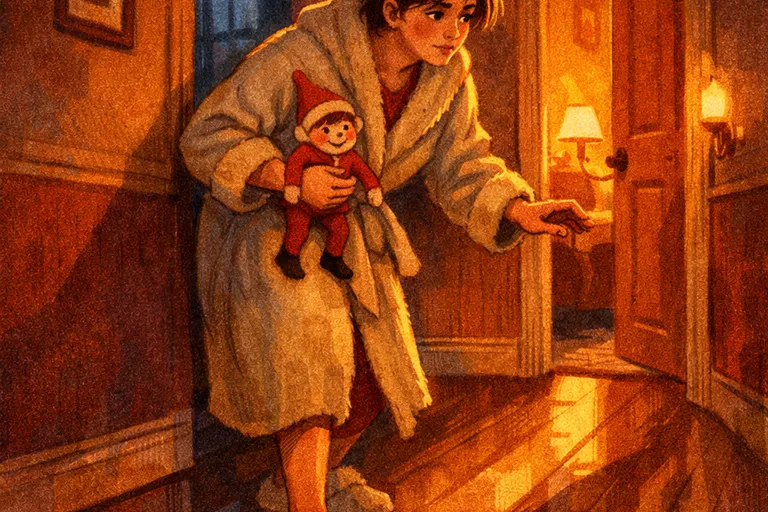
Then there's the practical backlash. Moving an elf every single night for 24 or more consecutive days is a commitment that many parents underestimate when they buy the box. Social media has turned the nightly elf relocation into an arms race of creativity. When one parent posts their elf rappelling down a chandelier made of candy canes, other parents feel inadequate propping theirs against a coffee mug.
The inevitable forgotten-to-move-the-elf panic at 2 a.m. has become its own genre of parenting humor. Entire blog posts and social media threads are dedicated to excuses for why the elf "didn't move" (he was tired, he liked that spot, the weather was too bad to fly).
The Behavioral Psychology Critique
Child psychologists have raised a different concern. The elf relies on extrinsic motivation: behave because someone is watching and reporting. Research in behavioral psychology consistently shows that extrinsic motivators can undermine intrinsic motivation over time. Kids who learn to behave because an elf is watching may struggle to internalize the reasons to behave well when the elf goes back in the box on December 26.
That said, there's little published evidence that the Elf on the Shelf causes measurable psychological harm. Children's Health, a pediatric health system in Dallas, has noted that the elf is unlikely to cause lasting damage when used in a lighthearted way, and that the real risk is more about how individual parents frame the experience than the toy itself.
A $100 Million Tradition That Didn't Exist 20 Years Ago
The Elf on the Shelf is remarkable less for what it is than for what it reveals about how traditions actually form. We tend to think of Christmas traditions as ancient, passed down through centuries of cultural practice. The Elf on the Shelf was invented in a kitchen in Georgia, rejected by every major publisher, and bootstrapped into existence by three women who bet their savings on it.
By 2025, the Lumistella Company had sold more than 31 million elf dolls globally, placed them in over 26,000 retail locations across 24 countries, and built a franchise that includes animated specials, a clothing line, and its own extended fictional universe. The book itself has appeared on the Publishers Weekly bestseller list with four titles in the top 10 simultaneously.
The tradition's rapid adoption says something about what parents want from Christmas: a daily ritual that's interactive, visual, and gives the whole household something to talk about at breakfast. The elf fills a gap that Advent calendars only partially address, and it does so with a character rather than chocolate.
Love it or resent it, the Elf on the Shelf proved that a Christmas tradition doesn't need centuries of history to feel essential. It just needs a good story, a no-touching rule, and parents willing to set an alarm for midnight.
Frequently Asked Questions
When did the Elf on the Shelf start?
The Elf on the Shelf was first published in 2005 by Carol Aebersold and her daughter Chanda Bell, through their self-founded publishing house in Atlanta, Georgia. They initially printed 5,000 copies. The tradition is based on a family custom Aebersold began with her own children around 1974 using a pixie elf doll named Fisbee.
How does the Elf on the Shelf work?
Families introduce the elf at the start of December and read the accompanying storybook to their children. Each night, the elf "flies" to the North Pole to report the children's behavior to Santa. The parent moves the elf to a new location before morning, and children search for it when they wake up. The tradition runs until Christmas Eve, when the elf departs for the year.
What are the Elf on the Shelf rules?
There are three official rules. Children cannot touch the elf, or it loses its magic. The elf does not move or speak while anyone is awake. And the elf reports to Santa each night about the children's behavior. If the elf is accidentally touched, sprinkling cinnamon nearby is said to restore its powers.
Is the Elf on the Shelf bad for kids?
Opinions are divided. A 2014 academic paper by Laura Pinto argued it normalizes surveillance for children. Some child psychologists warn that relying on external behavior monitoring can undermine intrinsic motivation. However, pediatric experts at Children's Health in Dallas note there is little evidence of lasting psychological harm, and that the impact depends largely on how parents use the tradition.
Who owns the Elf on the Shelf?
The Elf on the Shelf is owned by The Lumistella Company, an Atlanta-based firm founded by Carol Aebersold, Chanda Bell, and Christa Pitts. Originally called Creatively Classic Activities and Books, the company rebranded as Lumistella and has grown into a franchise generating an estimated $100 million in annual revenue with products sold in 24 countries.
Why is the Elf on the Shelf controversial?
The main criticisms center on three issues: it normalizes the idea of being watched by an authority figure, it uses surveillance-based motivation rather than teaching children to self-regulate, and it creates pressure on parents to stage increasingly creative elf scenes every night for a month. Supporters counter that it brings daily fun and anticipation to the Christmas season when used lightheartedly.