
 China
China 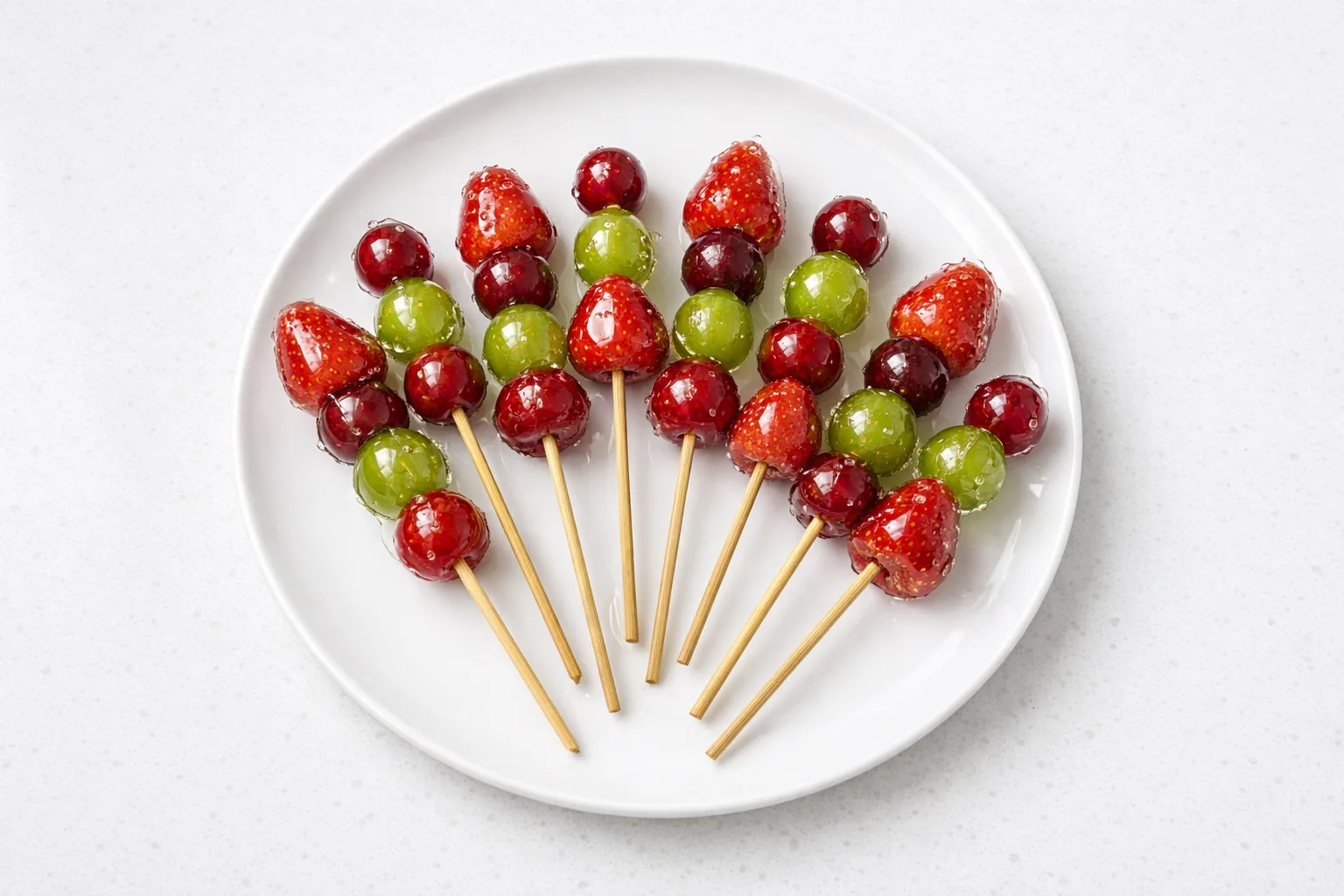
Christmas tanghulu starts with a simple idea: dip fruit in hard-candy syrup, let it set, eat it. Originating in northern China as bingtanghulu, a wintertime street snack of hawthorn berries threaded on sticks and coated in crackling sugar, it has spread far beyond its origins and landed squarely in the global Christmas candy conversation. The technique is identical to hard candy making, which means the sugar has to hit the hard-crack stage (300 to 310 F) and the fruit has to be bone-dry before it goes in. Ignore either rule and the coating stays sticky instead of shattering.
For a Christmas version, the fruit selection does the seasonal work. Strawberries, cranberries, red and green grapes, and mandarin segments hit the right color palette and flavors. The sugar shell is neutral and glassy, so whatever tartness is in the fruit comes through cleanly against the sweetness of the coating. These are party food and edible decoration in equal measure.
Equipment
Instructions
Tap each step to track your progress
- 1
Thread each skewer with a combination of 2 strawberries, 2 grapes, and 2 cranberries, alternating colors. Set on a parchment-lined tray. This is the time to confirm every piece of fruit is completely dry. Pat them again with paper towels if there is any surface moisture; water causes the sugar to crystallize on contact.
- 2
Combine the sugar, water, and cream of tartar in a heavy-bottomed medium saucepan. Stir once to combine, then set over medium-high heat. Do not stir again after this point. Stirring once the syrup is heating causes crystallization.
- 3
Clip a candy thermometer to the side of the pan, ensuring the bulb does not touch the bottom. Cook the syrup until it reaches 300 F (hard-crack stage). At this temperature the syrup will look pale gold and will smell faintly of caramel without any browning. This takes about 10 to 12 minutes.
- 4
Remove the pan from the heat immediately at 300 F. The residual heat will carry the temperature a few degrees higher, which is fine. Let it sit for 30 seconds to settle any active bubbling.
- 5
Working quickly, tilt the saucepan at a 45-degree angle. Dip one skewer into the syrup, rolling it to coat all the fruit pieces completely. Lift it out and let the excess drip back into the pan for 2 to 3 seconds.
- 6
Place the coated skewer on the parchment-lined tray. The shell will harden within 60 to 90 seconds at room temperature. Do not touch or move it until the coating is fully set.
- 7
Repeat with the remaining skewers, working fast. If the syrup thickens too much before you finish, return it to low heat for 30 to 60 seconds to loosen it again. Do not add water.
- 8
Serve the tanghulu within 2 to 3 hours of making. The sugar shell is at its best within the first hour, before any moisture from the fruit begins to migrate into the coating.
Tips & Tricks
Dry the fruit twice
Pat the fruit dry with paper towels, then let the skewers sit uncovered at room temperature for 10 minutes before dipping. Even a film of moisture invisible to the eye is enough to ruin the coating. This is the single most common reason tanghulu fails at home.
Do not skip the cream of tartar
Cream of tartar is an invert sugar that disrupts the formation of large sugar crystals in the syrup. Without it, the syrup is more likely to crystallize into an opaque grainy coating rather than a clear glass shell. It is worth tracking down; it is available in most grocery stores in the spice aisle.
Have parchment ready before you start cooking
The syrup moves from perfect to overheated in under a minute. Set up your dipping station before you turn on the heat: skewers staged, parchment laid out, thermometer clipped. Scrambling to find a baking sheet while 300 F syrup sits cooling in the pan is how batches get wasted.
Tilt the pan, do not dunk
Tilting the saucepan at a 45-degree angle concentrates the syrup in one deep pool rather than spreading it thin across the bottom. This makes coating much easier and ensures full coverage with a single dip. Dunking straight-down into a shallow pan leaves the top of the skewer uncoated.
Work in small batches for parties
If you are serving these at a party, make 5 to 6 skewers every 30 minutes rather than all at once. Fresh tanghulu has a snap and clarity that 2-hour-old tanghulu does not. The active cooking becomes part of the entertainment.
Troubleshooting
The sugar coating is sticky instead of hard
The syrup did not reach hard-crack temperature (300 F). A sticky or chewy coating means the syrup stopped somewhere in the soft-crack or firm-ball range. Use a reliable candy thermometer and do not pull the pan too early. High humidity in the kitchen also makes the coating stay tacky; if your kitchen is humid, the tanghulu will degrade faster regardless of technique.
The coating turned white and crystallized on the fruit
The fruit had moisture on the surface, or the syrup was stirred after it started heating. Surface water on the fruit causes instant crystallization on contact. Dry the fruit obsessively before dipping, and resist stirring the syrup after it comes to a boil.
The syrup is turning dark brown before it reaches 300 F
Your heat is too high. Back off to medium and let the temperature climb more gradually. Once the syrup turns amber or brown it has moved into caramel territory and will taste bitter rather than clean and sweet.
The syrup hardened in the pan before I finished dipping
This happens if the syrup was pulled from heat and allowed to cool too long. Return the pan to low heat for 30 to 60 seconds to re-liquefy. Do not add water. Work faster on the next batch by having all skewers staged and ready before dipping the first one.
The coating dripped off in a thick pool under the fruit
The excess syrup was not allowed to drip off before the skewer was set down. Hold each skewer over the pan for a full 2 to 3 seconds after lifting it out and let the excess fall back before transferring to parchment.
Variations
Mandarin and Cherry Version
Replace the cranberries with pitted fresh cherries and use mandarin orange segments instead of grapes. Peel the mandarin segments carefully and blot them very dry with paper towels, as citrus carries extra surface moisture. The result is sweeter and more fragrant, with the mandarin perfume cutting through the sugar coating distinctly.
Single-Fruit Strawberry Tanghulu
Thread each skewer with 3 to 4 large strawberries only, hull-side down. This is the most visually dramatic version and the easiest for children to eat. The all-strawberry version is what most people recognize from viral videos of the dish.
Tinted Sugar Shell
Add 2 to 3 drops of red or green gel food coloring to the syrup once it comes off the heat. Stir once, quickly, to incorporate. The coating will be a translucent jewel tone rather than clear glass, which makes for a more overtly festive presentation. Use gel coloring, not liquid; liquid coloring adds water and affects the texture.
Vegan and Allergen-Free
This recipe is naturally vegan, gluten-free, dairy-free, and nut-free as written. No substitutions are needed. Verify that your cream of tartar is certified gluten-free if you are cooking for someone with celiac disease, as cross-contamination can occur at some manufacturers.
Serving & Gifting
Serve tanghulu upright in a jar or glass filled with rice, coarse salt, or small stones to hold the skewers in place, which makes for an impressive centerpiece. They are best eaten within an hour of making, before the fruit moisture softens the coating. Pair them with hot tea, mulled cider, or as part of a holiday dessert platter alongside other finger sweets. For parties, make them in batches of 5 or 6 at a time so each set is freshly coated.
Storage & Freezing
Christmas tanghulu does not store well. The glassy coating begins to soften within 2 to 3 hours as moisture from the fruit migrates outward, and by the next day it will be sticky or weeping. Make these the same day you plan to serve them. Do not refrigerate; cold air is humid enough to accelerate the breakdown. Do not freeze. Make small batches as needed rather than trying to prepare them ahead.
Common Questions
What is tanghulu?
Tanghulu is a Chinese street food of fruit skewered on a stick and coated in a hard, clear candy shell made from sugar syrup cooked to the hard-crack stage. The original version uses hawthorn berries, which are tart and firm, but strawberries, grapes, and other fruits are now common. The coating shatters when bitten, like hard candy wrapped around fresh fruit.
Is tanghulu vegan?
Yes. The standard tanghulu recipe is naturally vegan, gluten-free, dairy-free, and nut-free. It contains only sugar, water, cream of tartar, and fruit. No animal products are used at any stage of the process.
Can I make tanghulu without a candy thermometer?
It is possible but difficult. The cold-water test for hard-crack stage involves dropping a small amount of syrup into ice water; if it forms brittle, snapping threads, it is ready. The thermometer method is far more reliable and removes the guesswork. A basic instant-read thermometer costs very little and is worth having for any candy-making.
How long does tanghulu last?
Tanghulu is best eaten within 1 hour of making and should be consumed the same day. The sugar coating begins to soften as moisture from the fruit migrates into it, turning the crisp shell sticky. It cannot be stored or made ahead successfully.
What fruits work best for Christmas tanghulu?
Firm, dry fruits work best. Strawberries, grapes, cherries, and cranberries are ideal because they have low surface moisture and hold their shape under the heat of the syrup. Avoid fruits with high water content like watermelon or soft berries like raspberries, which will bleed moisture into the coating almost immediately.
Why did my tanghulu coating turn cloudy instead of clear?
Cloudy coating is caused by crystallization, which happens when the syrup is stirred after heating begins, when moisture from the fruit touches the syrup, or when the syrup was not cooked to a high enough temperature. Use cream of tartar, dry the fruit completely, and cook to a full 300 F for a glassy, transparent result.