
 Czech Republic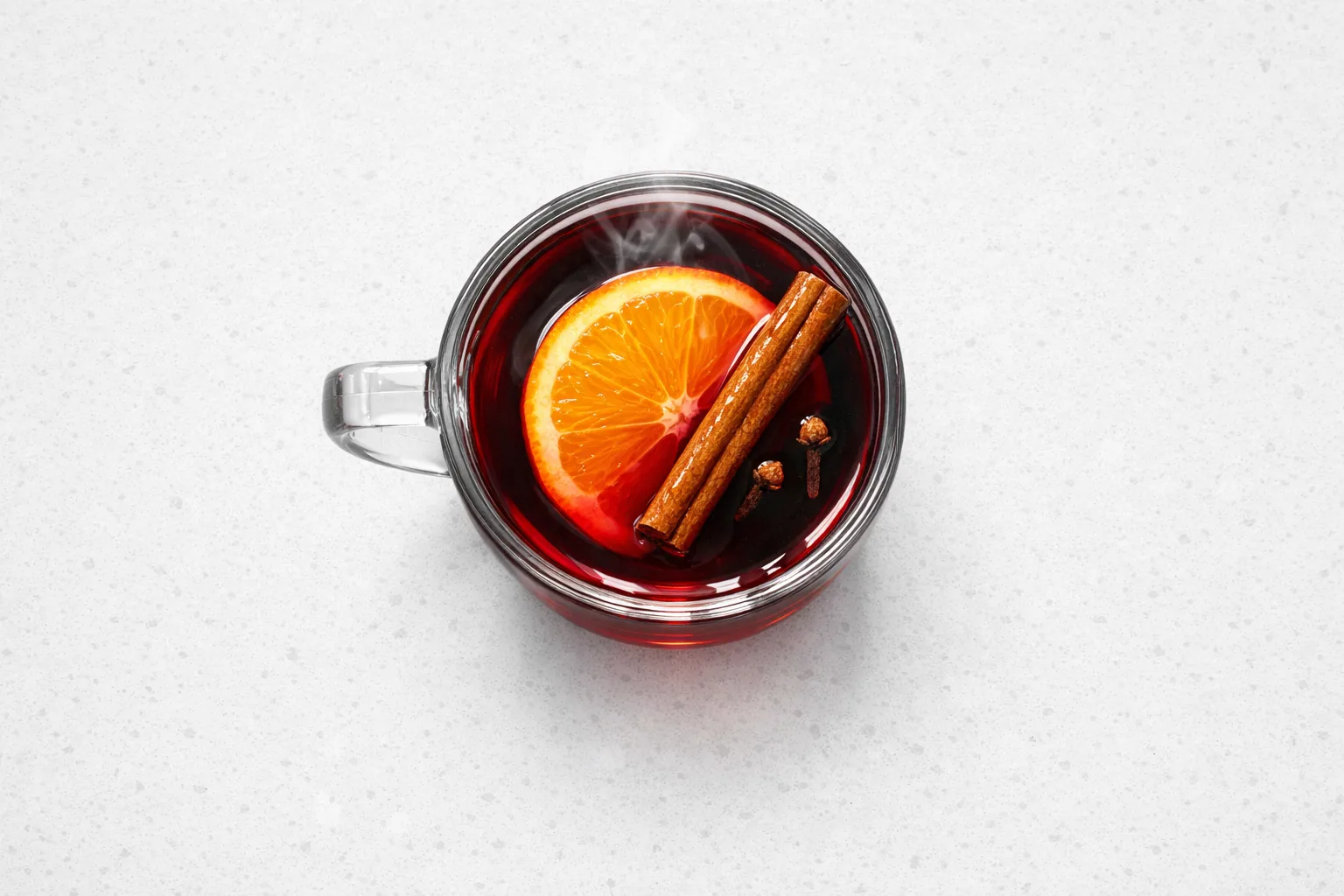
Czech mulled wine, known as svařené víno or simply svařák, is the defining drink of the Czech Christmas market season. From the first weekend of Advent, wooden stalls in every town square start selling it by the paper cup, and the smell of warming red wine with cloves and cinnamon is as much a part of Czech Christmas as the carp on Christmas Eve. Unlike German Glühwein, which tends to be sweeter and more heavily spiced, the Czech version is drier, less sugary, and built around the wine itself rather than around flavoring it into something unrecognizable.
The key to a proper svařák is restraint: enough spice to warm the wine, not so much that it tastes like mulling syrup. Czechs typically use a dry, medium-bodied red, something local like Frankovka or Zweigeltrebe, though any honest Moravian red works well. The wine needs heat but must never boil. Boiling drives off the alcohol and flattens the flavor. What you are aiming for is a slow, sustained warmth that lets the spices infuse without cooking the wine into submission.
Equipment
Instructions
Tap each step to track your progress
- 1
Combine the sugar, orange slices, lemon slices, cloves, cinnamon sticks, allspice, star anise, and cardamom pods in a medium saucepan. Add 1/4 cup of the wine and stir over low heat for 2 minutes until the sugar dissolves and the mixture becomes fragrant.
- 2
Pour in the remaining wine. Add the nutmeg. Increase the heat to medium-low.
- 3
Heat the wine slowly, stirring occasionally. Watch it carefully: you want steam rising and the surface gently shimmering, around 70-75C (160-167F). Do not let it boil. Small bubbles forming at the edge of the pan are fine; a rolling boil is not.
- 4
Once the wine is fully heated and fragrant, reduce the heat to the lowest setting. Let the spices steep for 15 minutes. The wine should stay hot but not simmer aggressively.
- 5
Taste and adjust sweetness. Add another tablespoon of sugar if needed, stirring to dissolve before adding more.
- 6
Strain through a fine-mesh sieve into a heatproof pitcher or ladle directly into glass mugs. Garnish each serving with a fresh orange slice and a cinnamon stick.
Tips & Tricks
Never let it boil
The single most important rule. Boiling drives off the alcohol and makes the wine taste thin and cooked. Keep the temperature between 65-75C (150-167F). If you do not have a thermometer, look for a very gentle steam with no rolling bubbles. The moment you see it starting to bubble actively, pull it off the heat immediately.
Use a wine you would drink on its own
Bad wine makes bad svařák. You do not need anything expensive, but use a wine that is at least pleasant to drink cold. A harsh, tannic wine will taste worse when heated. Czech Frankovka or any medium-bodied Moravian red is ideal. Avoid very tannic varieties like Cabernet Sauvignon unless you are balancing it with extra sugar.
Taste and adjust before straining
The sweetness of the wine, the bitterness of the citrus, and the intensity of the spices all interact. Always taste the wine while it is hot, before straining, and make any adjustments then. Once strained, you can still add lemon juice or dissolved sugar, but it is easier to correct before the spices come out.
Make a spice bundle for easier cleanup
Tie the whole spices in a small piece of cheesecloth or muslin tied with kitchen string. Drop the bundle into the wine to infuse and pull it out before serving without needing to strain. This also makes it easier to remove spices earlier if the flavor becomes too intense.
Steep, do not rush
Ten minutes of gentle steeping at proper temperature extracts far more from the spices than two minutes at a hard simmer. Plan to spend 20 minutes total on this recipe; most of that time is passive. Make it while people are arriving so it is ready at the right moment.
Troubleshooting
The wine tastes flat and the spices aren't coming through
The wine was not hot enough for long enough. Cold wine needs time to fully extract the spices. Make sure the wine reaches at least 65C before you reduce the heat to steep, and give it the full 15 minutes. If the flavor is still weak, add another cinnamon stick and steep for an additional 5 minutes.
The svařák is too bitter
Bitterness usually comes from the citrus peel being included too long. Lemon peel in particular turns bitter quickly. Use only flesh-side-up slices with minimal pith, or add lemon juice at the end instead of lemon slices during heating. Also check that your cloves are fresh; old cloves can taste medicinal.
The wine tastes cooked or flat, not vibrant
The wine boiled. You cannot recover from this; the alcohol has cooked off and the wine's character has collapsed. Start again with a fresh bottle and keep the heat low. A thermometer takes the guesswork out of it entirely.
It tastes too sweet or too syrupy
You added too much sugar before tasting. Always start conservatively with 2 tablespoons and taste after heating, because heat accentuates sweetness. If you have already over-sweetened, add a squeeze of fresh lemon juice to cut through it and balance the sweetness.
The spice flavor is overwhelming
Too many spices or too long a steep. Star anise and cloves are the most assertive; reduce each to 2 cloves and half a star anise next time. For the current batch, strain immediately and do not let it continue steeping.
Variations
Non-Alcoholic Svařák
Replace the wine with 750 ml of unsweetened red grape juice. Reduce the sugar to 1 tablespoon since grape juice is already sweet. The spice infusion process is identical. The result is a full-flavored warm grape drink that works for children and non-drinkers at Czech Christmas market gatherings.
White Wine Version (Svařené Bílé Víno)
Use a dry white wine such as Welschriesling or Müller-Thurgau in place of the red. Drop the allspice and star anise, keep the cinnamon and cloves, and add a strip of lemon zest and a few fresh ginger slices. The white version is lighter and more citrus-forward, popular at some Czech markets alongside the classic red.
Rum-Boosted Version
Add 2 tablespoons of dark rum per serving when ladling into mugs. This is a common Czech twist that gives the svařák extra warmth and depth without altering the base wine too much. Use a full-flavored Jamaican or Cuban-style rum, not spiced rum, which would compete with the mulling spices.
Sweetened with Honey
Replace the granulated sugar entirely with 3 tablespoons of mild floral honey (linden honey is traditional in the Czech Republic). Add the honey off the heat to preserve its aroma. The result is slightly less sharp and has a gentle floral note that works particularly well with the citrus.
Serving & Gifting
Serve in glass mugs or heatproof paper cups if you are setting up an outdoor stall or party. Keep the saucepan on the lowest heat setting and ladle to order so it stays warm without over-steeping. A garnish of a fresh orange slice and a cinnamon stick in each cup is standard. Svařák pairs naturally with Czech Christmas market food: trdelník (chimney cake), klobása (grilled sausage), or a plate of vánoční cukroví (Christmas cookies).
Storage & Freezing
Svařák is best made fresh and served immediately. If you have leftovers, strain out the spices, cool to room temperature, and refrigerate in a sealed container for up to 2 days. Reheat gently on the stovetop over low heat, never microwave, to avoid boiling off the alcohol. Do not add fresh spices when reheating; the base already has plenty of flavor. Leftover svařák also works well reduced further and used as a sauce base for poached pears or a red wine glaze.
Common Questions
What does svařák mean in Czech?
<em>Svařák</em> is an informal shortened form of <em>svařené víno</em>, which literally means "boiled wine" in Czech, though the name is misleading because proper svařák should never actually boil. The word comes from the verb <em>svařit</em>, to weld or to heat a liquid. It is the standard term used at Czech Christmas markets and in everyday speech.
What wine is best for Czech mulled wine?
A dry, medium-bodied red with moderate tannins works best. Frankovka (known as Blaufränkisch in Austria) and Zweigeltrebe are the most traditional Czech choices, both grown in Moravia. Pinot Noir or a lighter Merlot are good substitutes if Czech wines are unavailable. Avoid heavily tannic varieties, which become harsh when heated.
How is Czech svařák different from German Glühwein?
The main differences are sweetness and spice level. German Glühwein tends to be sweeter and more heavily spiced, sometimes including vanilla or more star anise. Czech svařák is drier, less sweet, and lets the wine flavor come through more clearly. Both use similar base spices (cinnamon, cloves, citrus) but the proportion and the wine style differ.
Can I make svařák ahead of time for a party?
Yes. Heat and steep the full batch, then strain out all the spices and keep the wine warm in a slow cooker on the lowest setting or in a thermos. This prevents over-steeping. Do not add fresh spices during the party; the strained wine holds its flavor well for 2-3 hours kept warm. For large groups, scale up the recipe proportionally.
Is Czech mulled wine the same as svařené víno?
Yes, they are the same drink. <em>Svařené víno</em> is the full formal name; <em>svařák</em> is the casual everyday shorthand. You will hear both at Czech Christmas markets. Outside the Czech Republic, it is usually described as Czech mulled wine or Czech hot spiced wine.
Can I make a non-alcoholic version of svařák?
Yes. Replace the wine with unsweetened red grape juice and reduce the sugar since grape juice is naturally sweet. The spice infusion method is identical, and the result is a convincing alcohol-free version with the same aroma profile. It is popular in Czech households with children during the Advent season.