
 Mexico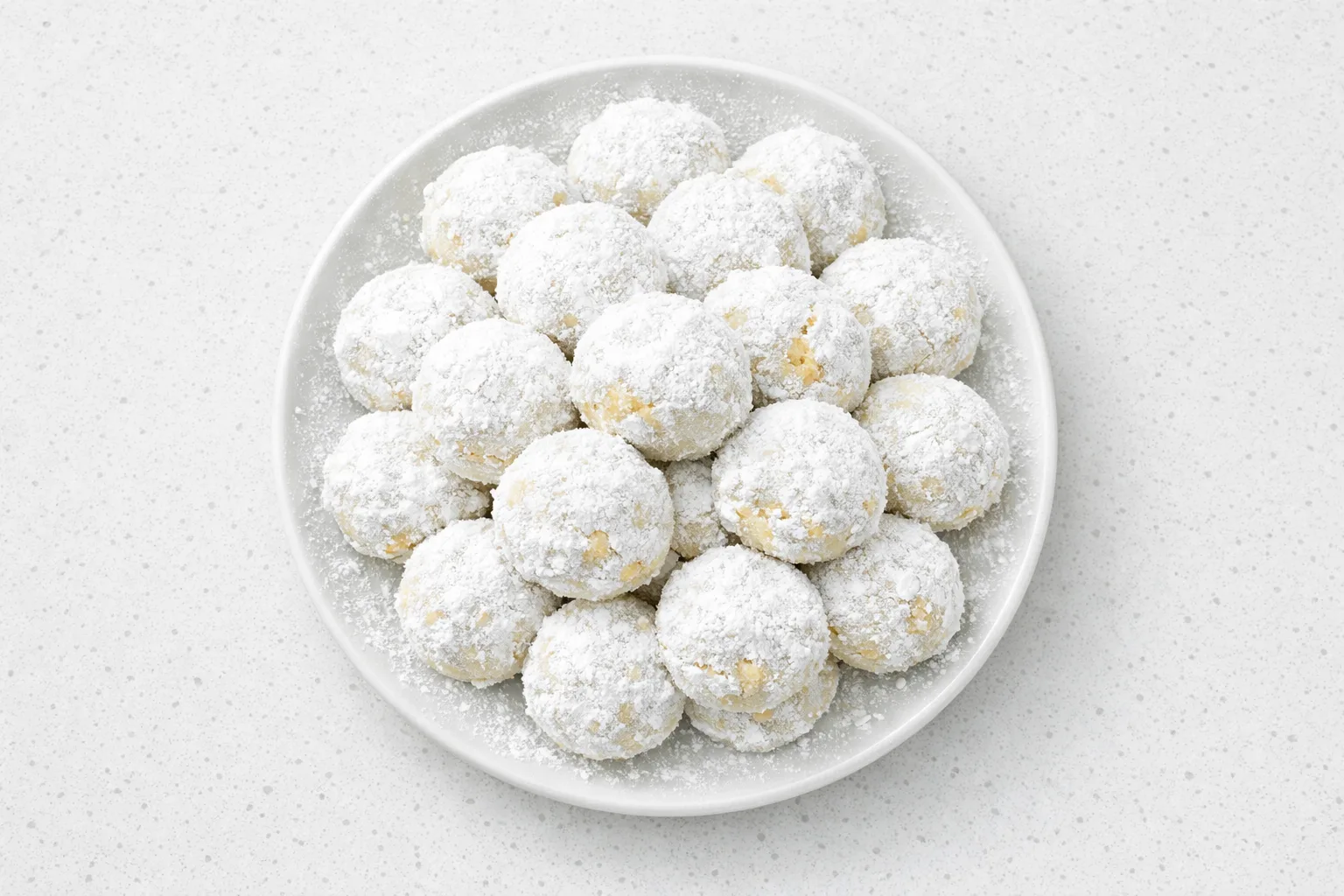
Mexican wedding cookies, known in Mexico as polvorones de nuez (literally "pecan crumblies"), are a Christmas fixture throughout Mexico and across Latin America. The name reflects their texture: polvo means dust or powder, which is exactly what these buttery pecan shortbreads turn into the moment they hit your tongue. They have nothing to do with weddings specifically; the "wedding cookie" name came later, likely from their presence at celebrations of all kinds.
The same cookie appears under three names depending on who made them: Mexican wedding cookies in the American Southwest, Russian tea cakes in mid-century American cookbooks, and snowball cookies on virtually every Christmas cookie platter. All three are the same recipe. The Mexican version leans on toasted pecans and a generous double-coat of powdered sugar while the dough is still hot. That double-roll is the technique that separates a proper polvoron from a dry, underpowdered disappointment.
This recipe toasts the pecans before grinding them into the dough, which deepens the nutty flavor significantly. The cookies bake pale, not golden, and the interior stays genuinely sandy rather than cakey. Roll them hot, let them cool, then roll them again.
Equipment
Instructions
Tap each step to track your progress
- 1
Toast the pecans in a dry skillet over medium heat, stirring frequently, for 4 to 5 minutes until fragrant and one shade darker. Spread on a plate and let cool completely. Once cool, pulse in a food processor until finely ground but not yet a paste; a few coarser bits are fine.
- 2
Preheat the oven to 350 F (175 C). Line two baking sheets with parchment paper.
- 3
In a stand mixer fitted with the paddle attachment, beat the softened butter and 1/2 cup powdered sugar on medium speed for 2 minutes until smooth and pale. Scrape down the bowl once. Beat in the vanilla extract.
- 4
Add the flour, ground pecans, and salt. Mix on low speed until the dough just comes together and pulls away from the sides of the bowl. The dough should feel soft but not sticky; it will firm up slightly as you work with it.
- 5
Roll the dough into 1-inch (2.5cm) balls using about 1 tablespoon of dough each. Place 1 inch apart on the prepared baking sheets. The balls do not spread, so spacing does not need to be generous.
- 6
Bake for 13 to 15 minutes, rotating the pans once at the halfway point. The cookies should look set and barely cream-colored on the bottom edges, not golden or browned. They will be quite soft when they first come out.
- 7
Let the cookies cool on the pan for exactly 5 minutes. They need to be warm but handleable for the first roll. While still warm, gently roll each cookie in the sifted powdered sugar until completely coated. Place on a wire rack.
- 8
Once fully cooled (at least 30 minutes), roll each cookie in the powdered sugar a second time. The first coat absorbs into the warm cookie; the second coat is what you see. Transfer to an airtight container.
Tips & Tricks
Toast the pecans, do not skip it
Toasting transforms raw pecans from mildly bitter to deeply nutty. It takes 5 minutes and makes a genuine difference to the flavor of the finished cookie. Let them cool completely before grinding or the heat will release oils that make the dough greasy.
Weigh the flour
The difference between 250g and a packed cup of flour (which can be 300g or more) is the difference between a sandy, tender polvoron and a dense, dry brick. If you do not have a scale, spoon flour into the cup and level it off, do not scoop.
Roll hot, then cold
The double roll is not optional. The first roll while the cookie is warm allows some sugar to dissolve into the surface, creating a base layer. The second roll once the cookie is fully cool builds the thick white coating that makes these look like snowballs. Skipping to a single cold roll gives you a thin, patchy coating.
Size consistency matters
Aim for balls that are as close to 1 tablespoon (about 15g) as possible. Undersized cookies overbake quickly; oversized ones stay raw in the center at 15 minutes. A small cookie scoop makes this fast and consistent.
Make the dough ahead
The dough keeps refrigerated for up to 5 days. Roll and bake in small batches as needed for maximum freshness. Bring the dough to room temperature for 15 minutes before rolling if it is very firm from the refrigerator.
Troubleshooting
The powdered sugar coating keeps sliding off
The first roll needs to happen while the cookies are still warm (around 5 minutes out of the oven). If they are already cold, the coating will not adhere properly. Rewarm briefly in a low oven (300 F / 150 C) for 3 minutes and roll immediately.
My cookies are crumbly and falling apart
The butter was either too cold and did not cream properly, or the flour was packed into the measuring cup rather than spooned in. Packed flour can add up to 30% more flour than the recipe intends. Use weight measurements (250g) for reliability.
The cookies turned golden brown
They were overbaked. Polvorones should come out of the oven looking underdone, still very pale on top. The bottoms should be just barely set, not browned. They continue to firm as they cool. Pull them at 13 minutes and check the bottom of one cookie; it should be cream to very light gold, nothing darker.
The dough is too soft to roll into balls
The butter was too warm (above 70 F / 21 C), or the kitchen is very hot. Chill the dough for 20 to 30 minutes in the refrigerator until it firms up to a playdough consistency before shaping.
There's a thick crust of powdered sugar clumping on some cookies
The cookies were too hot when rolled, causing the sugar to melt and cake. Wait the full 5 minutes before rolling. The surface should feel warm but not burning to the touch.
Variations
Walnut or Almond Version
Substitute an equal weight of walnuts or blanched almonds for the pecans. Toast them the same way. Walnuts give a slightly more bitter, earthier cookie; almonds produce a paler, more delicate crumb. Add 1/4 tsp almond extract alongside the vanilla if using almonds.
Vegan Adaptation
Replace the butter with an equal weight of vegan block butter (not spread). Stick-style vegan butter that is at least 80% fat works best; lower-fat spreads make the dough too soft. The vanilla and all other ingredients are already plant-based. The cookies will be slightly less rich but hold their shape and coating well.
Chocolate Pecan Snowballs
Add 2 tablespoons of Dutch-process cocoa powder to the flour. The cookies will be darker and have a subtle chocolate note that works well against the sweet powdered sugar coating. Roll in plain powdered sugar or a mix of powdered sugar and a pinch of cocoa.
Citrus Polvorones
Add the finely grated zest of one orange or two limes to the butter before creaming. Citrus zest is traditional in some regional Mexican versions and cuts through the richness of the butter and pecans nicely.
Serving & Gifting
Polvorones are best served at room temperature, piled loosely on a plate or in a shallow bowl so the powdered sugar coating stays intact. They pair naturally with Mexican hot chocolate (<em>champurrado</em>) or strong black coffee. For a cookie swap, pack them in a single layer in a rigid-sided tin with parchment between layers; stacking without support crushes the coating. For gifting, a small kraft box lined with tissue paper and dusted with a little extra powdered sugar before closing looks polished without effort.
Storage & Freezing
Store in an airtight container at room temperature for up to 3 weeks; the powdered sugar coating actually helps preserve them by sealing the surface. Do not refrigerate, the moisture condenses on the sugar coating and makes it gummy. The unbaked dough freezes well for up to 2 months; roll into balls, freeze on a sheet until solid, then transfer to a freezer bag. Bake directly from frozen at 350 F for 16 to 18 minutes. Baked and coated cookies do not freeze well; the powdered sugar turns wet and gummy on thawing.
Common Questions
What is the difference between Mexican wedding cookies, Russian tea cakes, and snowball cookies?
They are all the same cookie: a butter-and-nut shortbread rolled in powdered sugar. The names are regional. "Russian tea cakes" appeared in American cookbooks in the mid-20th century; "snowball cookies" became common around the same time. "Polvorones" is the Mexican and Spanish term and predates both English names.
Can I use pre-ground pecans or pecan flour?
Yes, but toast whole pecans first, then grind them yourself for the best flavor. Store-bought nut flours are made from raw nuts and lack the depth that toasting provides. If using pre-ground pecans, spread them on a sheet pan and toast at 350 F for 5 minutes, stirring once, before using.
Can I make Mexican wedding cookies without nuts?
You can substitute an equal weight of toasted shredded coconut (ground finely in a food processor) for a nut-free version. The texture is slightly different but still tender and crumbly. The cookies will be nut-free but check that your other ingredients are processed in nut-free facilities if you are baking for someone with a severe allergy.
How long do Mexican wedding cookies last?
Stored in an airtight container at room temperature, they stay fresh for up to 3 weeks. The powdered sugar coating helps preserve them. Do not refrigerate as the moisture makes the coating gummy.
Why do my Mexican wedding cookies come out flat?
Flat polvorones usually mean the butter was too soft (nearly melted) when creamed. The butter should be soft enough to leave an indent when pressed but still hold its shape. If your kitchen is warm, start with cold butter and cream it for a full 3 minutes until it warms and lightens from the friction of the mixer.
Can I use other nuts besides pecans?
Yes. Walnuts are the most common substitute and give a slightly earthier result. Blanched almonds produce a paler, more delicate cookie. Pistachios (unsalted, shelled) make a striking pale-green version. Toast any nut the same way before grinding.