
 Mexico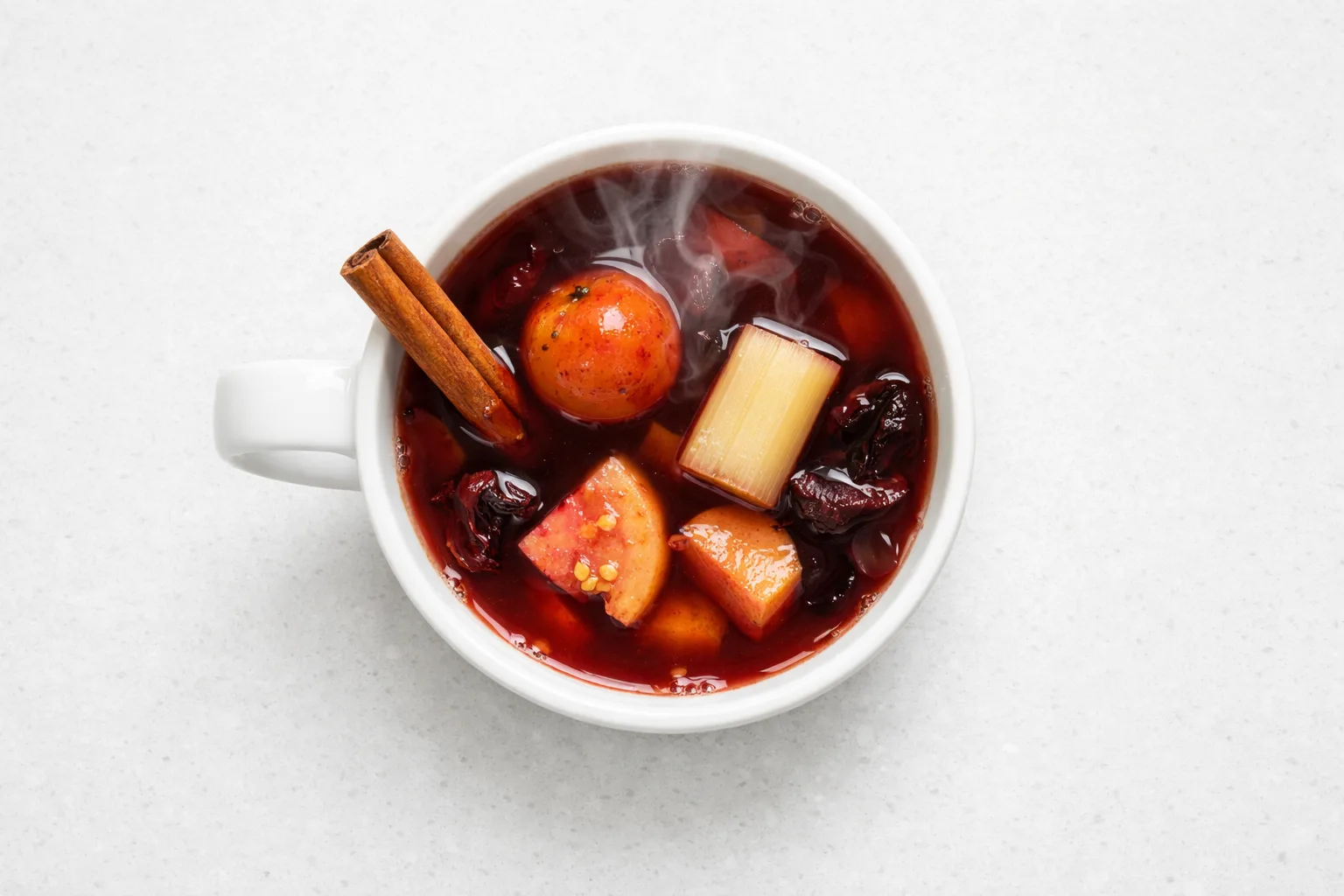
Ponche navideño is Mexico's Christmas punch, and it is as central to the holiday there as mulled wine is in Germany or eggnog in the United States. It appears every year from December 16 onward, simmering in large clay pots at posadas — the nine-night celebrations leading up to Christmas Eve — and in homes across every region of the country. The base is water infused with tejocotes (a small, tart native fruit related to the hawthorn), dried hibiscus flowers, piloncillo (unrefined cane sugar), and whole spices. Guavas, tamarind, and dried prunes or apples are added for depth. The result is somewhere between a hot fruit compote and a tea, intensely fragrant, subtly tart, and just sweet enough.
What makes this recipe work is using piloncillo rather than white sugar. Piloncillo has a molasses richness that white sugar simply cannot replicate, and it dissolves slowly into the punch, building flavor as the fruit simmers down. Tejocotes are sold canned in Mexican grocery stores and Latin supermarkets outside Mexico — look for them in brine, not syrup. Dried hibiscus flowers (jamaica) are widely available and give the punch its deep ruby color. Do not skip the tamarind; it adds the tart backbone that keeps the sweetness in balance.
Equipment
Instructions
Tap each step to track your progress
- 1
Bring the water to a boil in a large pot (at least 5 quarts). Add the cinnamon sticks and cloves, reduce to a strong simmer, and let them steep for 5 minutes while you prep the fruit.
- 2
Add the tejocotes, guavas, prunes, dried apples, raisins, and sugar cane pieces if using. Stir everything into the water.
- 3
Add the hibiscus flowers and tamarind paste. If using whole tamarind pods, break them apart and add the pulp, discarding any seeds.
- 4
Add the chopped piloncillo (or dark brown sugar). Stir and let it dissolve over medium heat, about 5 minutes.
- 5
Bring the punch to a gentle boil, then reduce the heat to low. Simmer uncovered for 35 to 40 minutes, stirring occasionally, until the broth is a deep ruby-red and the fruit is completely tender.
- 6
Taste the punch and adjust sweetness. Tejocotes and hibiscus are both quite tart; if the punch is too sharp, add another 2 tablespoons of piloncillo or brown sugar and stir until dissolved. If it is too sweet, add a squeeze of fresh lime juice.
- 7
Serve hot in mugs, making sure each cup gets some fruit pieces. Guests fish the fruit out and eat it as part of the drink.
Tips & Tricks
Use Mexican cinnamon (canela)
Mexican canela is Ceylon cinnamon, not the Cassia variety used in most US supermarket "cinnamon sticks." Ceylon cinnamon is softer, more floral, and less astringent. It is sold at any Mexican grocery store and makes a noticeable difference in the punch. If you can only find Cassia cinnamon, use one stick instead of two.
Don't skip the piloncillo
Dark brown sugar is a workable substitute, but piloncillo has a richer, molasses-forward flavor that is worth seeking out. It is sold at Mexican grocery stores and most large supermarkets in the Latin foods aisle. One standard cone is about 4 oz; two cones give you roughly 8 oz total.
Make it the night before
Ponche actually tastes better the next day after the flavors have melded in the fridge. Make a full pot on December 23, refrigerate overnight, and reheat on Christmas Eve. This also frees up stove space during the party itself.
Rinse the hibiscus flowers
Dried hibiscus can carry dust or small debris from packing. Give them a quick rinse in cold water and drain before adding to the pot. This takes 10 seconds and prevents any grit in the finished drink.
Taste before adding more sweetener
Sweetness preference varies widely, and piloncillo cones are not standardized in size. Taste the punch after 30 minutes of simmering and calibrate sweetness then, not at the start. The tamarind and hibiscus acidity changes as it cooks, so early sweetness adjustments can lead to an overly sweet final product.
Troubleshooting
The punch is too tart
Hibiscus and tejocotes are both quite acidic, especially if the tejocotes are canned in brine. Add more piloncillo or dark brown sugar, a tablespoon at a time, stirring and tasting. If you added too much tamarind, a teaspoon of honey will help without pushing the flavor in the wrong direction.
The punch is not dark red enough
The color comes primarily from the hibiscus. If the punch looks orange or pale, add another 2 tablespoons of dried hibiscus flowers and simmer for 10 more minutes. Old or improperly stored hibiscus can lose its pigment; buy from a store with high turnover.
The tejocotes are still hard
Fresh tejocotes are dense and need at least 40 minutes of simmering to soften fully. Canned tejocotes are already cooked and will be soft much faster. If using fresh, pierce each one with a fork before adding to the pot to help the liquid penetrate.
The punch reduced too much and is too thick
Add 1 to 2 cups of hot water, stir, and adjust seasoning. Ponche should be a thin, broth-like drink with fruit pieces, not a thick syrup.
I can't find tejocotes
Crabapples are the closest in texture and tartness. Use about 1 lb, halved, and increase the cook time by 10 minutes as they are denser. The flavor will be slightly different but the result is still a good hot fruit punch.
Variations
Spiked Ponche (Ponche con Piquete)
Add 1 to 2 oz of good tequila blanco or sotol to each cup just before serving. In Mexico this is called the "piquete" and it is completely standard at evening posadas. Do not add the spirits to the whole pot, as the alcohol will cook off. Add directly to individual cups.
Vegan Version
The base recipe is already vegan. Confirm your piloncillo brand does not use bone char in processing if strict veganism is a requirement; look for brands that specifically state vegan production, or use coconut palm sugar as a substitute.
Lighter Citrus Variation
Add the peel of one orange and one lime (avoiding the white pith) along with the spices. Increase the hibiscus to 3/4 cup. This version is brighter and more citrus-forward, and works well for people who find the standard recipe too jammy.
Slow Cooker Ponche
Combine all ingredients in a 6-quart slow cooker. Cook on high for 3 hours or low for 5 to 6 hours. This method is ideal for parties because you can hold the punch on the "warm" setting for hours without over-reducing.
Serving & Gifting
Serve directly from the pot with a ladle, making sure each cup gets 2 to 3 pieces of fruit. In Mexico, ponche is served in clay cups or simple mugs, never fancy glasses. For a party, set the pot on a low burner or in a slow cooker on warm so guests can help themselves. A small dish on the side for discarded cinnamon sticks and fruit skins is a practical touch.
Storage & Freezing
Ponche keeps in the refrigerator in a covered pot or airtight container for up to 5 days. The flavor deepens overnight, so day-two ponche is often better than the fresh batch. Reheat gently on the stove over medium-low heat; do not boil again or the fruit will disintegrate. The punch can also be frozen for up to 2 months, though the fruit pieces will soften further after thawing. Freeze in quart containers, leaving headspace for expansion.
Common Questions
What are tejocotes and where can I buy them?
Tejocotes (<em>Crataegus mexicana</em>) are a small, yellow-orange fruit native to Mexico, related to the hawthorn. They are tart, slightly astringent, and hold their shape when cooked. Outside Mexico, look for canned tejocotes in the canned fruit section of Mexican grocery stores, Latin supermarkets, or online. Canned tejocotes in brine work well; rinse them before using to reduce salt.
Can I make ponche without tejocotes?
Yes. Substitute an equal weight of crabapples (halved) or a mix of firm, tart apples and fresh cranberries. The flavor will differ but the drink will still be a good hot fruit punch. Crabapples are the closest in texture and tartness to tejocotes.
What is piloncillo and can I replace it?
Piloncillo is unrefined Mexican cane sugar sold in hard cone shapes. It has a deep, molasses-forward flavor that is closer to jaggery than to regular brown sugar. Dark brown sugar is the best substitute (use the same weight). Avoid light brown sugar or white sugar; they lack the richness that defines ponche's flavor.
How strong should the ponche be if I add tequila?
Add 1 to 1.5 oz per cup. The standard "piquete" in Mexico is a modest pour, enough to warm you up but not enough to overpower the fruit flavors. Use a good tequila blanco rather than an aged reposado; the clean agave flavor integrates better with the hibiscus and cinnamon.
Is ponche navideño the same as agua de jamaica?
No. Agua de jamaica is a cold hibiscus-water drink made with just hibiscus, water, and sugar. Ponche navideño is a hot punch with multiple fruits, spices, piloncillo, and a longer simmer time. They share the hibiscus base and ruby color, but the flavor profiles are quite different.
How much does this recipe make and can I scale it?
This recipe makes about 10 generous cups. It scales easily: double or triple the entire recipe for a party. Use the largest pot you have; the fruit takes up significant volume before it softens. Keep the spice ratio proportional but you can reduce it slightly when tripling, as the flavor intensifies with more volume.