
 Poland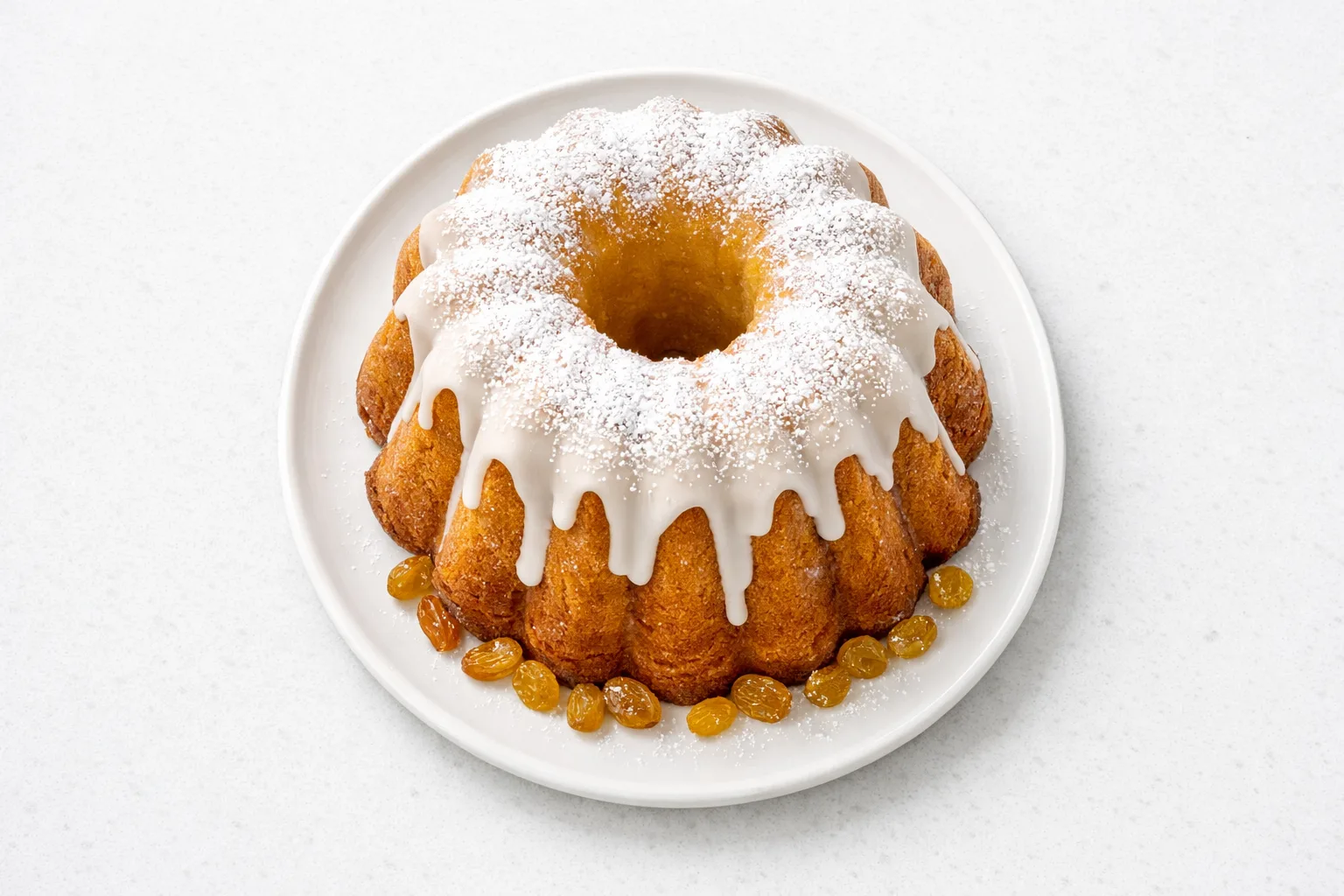
Polish babka is one of the most beloved holiday breads in Poland, baked for both Easter and Christmas in tall, fluted pans that give it its distinctive silhouette. The name means "grandmother" or "old woman" in Polish, a reference to the bread's full, rounded shape. This is a yeasted enriched dough, more cake-like than bread, built on a foundation of egg yolks, butter, and a generous pour of rum over plump raisins. The result is a crumb that is light, fine, and almost feathery, with a subtle sweetness and the warm note of citrus and alcohol baked right in.
The traditional Polish babka recipe calls for patience: a long knead, a slow rise, and careful handling of an enriched dough that can easily be overdone. Unlike a quick loaf, babka rewards the cook who respects the process. This version uses a stand mixer to handle the intensive kneading, keeps the butter cold enough to avoid collapsing the gluten structure, and finishes with a simple white fondant glaze that pools beautifully in the ridges of the pan. The crumb should pull apart in long, silky threads when torn.
Equipment
Instructions
Tap each step to track your progress
- 1
Combine the golden raisins and rum in a small bowl. Let them soak for at least 30 minutes while you prepare the dough. If using orange juice, warm it slightly before soaking. Drain before adding to the dough, reserving any unabsorbed liquid for the glaze if desired.
- 2
Dissolve the yeast in the warm milk with 1 tablespoon of the sugar. Let it sit for 5-10 minutes until foamy and fragrant. If it does not foam, the yeast is dead and must be replaced.
- 3
In a stand mixer fitted with the dough hook, combine the flour, remaining sugar, and salt. Add the yeast mixture, egg yolks, vanilla extract, and lemon zest. Mix on low speed until the dough comes together into a shaggy mass, about 2 minutes.
- 4
Increase speed to medium and knead for 8 minutes. The dough will be smooth but quite sticky. With the mixer running, add the softened butter, one or two cubes at a time, waiting for each addition to be fully incorporated before adding the next. This process takes about 10 minutes total. Once all butter is incorporated, increase to medium-high and knead for a further 5 minutes until the dough is smooth, glossy, and pulls away cleanly from the sides of the bowl. It will still be soft and slightly tacky.
- 5
Fold the drained raisins into the dough by hand, turning the dough over itself several times to distribute them evenly without tearing the gluten structure. Transfer to a lightly oiled bowl, cover tightly with plastic wrap, and let rise at room temperature until doubled in size, about 1.5 to 2 hours.
- 6
Generously butter a 10-cup fluted bundt pan or a traditional tall babka pan (tube pan), making sure to grease every ridge. Dust lightly with flour and tap out the excess.
- 7
Gently punch down the risen dough and transfer it to the prepared pan. The dough will fill roughly one-third of the pan. Cover loosely with plastic wrap and let it rise again until it reaches about 1 inch below the rim of the pan, approximately 45 to 60 minutes. Do not rush this second rise.
- 8
Preheat the oven to 350F (175C) during the last 20 minutes of the second rise. Bake for 40-45 minutes until deep golden brown on top and a wooden skewer inserted into the center comes out clean. The internal temperature should read 190-195F (88-90C). If the top browns too quickly, tent loosely with foil after 25 minutes.
- 9
Cool in the pan for 15 minutes, then invert onto a wire rack. The babka should release cleanly. If it sticks, run a thin offset spatula around the edges before inverting. Let cool completely before glazing, at least 1 hour.
- 10
Whisk the powdered sugar, milk, and vanilla together until smooth and pourable but not watery. It should coat the back of a spoon thickly. Drizzle over the completely cooled babka, letting it run down the ridges naturally. Let the glaze set for 20 minutes before slicing.
Tips & Tricks
Add the butter slowly and patiently
This is the most critical step in making babka. The butter must be incorporated gradually, with the mixer running, over 10 full minutes. Adding it too fast causes the dough to turn greasy and the gluten structure to break down, producing a dense, heavy loaf instead of a light, feathery one.
Use egg yolks only, not whole eggs
The additional fat from the yolks (compared to whole eggs) is what gives babka its characteristically rich, golden crumb. Whole eggs introduce too much white, which can make the texture slightly rubbery. Six yolks sounds like a lot, and it is, but this is correct for traditional Polish babka.
Let the second rise go fully
Under-proofed babka bakes up tight and dense. The dough should reach within 1 inch of the rim of the pan before it goes into the oven. If your kitchen is cool (below 68F/20C), the second rise can take up to 90 minutes. Do not try to hurry it.
Make ahead for holiday baking
The dough can be made through the first rise, then punched down, shaped into the pan, and refrigerated overnight (covered). The next morning, let it come to room temperature and complete its second rise before baking. This make-ahead method actually improves the flavor due to the slow, cold fermentation.
Soak the raisins properly
Dry raisins pull moisture from the dough as they bake, creating dry pockets. A 30-minute soak in rum or orange juice plumps them up and ensures they integrate cleanly into the crumb. Drain them well before folding in to avoid adding excess liquid to the dough.
Troubleshooting
My dough is not rising
The most common cause is yeast that was killed by milk that was too hot. Milk above 115F (46C) will destroy the yeast before fermentation can start. Use an instant-read thermometer to check the temperature. Also check the expiry date on your yeast; old or improperly stored yeast will not activate reliably.
The babka is dense and heavy, not light
The butter was added too quickly, not allowing the gluten network to develop before the fat coated the strands. Add butter slowly, one or two pieces at a time, and wait until each piece is fully absorbed before adding more. Rushing this step is the single most common reason for a dense enriched dough.
The babka stuck to the pan
The pan was not buttered and floured thoroughly enough, especially in the ridges of a bundt pan. Use softened (not melted) butter and a pastry brush to coat every surface, then dust with flour and tap out the excess. For extra insurance, use a baking spray that contains flour.
The top cracked during baking
Cracking usually means the oven temperature was too high for the first phase of baking, causing the crust to set before the interior had finished expanding. Check your oven with a thermometer, as many home ovens run 25F hot. Tenting with foil after the first 25 minutes also prevents over-coloring.
The glaze is too runny and slides off
The babka was still too warm when glazed. Enriched breads hold a lot of residual heat even when they feel cool to the touch. Wait at least 1 full hour after removing from the pan. Also ensure the glaze is thick enough: it should fall from a spoon in a slow, thick ribbon, not a thin stream.
Variations
Chocolate Babka Polish Style
Replace 1/3 cup of the flour with Dutch-process cocoa powder and substitute the raisins with 3/4 cup of roughly chopped dark chocolate (60-70% cocoa), folded into the dough in the final step instead of soaked raisins. Skip the rum soak. Glaze with a dark chocolate ganache made from 1/2 cup heavy cream heated and poured over 3 oz chopped dark chocolate, stirred until smooth.
Citrus and Cardamom Babka
Increase the lemon zest to 1 tablespoon and add 1 tablespoon of orange zest plus 1/2 teaspoon of ground cardamom to the dough. Replace the raisins with dried cranberries soaked in orange juice. The result has a brighter, more aromatic profile that pairs well with a lemon-juice-based glaze.
Dairy-Free Adaptation
Replace the whole milk with full-fat oat milk or almond milk (warmed to the same temperature), and substitute the butter with a high-fat dairy-free block butter such as Miyoko's. Avoid spreadable margarine, which has too high a water content and will make the dough greasy. The texture will be slightly less tender but still excellent. Use the dairy-free milk in the glaze as well.
Mini Babkas
Divide the risen dough into 12 equal portions and place each in a well-greased standard muffin tin or individual fluted brioche molds. The second rise will take only 30-40 minutes and baking time reduces to 18-22 minutes at the same temperature. These are ideal for gifting individually.
Serving & Gifting
Serve babka at room temperature, sliced into generous wedges or pulled apart by hand. It pairs beautifully with strong black coffee or tea, or alongside a glass of cold milk for younger guests. For a Christmas table centerpiece, place the glazed babka on a wooden board or decorative plate and dust lightly with powdered sugar just before serving. For gifting, wrap the whole cooled (unglazed) babka in parchment and ribbon, and pack the glaze separately in a small jar with instructions to drizzle before serving.
Storage & Freezing
Babka keeps well at room temperature for 3 days, wrapped tightly in plastic wrap or stored in an airtight container to prevent it from drying out. For longer storage, refrigerate for up to a week; bring to room temperature before serving, or warm individual slices briefly in a 300F oven for 5 minutes. Babka freezes exceptionally well: wrap the unglazed loaf tightly in two layers of plastic wrap and freeze for up to 3 months. Thaw overnight at room temperature and glaze just before serving.
Common Questions
What is the difference between Polish babka and chocolate babka?
Polish babka is a traditional yeasted sweet bread enriched with egg yolks and butter, classically flavored with rum-soaked raisins and lemon zest. Chocolate babka is a modern Jewish-American variation that uses the same enriched dough but is rolled with a chocolate filling and twisted before baking. The two share a name and dough structure but are distinct recipes with different finishes.
Can I make babka without a bundt pan?
Yes. A standard 9x5 inch loaf pan works for a single loaf. The baking time will be similar (40-45 minutes) but the shape will lack the fluted ridges. Alternatively, use two smaller loaf pans and reduce baking time to 30-35 minutes. A tube pan (angel food cake pan) is the closest traditional substitute and gives the tall, ring shape typical of Polish babka.
Is babka a Christmas bread or an Easter bread in Poland?
Babka is traditionally associated with Easter in Poland, but it is also baked and served throughout the winter holiday season, including Christmas and New Year celebrations. Its rich, enriched dough made it a festive bread for any major holiday when butter and eggs were used freely.
Can I substitute the rum in this babka recipe?
Yes. Orange juice is the best non-alcoholic substitute for soaking the raisins and produces a similarly plump result with a brighter citrus note. Apple juice also works. The rum flavor itself is mild in the baked bread, so the substitution does not significantly change the final taste.
How do I know when babka is fully baked?
The most reliable method is an instant-read thermometer inserted into the thickest part of the loaf; it should read 190-195F (88-90C). Visually, the top should be deep golden brown and a wooden skewer inserted into the center should come out with no wet dough clinging to it. The bread will also have pulled slightly away from the edges of the pan.
Why does my babka have a dense, compact crumb instead of feathery layers?
Three common causes: the butter was added too quickly and broke the gluten structure; the dough was under-proofed and did not get enough time to rise; or the oven was too hot and the exterior set before the interior could fully expand. The butter incorporation step is the most likely culprit in home kitchens. Slow down and let the mixer do the work.