
 Czech Republic
  Poland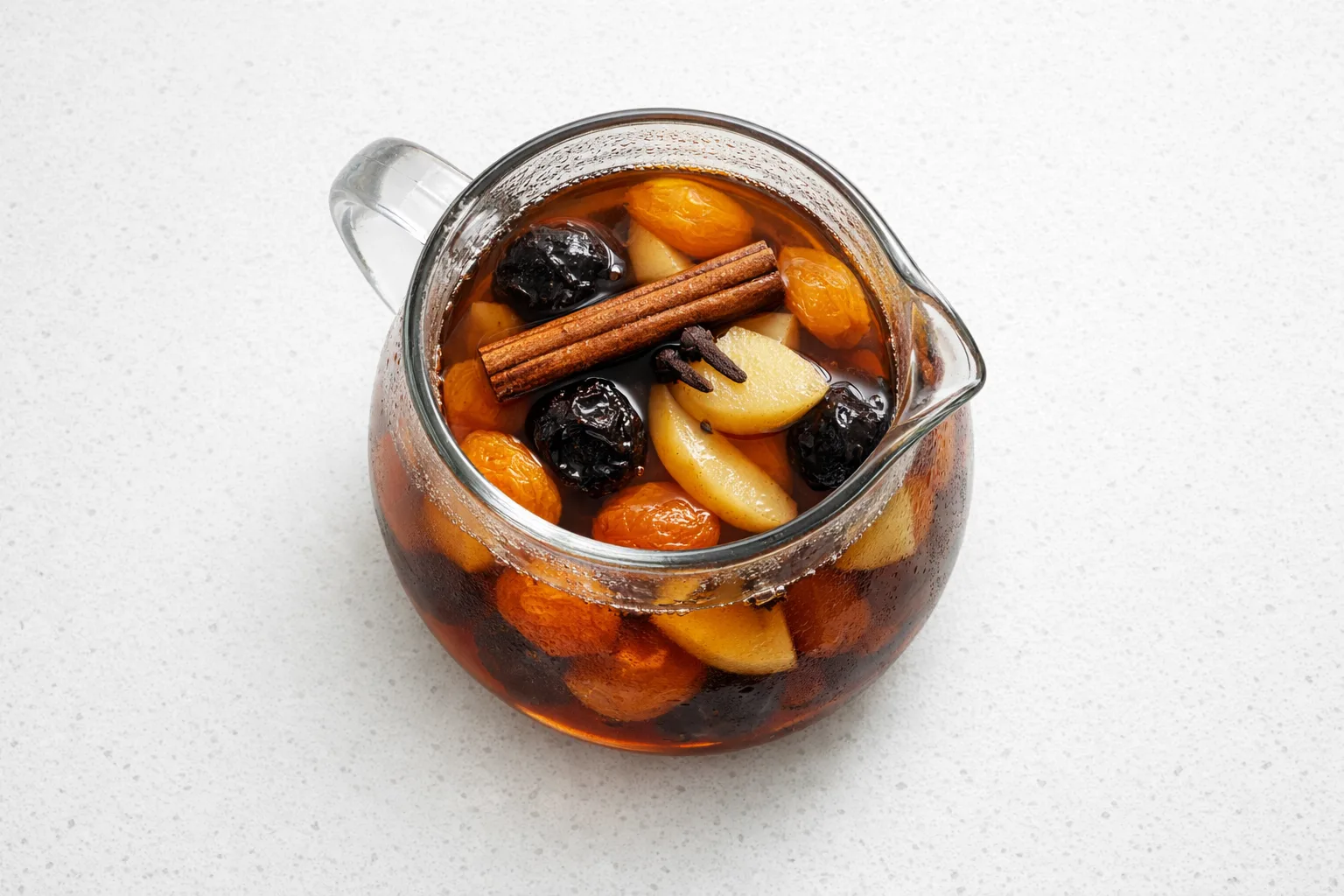
Christmas kompot is the drink that signals the start of Christmas Eve dinner in Czech households. Made by slow-simmering dried fruits with cinnamon, cloves, and lemon peel, this vanocni kompot is served warm or at room temperature alongside the traditional Christmas Eve carp feast. Unlike sweetened fruit juices, it has a restrained, almost wine-like depth from the reconstituted fruits that have released their concentrated flavor into the simmering water.
Across Central and Eastern Europe, variations of this drink appear under different names: in Poland it is kompot wigilijny, served as the twelfth dish of the Christmas Eve Wigilia supper; in Slovakia it follows nearly identical preparation. The Czech version typically features dried plums as the dominant fruit, with pears and apricots providing balance. This recipe keeps the spicing restrained so the fruit carries through rather than being overwhelmed by star anise or cardamom.
The recipe scales effortlessly, keeps for days in the fridge, and actually improves with time as the spices continue to steep. Make it the evening before and simply reheat before dinner.
Equipment
Instructions
Tap each step to track your progress
- 1
Rinse the dried fruits in a colander under cold running water to remove any surface dust. Place the prunes, pear slices, apricots, cranberries, and raisins into a medium-large saucepan (at least 3-quart capacity).
- 2
Pour in the cold water. Add the cinnamon stick, cloves, allspice berries, and lemon peel strips. Do not add sugar yet. Bring to a boil over medium-high heat, stirring once to make sure nothing is sticking to the bottom.
- 3
Once the liquid reaches a boil, reduce the heat to low. Add 3 tablespoons of sugar and stir to dissolve. The liquid should be at a gentle simmer with the occasional bubble breaking the surface.
- 4
Simmer uncovered for 25 minutes. The fruits will plump and soften, releasing their color and flavor into the liquid. The kompot should turn a rich amber-brown. Stir gently every 8-10 minutes.
- 5
Remove from heat. Add the tablespoon of fresh lemon juice and stir. Taste for sweetness: the kompot should be lightly sweet with a distinct tartness from the fruit. Add more sugar if needed, stir until dissolved.
- 6
Let the kompot rest for at least 15 minutes before serving. During resting, the spices continue to steep and the flavors settle. Remove and discard the cinnamon stick, cloves, allspice berries, and lemon peel before serving, or leave them in for presentation.
- 7
Serve warm in mugs or small bowls, making sure each portion includes some of the softened fruits. The fruits are eaten alongside the liquid, not discarded.
Tips & Tricks
Use unsulfured dark apricots
The orange, sulfured apricots that dominate most supermarket shelves are treated to preserve their bright color. For kompot, the dark brown unsulfured variety (available at health food stores or Eastern European markets) delivers far more concentrated flavor and a richer color in the final liquid.
Make it the evening before
The kompot should rest overnight in the fridge. The spices steep through the night and the fruit swells further, resulting in a more complex drink with better fruit-to-liquid integration. Reheat gently before serving.
Do not boil vigorously
A full rolling boil breaks down the fruit too fast and muddies the flavor. You want a gentle simmer: the water surface should be disturbed but not agitated. If you see foam forming at the start, skim it off with a spoon.
Adjust sweetness at the end, not the beginning
Different batches of dried fruit vary significantly in natural sugar content. Always add sugar in the last 5 minutes of cooking after the fruits have released their flavor, then adjust by taste. Adding all the sugar at the beginning can mask how sweet the fruits actually are.
Serve with the fruits, not just the liquid
The stewed prunes, apricots, and pears are part of the dish. Each mug or bowl should include a few pieces of fruit at the bottom. They are soft enough to eat with a spoon and carry the concentrated kompot flavor.
Troubleshooting
The kompot is too sweet
You added sugar before tasting after the full simmer time. The dried fruits release significant natural sugar during cooking. Next time, hold the sugar until the final 5 minutes. To fix an over-sweetened batch, add lemon juice a teaspoon at a time and a pinch of salt to balance.
The liquid is thin and pale
The fruits did not simmer long enough, or the heat was too low for active simmering. Bring it back to a proper low simmer (small steady bubbles) and continue for another 10-15 minutes. The color deepens significantly in the last 10 minutes of cooking.
The fruits fell apart completely
The simmer was too vigorous, or the fruits simmered too long. Use whole prunes rather than chopped, and keep the heat at the lowest setting that maintains a lazy bubble. Kompot fruits should be soft and plump but still hold their shape.
The flavor tastes flat and one-dimensional
The lemon juice was omitted or the citrus peel was too thin to extract oils. The acid from lemon is essential to lift the sweetness. Add a fresh squeeze of lemon and taste again. If it still tastes dull, add one more clove and simmer for 5 more minutes.
It smells too strongly of cloves
Cloves are highly volatile and can overwhelm quickly. Three to four is the right range. If the clove flavor is already dominant before the full simmer time, fish them out early. For future batches, use only 2 cloves.
Variations
All-Plum Kompot
Use 2 cups of dried prunes and omit the pear and apricot entirely. This is the most traditional Czech version, with a darker, more intense flavor and a slightly more tannic finish. Reduce the sugar slightly to start with 2 tablespoons, as prunes contribute more natural sweetness than the mixed-fruit version.
With Star Anise (Polish Style)
Add 1 whole star anise along with the other spices. The <em>kompot wigilijny</em> prepared in Poland for the Christmas Eve <em>Wigilia</em> supper often incorporates star anise for a more pronounced anise note. Remove it after 20 minutes of simmering to prevent the flavor from dominating.
Apple and Fig Version
Replace the dried cranberries and raisins with 1/4 cup dried fig pieces and add 1 small dried apple ring. This gives a milder, less tart result that works well for children or when served cold as a summer kompot riff.
Lightly Spiced Chilled Version
Prepare the kompot with half the spices, chill completely, and serve cold in tall glasses over ice with a few of the stewed fruits at the bottom. Less traditional but a practical option for warm-weather Christmas celebrations in the southern hemisphere.
Serving & Gifting
Serve the kompot warm in mugs or small ceramic bowls immediately before or during the Christmas Eve meal, making sure each serving includes several pieces of the softened fruit. In Czech tradition, it appears on the table alongside fish soup and carp; the kompot's mild sweetness serves as a counterpoint to the savory courses. For a festive presentation at a gathering, keep it warm in a slow cooker set to low and let guests ladle their own. It pairs well with a small plate of Christmas cookies set beside it.
Storage & Freezing
Christmas kompot keeps refrigerated in a sealed container for up to 5 days. The flavor actually deepens and improves on day two as the spices continue to steep into the fruit. Reheat gently over low heat or in a microwave until steaming, not boiling. It does not freeze well: the fruit texture becomes mushy and the spice notes turn harsh after thawing. Make fresh in the days leading up to Christmas rather than freezing ahead.
Common Questions
What is Christmas kompot?
Christmas kompot is a traditional Central and Eastern European warm drink made by simmering dried fruits with spices in water. In Czech and Slovak tradition it is called <em>vanocni kompot</em> and served on Christmas Eve alongside the main meal. It is lightly sweet, mildly spiced, and the stewed fruits are eaten along with the liquid.
Is Christmas kompot alcoholic?
No, traditional Christmas kompot contains no alcohol. It is a non-alcoholic warm fruit drink suitable for all ages. Some modern variations add a splash of red wine or brandy, but the classic version served as part of the Czech Christmas Eve feast is alcohol-free.
Can I use fresh fruit instead of dried?
Dried fruit is essential to the traditional recipe. Fresh fruit does not produce the same concentrated, amber-colored liquid and breaks down too quickly. Dried fruits release a far more intense flavor as they rehydrate in the simmering water. Stick with dried for authentic results.
What dried fruits are used in kompot?
The Czech version typically centers on dried prunes (plums), with dried pears, apricots, and often cranberries or sour cherries. Raisins are common as well. The exact mix varies by family and region. The key is to use good quality dried fruits with no added sugar or sulfites where possible.
How long does Christmas kompot last?
Stored in a sealed container in the refrigerator, Christmas kompot keeps for 4 to 5 days. The flavor improves on day two. It does not freeze well because the fruit texture degrades significantly after thawing.
Can I make Christmas kompot in a slow cooker?
Yes. Combine all ingredients in a slow cooker, cook on low for 4 hours or high for 2 hours. This is a practical method for large batches or for keeping kompot warm throughout a Christmas Eve dinner. Add the lemon juice and adjust sweetness at the end, just as you would on the stovetop.