
Mistletoe: History, Meaning and the Kissing Tradition
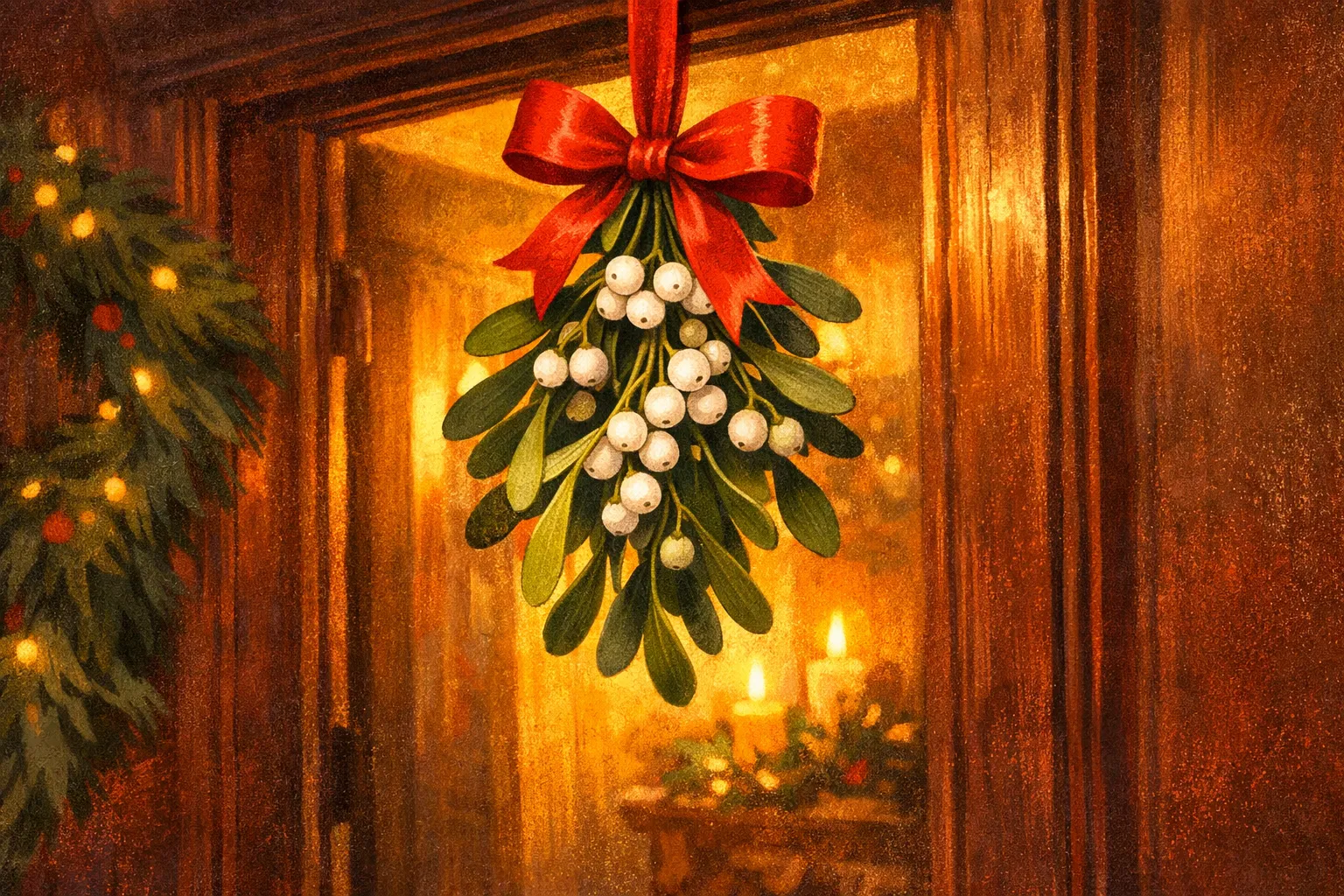
The plant literally named after bird droppings became Christmas' most romantic symbol. How a parasitic weed earned its place above every holiday doorway.
The word "mistletoe" comes from two Anglo-Saxon words: "mistel," meaning dung, and "tan," meaning twig. Dung twig. That's the real name of the plant you're supposed to kiss under at Christmas. The etymology makes perfect sense once you know how mistletoe spreads: birds eat the berries, fly to another tree, and deposit the seeds in their droppings on a branch. The plant then germinates right there in the excrement, sinks root-like structures into the host tree's bark, and begins stealing its water and nutrients.
Contents
This is the plant that somehow became the Western world's most enduring symbol of holiday romance.
Mistletoe's story stretches back at least two thousand years, touching Norse gods, Celtic priests, English servants, and American bestselling authors along the way. It has been sacred, deadly, medicinal, and romantic, often simultaneously. And yes, it is mildly poisonous.
What Is Mistletoe? The Botany of a Parasite
Mistletoe is not one species but a common name for over 1,300 species of obligate hemiparasitic plants in the order Santalales. The two most relevant to Christmas are Viscum album (European mistletoe) and Phoradendron leucarpum (American mistletoe). Both grow as evergreen shrubs on the branches of host trees, forming those distinctive round clumps visible in bare winter canopies.
The "hemiparasite" label is important. Unlike a full parasite, mistletoe contains chlorophyll and can photosynthesize on its own. It primarily steals water and dissolved minerals from its host through a specialized structure called a haustorium, which penetrates the host's bark and taps into its vascular tissue. The process of establishing this connection can take over a year.
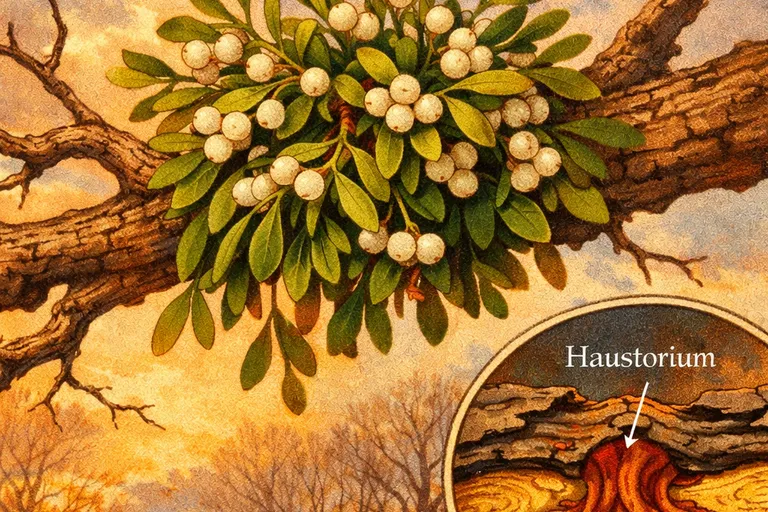
A light infestation barely bothers the host. A heavy one can kill it. Mistletoe has been documented taking over entire tree crowns, replacing the host's foliage with its own while reducing the tree to little more than a water pipe and structural support. Foresters and arborists generally consider it a pest. The romantic associations are, to put it gently, one-sided.
Mistletoe favors apple trees, limes, poplars, and willows, but the type that most fascinated ancient peoples was the rare variety that grew on oaks. That particular combination drove the Druids to build an entire ritual around harvesting it.
The Druids and the Golden Sickle
Nearly everything we know about the Druid mistletoe ritual comes from a single source: Pliny the Elder's Natural History, written around 77 AD. Pliny described the Druids as holding nothing more sacred than mistletoe found growing on an oak tree. Because the oak was already their holiest tree, mistletoe clinging to one was seen as a sign from the gods themselves.
The ritual, as Pliny recorded it, followed a precise script. A white-robed priest climbed the oak and cut the mistletoe with a golden sickle. The severed plant was caught in a white cloth; it was never allowed to touch the ground. Two white bulls "whose horns had never been bound" were then sacrificed, and prayers were offered asking the gods to make the mistletoe a blessing to those who received it.
Historians have found crescent-shaped bronze and iron sickles at Celtic ritual sites, but never one made of gold. A gold sickle would be too soft to cut through woody stems anyway. The "golden" detail was likely symbolic, or Pliny was embellishing for his Roman audience.
The Druids called mistletoe "allheal" and believed it could cure infertility, neutralize poisons, and protect homes from evil spirits. Because mistletoe stays green through winter while its host tree appears dead, they interpreted this as evidence that the oak's spirit passed into the mistletoe during the cold months, returning to the tree in spring. That association with life persisting through apparent death is probably why the plant became linked to healing, fertility, and renewal.
Mistletoe in Norse Mythology: The Death of Baldur
The most dramatic mistletoe story in mythology involves the Norse god Baldur, and it's a tragedy, not a romance. Baldur, son of Odin and Frigg, was the most beloved god in Asgard. When he began having nightmares foretelling his death, his mother Frigg traveled across the nine realms extracting an oath from every living and non-living thing that they would never harm her son.
She skipped the mistletoe. It seemed too small and harmless to bother with.

The trickster god Loki discovered this loophole. He fashioned a spear (or arrow, depending on the version) from mistletoe and gave it to Baldur's blind brother Hodr, guiding his hand to throw it. The mistletoe pierced Baldur and killed him. The most beloved of the gods, felled by the one thing everyone had overlooked.
Some later retellings added a redemptive coda: after Baldur's eventual resurrection, Frigg declared mistletoe a symbol of love rather than death, and anyone who passed beneath it would receive a kiss. This epilogue is likely a later addition rather than an original part of the myth, but it's the version that gets cited when people try to connect the Norse story to the kissing tradition. The actual Prose Edda, written by Snorri Sturluson in the 13th century, doesn't mention kissing at all.
Why Do We Kiss Under the Mistletoe?
The honest answer is: nobody is entirely sure how a poisonous parasite became a prompt for kissing. The Norse connection is tenuous at best. The Druids revered it, but there's no record of them kissing under it. The tradition most likely emerged in England, and the earliest solid evidence places it in the late 18th century.
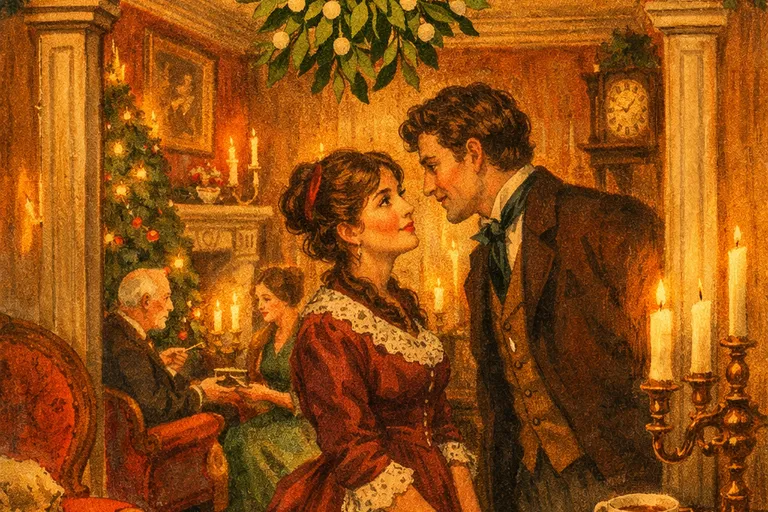
The first known reference to kissing under the mistletoe appears in a song published in 1784. The custom seems to have started among servants in English households before spreading to the middle classes. The rules were specific: a man could steal a kiss from any woman caught standing beneath a hanging sprig of mistletoe, and refusing was considered bad luck. With each kiss, a berry was plucked from the sprig. When the berries ran out, the kissing privilege expired.
The tradition gained wider popularity through Washington Irving's The Sketch Book of Geoffrey Crayon, Gent., published in 1820. Irving had observed English Christmas customs firsthand and wrote: "The mistletoe is still hung up in farm-houses and kitchens at Christmas, and the young men have the privilege of kissing the girls under it, plucking each time a berry from the bush." The book was a bestseller on both sides of the Atlantic and introduced many Americans to the practice.
By the Victorian era, the tradition was firmly established. Charles Dickens referenced it. Christmas cards depicted it. What had started as a slightly scandalous party game among domestic staff became a standard piece of holiday decor in respectable parlors. The berry-plucking rule faded, and the mistletoe became a permanent fixture rather than a consumable one.
What Does Mistletoe Symbolize?
Mistletoe has accumulated meanings like it accumulates host trees. Fertility and vitality are the oldest associations, dating to the Druids and predating Christianity. Peace is another. In some medieval European traditions, enemies who met beneath mistletoe in a forest were obliged to lay down their arms until the next day. The Romans associated it with Saturnalia, their December festival of feasting and social inversion.
The Christian church had a complicated relationship with mistletoe. Unlike holly, ivy, and evergreen boughs, mistletoe was banned from many churches because of its pagan associations. York Minster in England was a notable exception: mistletoe was laid on the altar during the Christmas season, and a general pardon was proclaimed to the city's wrongdoers.
The plant's ability to stay green when everything else appears dead made it a natural symbol of persistence and hope during the darkest part of the year. This is the same logic behind decorating with holly, ivy, and evergreen branches: bringing living greenery indoors when the world outside looks lifeless.
Is Mistletoe Poisonous?
Yes, but probably less dangerous than its reputation suggests. The toxicity question matters because mistletoe hangs in homes with children and pets, and the white berries are eye-catching to both.
European mistletoe (Viscum album) is more toxic than American mistletoe (Phoradendron leucarpum). Both contain toxic compounds called viscotoxins and lectins. A 1996 study of nearly 100 cases of American mistletoe ingestion found that most patients had no notable symptoms. The most common reaction is gastrointestinal upset: nausea, vomiting, and stomach pain.
For pets, the ASPCA lists mistletoe as toxic to dogs, cats, and horses. Symptoms include vomiting, diarrhea, difficulty breathing, and in rare cases, low blood pressure. The FDA notes, however, that severe mistletoe poisoning in pets is rare, and ingestion of a few leaves typically causes only mild stomach upset.
The practical advice is straightforward: hang real mistletoe out of reach, clean up any fallen berries, and consider artificial mistletoe if small children or curious pets are in the house. You don't need to treat it like uranium, but you shouldn't leave a bowl of berries on the coffee table either.
Frequently Asked Questions
Why do we kiss under the mistletoe?
The tradition of kissing under the mistletoe most likely originated among servants in England during the late 18th century. The earliest known reference appears in a song from 1784. The custom spread to the middle classes and gained wider popularity after Washington Irving described it in his 1820 bestseller The Sketch Book. The original rules required plucking a berry with each kiss.
Is mistletoe poisonous to humans?
Mistletoe is mildly toxic if ingested. European mistletoe (Viscum album) is more toxic than the American variety. A 1996 study found that most people who accidentally ate American mistletoe had no significant symptoms. The most common reaction is gastrointestinal upset, including nausea and vomiting. Serious poisoning in humans is rare.
Is mistletoe poisonous to dogs and cats?
The ASPCA classifies mistletoe as toxic to dogs, cats, and horses. Symptoms can include vomiting, diarrhea, and difficulty breathing. However, the FDA reports that severe mistletoe poisoning in pets is uncommon. If a pet eats mistletoe, contact your veterinarian or the ASPCA Animal Poison Control Center.
What does mistletoe have to do with Norse mythology?
In Norse mythology, the god Baldur was killed by a weapon made from mistletoe. His mother Frigg had secured oaths from all things not to harm him but overlooked the mistletoe, considering it too small to pose a threat. The trickster god Loki exploited this oversight. Some later retellings claim Frigg then declared mistletoe a symbol of love, but this detail doesn't appear in the original sources.
How does mistletoe grow?
Mistletoe is a hemiparasitic plant. Birds eat its berries and deposit the seeds on tree branches through their droppings. The seed germinates on the branch and sends a structure called a haustorium into the host tree's bark, tapping into its water and mineral supply. Mistletoe can photosynthesize on its own but depends on the host tree for water and nutrients.
Why did the Druids consider mistletoe sacred?
According to Pliny the Elder, the Druids prized mistletoe growing on oak trees above all else. They believed it could cure infertility and counteract poisons. Because mistletoe stays green through winter while its host tree sheds its leaves, the Druids interpreted this as the oak's spirit migrating into the mistletoe until spring. They harvested it in elaborate ceremonies involving white robes and a golden sickle.