
 United Kingdom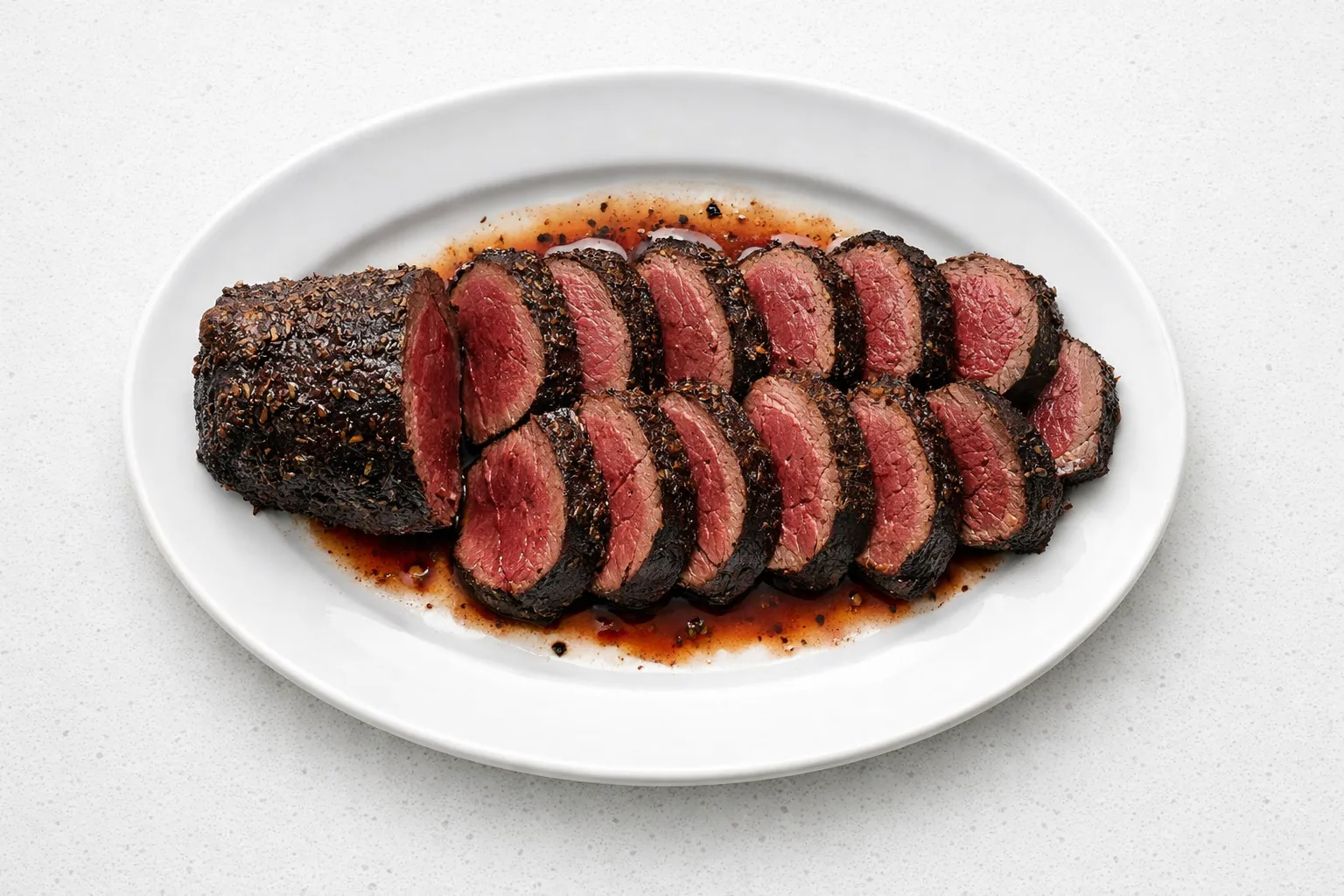
A Christmas venison roast is one of the finest centrepieces you can put on a festive table. Venison has long been the meat of winter feasts in Britain and across northern Europe, where deer were the prize of the hunt and roast venison the mark of a serious Christmas dinner. The loin is the cut to use: tender, lean, and quick enough to roast without the low-and-slow treatment that haunts tougher shoulder cuts.
The challenge with venison loin is that it has almost no fat of its own, so the margin between perfect and dry is narrower than with beef or lamb. The fix is a two-stage cook: a hard, high-heat sear to build a deeply caramelized crust, then a short blast in a hot oven to bring the interior to 130 to 135 F (54 to 57 C) for medium-rare. Rest it properly, and every slice will be juicy and deeply savory with none of the gaminess that puts people off venison.
The crust here is built from crushed juniper berries, fresh rosemary, garlic, and coarse black pepper, bound with a little Dijon mustard. Juniper is the classic pairing for venison across British and Scandinavian cooking; it cuts through the richness and ties the meat to its woodland origins without overwhelming it.
Equipment
Instructions
Tap each step to track your progress
- 1
Remove the venison loin from the refrigerator 45 minutes before cooking. Pat completely dry with paper towels. Moisture on the surface will steam instead of sear, and you will not get a proper crust.
- 2
Preheat the oven to 425 F (220 C). Line a small roasting tray with foil.
- 3
Mix the crushed juniper berries, rosemary, garlic, thyme, black pepper, and 1 tbsp olive oil in a small bowl to form a rough paste. Brush the venison all over with Dijon mustard, then press the herb paste firmly onto all surfaces.
- 4
Season the outside of the loin with flaky sea salt and the additional teaspoon of black pepper.
- 5
Heat a heavy-bottomed ovenproof skillet or cast iron pan over high heat until smoking. Add 1 tbsp olive oil. Sear the venison on all sides for 90 seconds per side, including the ends, until a deep mahogany crust forms. Total searing time is about 6 minutes. Do not rush this step; the crust is where most of the flavor lives.
- 6
Transfer the seared loin to the prepared roasting tray. Insert a probe thermometer into the thickest part. Roast at 425 F (220 C) for 12 to 18 minutes, until the internal temperature reads 130 F (54 C) for medium-rare or 135 F (57 C) for medium. Venison is best served no higher than medium; beyond that it becomes dry and livery in texture.
- 7
Transfer the venison to a warm plate and tent loosely with foil. Rest for 10 full minutes. The internal temperature will continue to rise 3 to 5 degrees during resting.
- 8
While the venison rests, make the pan sauce. Pour off excess fat from the skillet used for searing and return it to medium-high heat. Add the red wine and scrape up all browned bits from the bottom of the pan. Let the wine reduce by half, about 2 minutes.
- 9
Add the stock and redcurrant jelly. Reduce the sauce until it lightly coats a spoon, about 4 to 5 minutes. Remove from heat and whisk in the cold butter cubes one at a time until the sauce is glossy. Season with salt and pepper.
- 10
Slice the venison into thick medallions, about 1 inch thick. Arrange on a warmed platter and spoon the pan sauce around the meat just before serving.
Tips & Tricks
Use a thermometer, not a timer
Venison loin varies considerably in thickness, and every oven is different. A probe thermometer is the only reliable way to hit the right temperature. Pull the meat at 130 F (54 C) for medium-rare and trust the rest to carryover heat.
Dry the meat completely before searing
Any surface moisture turns to steam in the pan and prevents browning. Pat the loin dry with several changes of paper towel, and if you have time, leave it uncovered in the refrigerator for an hour before cooking.
Let it rest properly
Ten minutes is the minimum; twelve is better. Cutting too soon lets all the accumulated juices run onto the board instead of staying in the meat. Tent with foil but do not wrap tightly or the crust will steam soft.
Source good-quality venison
Farmed red deer or fallow deer loin is consistently tender and less strongly flavored than wild. If using wild venison, trim every trace of silver skin and any surface fat, which carries most of the gaminess.
Make the sauce while the meat rests
The 10-minute rest window is exactly enough time to build the pan sauce from the searing skillet. You use the same fond for both, so nothing is wasted and the sauce is ready when the meat is.
Troubleshooting
The venison is dry
The internal temperature went too high. Venison has almost no intramuscular fat, so it dries out quickly past medium. Always use a thermometer; do not rely on timing alone. If this happens again, pull the loin at 128 F (53 C) and let carryover heat do the rest.
The herb crust fell off during roasting
The mustard layer was too thin or the loin was wet. Pat the meat completely dry before applying mustard, and press the herb paste on firmly. A thicker smear of Dijon acts as glue.
The pan sauce is too thin
Let it reduce longer. A good pan sauce should coat the back of a spoon. If the sauce is already well-reduced but still thin, mix 1 tsp cornstarch with 1 tbsp cold water and whisk it in, then simmer for 1 minute.
The crust is burnt but the interior is undercooked
The sear temperature was too high relative to the oven temperature, or the oven was too cool. Check your oven with a thermometer as most home ovens run 25 degrees low. Start the oven at the correct temperature, and keep the sear to 90 seconds per side maximum.
The meat has a strong gamey smell
This is usually from the silver skin or sinew not being fully trimmed. Ask your butcher to clean the loin properly, or trim it yourself with a thin, flexible knife. Well-trimmed venison loin should smell clean and slightly sweet when raw.
Variations
Herb-Butter Basted Loin
Instead of the dry herb crust, soften 4 tbsp unsalted butter with the same juniper, rosemary, and garlic mixture. Roast the venison on a rack and spoon the compound butter over it every 5 minutes. The butter bastes the lean meat and helps the exterior brown without a sear, though a sear will still give a better crust.
Venison Rack or Saddle
The same technique works for a rack of venison or a bone-in saddle. Adjust the roasting time: a venison rack at this size will hit medium-rare in 15 to 20 minutes at the same temperature. Leave the bones in for presentation and carve at the table.
Red Wine and Blackberry Sauce Variation
For a richer sauce, replace the redcurrant jelly with 2 tbsp blackberry jam and add a small sprig of fresh thyme to the reduction. Strain before serving. The blackberry deepens the berry notes and pairs particularly well with aged venison.
Dairy-Free
The pan sauce is easily made dairy-free by omitting the butter finish. Use a teaspoon of olive oil stirred in off heat instead. The sauce will be thinner and less glossy but just as flavourful.
Serving & Gifting
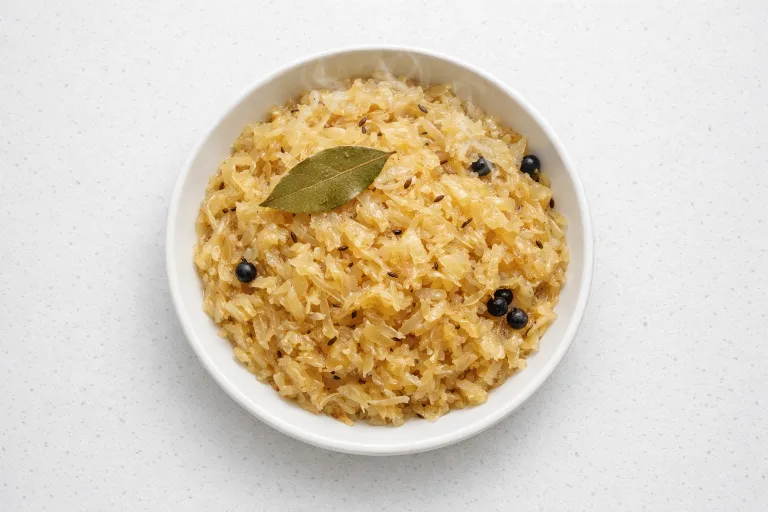
Serve the sliced venison immediately after the 10-minute rest, with the pan sauce spooned over or alongside. Classic accompaniments are roasted celeriac or parsnips, braised red cabbage, and a green such as cavolo nero or Brussels sprouts. A glass of Pinot Noir or an aged Burgundy is the obvious wine match; the earthiness in both the wine and the meat reinforce each other.
Storage & Freezing
Leftover venison keeps in an airtight container in the refrigerator for up to 3 days. Reheat gently at a low temperature (300 F / 150 C) for 10 to 12 minutes, covered with foil, to avoid drying it out further; it will not return to medium-rare but will still be edible. The pan sauce keeps refrigerated for 3 days and reheats well on the stovetop over low heat. Raw trimmed venison loin can be frozen for up to 3 months, well-wrapped. Thaw overnight in the refrigerator before cooking.
Common Questions
How do you cook venison roast without it drying out?
The key is not overcooking it. Venison loin should be pulled from the oven at 130 F (54 C) internal temperature for medium-rare. Rest it for at least 10 minutes before slicing. Because venison is very lean, even 10 degrees too high will make it noticeably dry.
What temperature should venison roast be cooked to?
For medium-rare, pull the venison at 130 F (54 C) and let carryover heat bring it to around 133 to 135 F (56 to 57 C) after resting. Medium is 135 to 140 F (57 to 60 C). Beyond medium-well, venison loses its texture and becomes dry.
What cut of venison is best for a Christmas roast?
The loin (also called the backstrap or saddle fillet) is the best choice: tender, lean, and quick to cook. A haunch (leg) can also be used but needs much longer cooking time and benefits from a marinade. For a dramatic presentation, a rack of venison is excellent.
Can I use frozen venison for this recipe?
Yes, but thaw it completely in the refrigerator overnight before cooking. Do not rush the thaw by leaving it at room temperature. Pat it thoroughly dry after thawing, as defrosted meat releases significantly more surface moisture than fresh.
What goes with venison roast at Christmas?
Roasted root vegetables (parsnips, celeriac, beetroot), braised red cabbage, and a rich red wine pan sauce are the most natural pairings. The slightly sweet, earthy flavors of root vegetables balance the leanness of the venison. For drinks, Pinot Noir or a red Burgundy works best.
Is venison healthy for Christmas dinner?
Venison is one of the leanest red meats available, typically lower in fat than beef or lamb with comparable protein. A 6 oz serving of venison loin has roughly 48g of protein and under 5g of fat. It is a good source of iron and B vitamins.