
 United Kingdom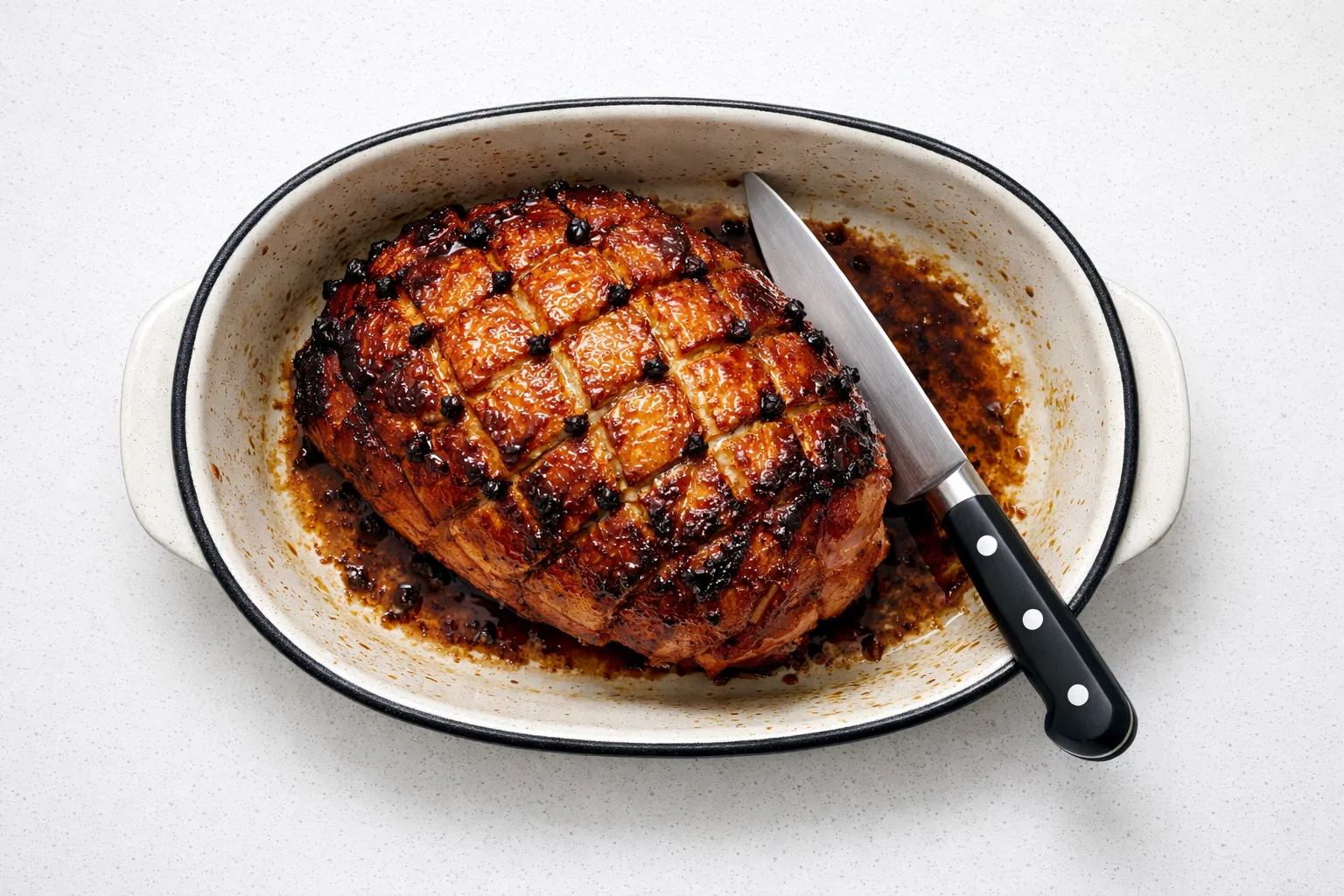
Air fryer gammon at Christmas has become a genuine alternative to the oven-cooked joint, and for good reason. A gammon joint cooked in the air fryer develops the same deeply caramelised glaze and juicy interior you get from hours of slow roasting, but in about half the time and with far less effort. In the United Kingdom, a glazed gammon is a Boxing Day and Christmas Day staple, often sitting alongside the turkey or taking pride of place as the centrepiece of a cold cuts spread.
The method here is simple: cook the gammon joint unglazed at a moderate temperature to build a proper internal temperature, then crank the heat for the glaze in the final 15 minutes. The honey mustard glaze scorches slightly at the edges of each diamond cut, giving you that sticky, lacquered finish that tastes as good as it looks. Cloves pressed into each diamond point are traditional and perfume the meat as it finishes cooking.
This recipe works for joints from 1kg to 2kg, which covers most domestic air fryer capacities. Adjust the initial cook time using the guide in the tips, and check with a meat thermometer rather than relying on time alone.
Equipment
Instructions
Tap each step to track your progress
- 1
Remove the gammon from the fridge 30 minutes before cooking. Pat it completely dry with kitchen paper, this is important for the glaze to adhere properly. If the joint has netting, leave it on until after the initial cook.
- 2
Preheat your air fryer to 160C (320F) for 3 minutes. Rub the gammon all over with vegetable oil and black pepper.
- 3
Place the gammon fat-side up in the air fryer basket. Cook at 160C (320F) for 25 minutes per 500g, so a 1.5kg joint cooks for approximately 60 minutes. Flip the joint halfway through to ensure even cooking.
- 4
While the gammon cooks, make the glaze. Stir together the honey, wholegrain mustard, Dijon mustard, dark brown sugar, and cider vinegar in a small bowl until the sugar dissolves. Set aside.
- 5
At the 60-minute mark, use a meat thermometer to check the internal temperature. It should read at least 70C (160F) in the thickest part. If it hasn't reached temperature, cook for a further 10 minutes and check again.
- 6
Once the gammon is cooked through, remove it from the air fryer. If the joint has netting, cut it away now. Use a sharp knife to remove most of the rind, leaving a layer of fat about 5mm thick. Score the fat in a diamond pattern, cutting down to the meat but not through it.
- 7
Press one whole clove into the intersection of each diamond. Brush the scored fat generously with the honey mustard glaze, making sure it gets into all the cuts.
- 8
Return the gammon to the air fryer, fat-side up. Increase the temperature to 200C (390F) and cook for 12 to 15 minutes until the glaze is deeply caramelised and the surface is a rich mahogany brown. Watch it from the 10-minute mark as honey glazes can burn quickly.
- 9
Remove the gammon and rest it on a board, tented loosely with foil, for at least 15 minutes before carving. The juices will redistribute and the glaze will set into a sticky coating.
Tips & Tricks
Get the internal temperature right, not the clock
Air fryer models vary widely in actual heat output. A meat thermometer is non-negotiable here. The gammon is ready to glaze when the centre reads 70C (160F), regardless of how long that takes.
Score deeply into the meat for the best glaze penetration
Shallow scoring gives you surface caramelisation only. Cut the diamond pattern down to the meat itself, about 5mm deep. The glaze flows into the cuts and creates those sticky, intensely flavoured pockets of caramel around each clove.
Size matters for air fryer fit
A 1.5kg joint needs at least a 5.5 litre air fryer. If you have a smaller machine, buy a 1kg joint (reduce initial cook time to around 40 minutes) or ask your butcher to tie the joint into a taller, more compact shape that fits vertically.
Make the glaze ahead
The honey mustard glaze can be mixed up to 3 days ahead and kept in a small jar in the fridge. Bring it to room temperature before brushing so it spreads easily and doesn't seize up on the hot fat.
Rest without skipping it
Fifteen minutes of resting is not optional. Cutting into a gammon straight from the air fryer produces a flood of pink juices across the board and a drier end result. The rest allows the temperature to equalise and the glaze to firm up into a proper coating.
Troubleshooting
The glaze is burning before the fat is properly caramelised
The air fryer temperature was too high or the glaze went on too early. Apply the glaze only after the main cook is complete and the internal temperature has been reached. If the glaze is browning too fast, reduce the temperature to 190C and add 3 to 4 minutes to the finish time.
The centre of the gammon is still pink and underdone
Air fryers vary significantly in actual heat output. Always use a meat thermometer rather than relying on timing alone. The gammon needs to reach 70C (160F) at the centre. If it hasn't, continue cooking in 5-minute increments at 160C before applying the glaze.
The fat hasn't crisped up, it's soft and flabby
The fat needs to be scored properly and the rind removed before glazing. If you left too thick a layer of fat or didn't score deeply enough, the heat can't penetrate. Return to the air fryer at 200C for an extra 5 minutes with the glaze brushed on again.
The glaze isn't sticking to the fat
The surface was not dry enough before glazing, or the fat was still covered by the rind. Pat the scored fat dry with kitchen paper before brushing on the glaze. The glaze should coat the fat evenly rather than sliding off.
My air fryer is filling with smoke
Fat rendering from the gammon is dripping onto the heating element. Add 2 to 3 tablespoons of water to the bottom of the air fryer drawer before cooking. This catches the drips and prevents smoking without affecting the cooking.
Variations
Maple and Clementine Glaze
Replace the honey with pure maple syrup and add the finely grated zest of one clementine plus 1 tbsp of clementine juice. This gives a lighter, more fragrant finish with less sweetness than the honey version. It pairs particularly well with smoked gammon joints.
Marmalade and Ginger Glaze
Swap the honey and wholegrain mustard for 3 tbsp of thick-cut orange marmalade and 1 tsp of freshly grated ginger. The bitter citrus cuts through the fat beautifully and gives a glossy, jewelled appearance. A classic British combination that works brilliantly for Christmas.
Cola-Poached First (Traditional Method)
For a more traditional result, simmer the gammon joint in cola (not diet) for 20 minutes per 500g before transferring to the air fryer. Discard the cooking liquid, then glaze and finish in the air fryer at 200C for 15 minutes. This produces an exceptionally tender, lightly sweetened interior.
Dairy-Free and Gluten-Free
This recipe is naturally dairy-free. To make it gluten-free, check your mustard labels as some brands add wheat-based thickeners, and use a certified gluten-free brand. The rest of the ingredients are inherently gluten-free.
Serving & Gifting
Serve the gammon warm as a main course with roast potatoes, colcannon, or a simple grain mustard sauce. Cold, it slices beautifully for Boxing Day sandwiches with sourdough, strong cheddar, and a smear of wholegrain mustard. For a centrepiece presentation, transfer the joint to a wooden board and surround it loosely with sliced clementines or a few sprigs of fresh rosemary. Leftovers work in everything from a classic gammon and egg to a ham, leek and potato soup.
Storage & Freezing
Cover leftover gammon tightly in foil or transfer to an airtight container and refrigerate within 2 hours of cooking. It keeps for up to 4 days in the fridge. For freezing, slice or dice the cold gammon and freeze in portions in zip-lock bags for up to 3 months. Thaw overnight in the fridge. Reheat slices briefly in the air fryer at 180C for 3 to 4 minutes, or eat cold straight from the fridge.
Common Questions
How long does it take to cook a gammon joint in the air fryer?
Allow 25 minutes per 500g at 160C (320F) for the initial cook, plus 12 to 15 minutes at 200C for the glaze. A 1.5kg joint takes about 75 minutes total, not including the resting time. Always verify with a meat thermometer rather than time alone.
Can I cook a bone-in gammon joint in the air fryer?
Yes, but you'll need a large air fryer (7 litres or more) and the bone will affect heat penetration. Add 10 minutes to the cook time and check the temperature in the thickest part of the meat, away from the bone. Bone-in joints tend to take slightly longer to reach temperature.
Does the gammon need to be soaked before cooking in the air fryer?
Modern gammon joints sold in supermarkets are typically mild-cured and do not need soaking. If you have bought a traditionally salt-cured joint from a butcher, soak it in cold water for 12 to 24 hours, changing the water once. Taste a small piece after the initial cook and if it is very salty, blanch briefly in boiling water before glazing.
What is the difference between gammon and ham?
Gammon is cured pork that has not been cooked. Once cooked, it is technically ham. In British cooking, the terms are often used interchangeably, but if you buy a "gammon joint" at the supermarket it needs to be cooked through before eating. Pre-cooked "ham joints" are already safe to eat cold.
Can I make this recipe with a smoked gammon joint?
Yes. Smoked gammon works well with the honey mustard glaze and benefits particularly from the maple and clementine variation. The smoke flavour is more assertive, so the sweet-sharp glaze provides a good counterbalance. Cooking times and temperatures are identical to unsmoked.
How do I stop the air fryer from smoking when cooking gammon?
Fat dripping from the joint onto the heating element is the main cause of smoke. Add 2 to 3 tablespoons of water to the drawer underneath the basket before you start cooking. Empty and refill the water at the halfway flip point if there is a lot of rendered fat.