
 United Kingdom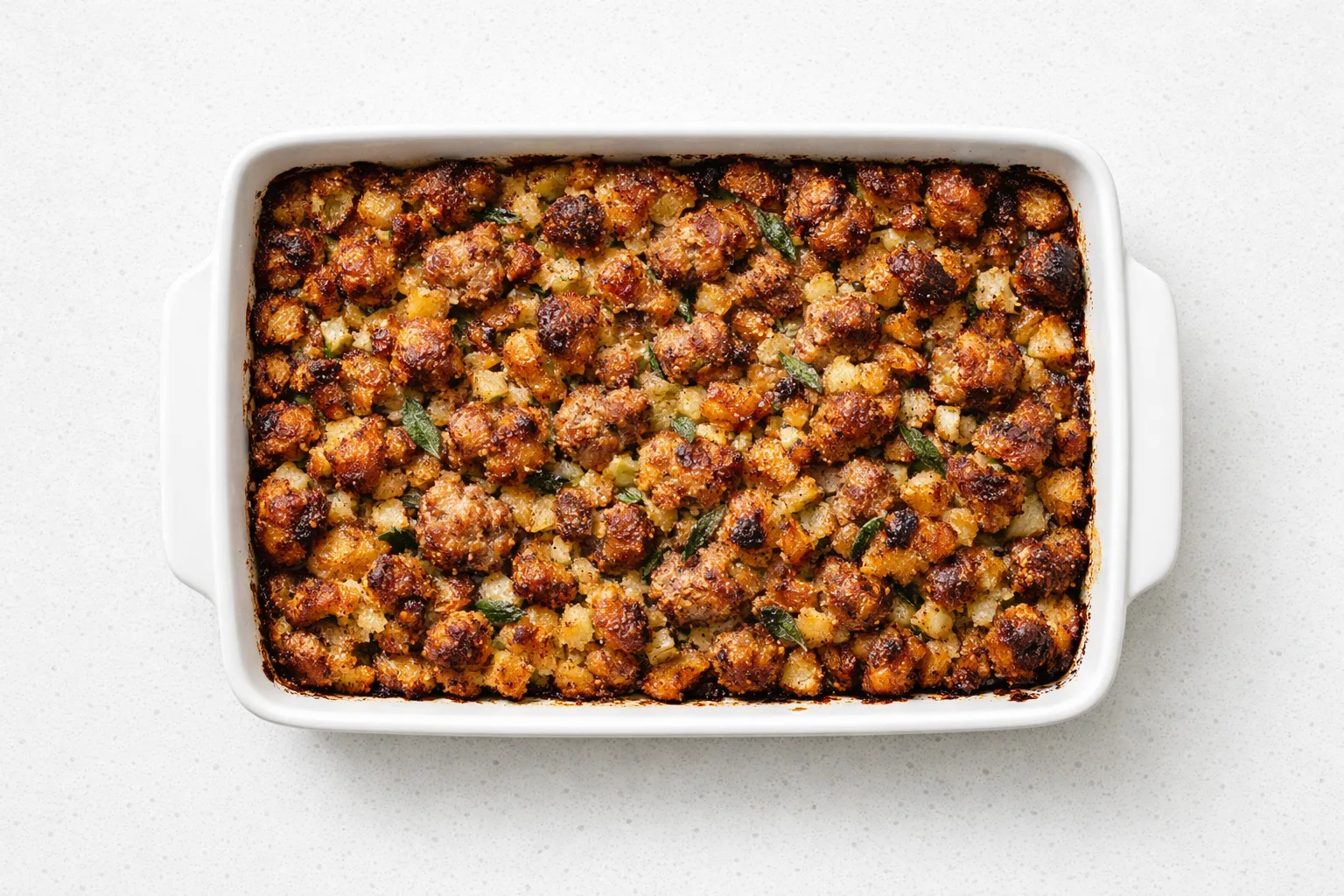
British Christmas sausage stuffing is as much a fixture of the Christmas dinner table as the turkey itself. Made from pork sausage meat bound with breadcrumbs, onion, and fresh sage, it is a distinctly different animal from the bread-forward American dressing -- denser, meatier, and deeply savory. It is the stuffing you find alongside pigs in blankets, roast potatoes, and turkey gravy, and it is the one British cooks have strong opinions about.
The key is the fat ratio. Good-quality pork sausage meat (loose, not removed from casings, with a fat content around 20%) gives the stuffing its richness and binding power. The onions need slow cooking until truly soft and sweet; rushed onions give a raw, sharp edge that no amount of sage can mask. Breadcrumbs keep the texture from being too dense while soaking up the rendered pork fat as it bakes.
This recipe is baked in a dish rather than stuffed inside the bird, which means consistent doneness, a proper browned crust, and zero food-safety anxiety. It can be assembled the day before and pulled from the refrigerator straight to the oven on Christmas morning.
Equipment
Instructions
Tap each step to track your progress
- 1
Preheat your oven to 375 degrees F (190 degrees C). Butter a 9x13 inch (23x33 cm) baking dish generously.
- 2
Melt the butter in a large skillet over medium-low heat. Add the onions with a generous pinch of salt and cook, stirring every few minutes, for 15 to 18 minutes until fully soft, translucent, and beginning to catch golden colour at the edges. Do not rush this. Under-cooked onions give the finished stuffing a raw, pungent quality. Remove from the heat and allow to cool for 5 minutes.
- 3
Add the garlic to the still-warm pan (the residual heat will soften it). Stir in the chopped sage and thyme. The herbs will release their fragrance immediately in the hot fat. Add the parsley if using.
- 4
In a large mixing bowl, combine the pork sausage meat, cooled onion and herb mixture, breadcrumbs, beaten egg, pepper, remaining salt, and nutmeg. Mix thoroughly with your hands until everything is evenly distributed. The mixture should hold together when squeezed but not feel tight or stiff. If it seems very dense, add a tablespoon or two of cold water.
- 5
Taste the raw mixture by frying a small piece in the skillet. Adjust seasoning -- it should taste well-seasoned, herby, and clearly porky. Under-seasoned sausage stuffing baked in a large dish is very difficult to fix after the fact.
- 6
Transfer the mixture into the prepared baking dish, spreading it out in an even layer about 1 1/2 to 2 inches deep. Do not pack it down hard; pressing compacts the mixture and you lose the textural contrast between the crisp top and tender interior.
- 7
Cover the dish tightly with foil and bake for 25 minutes. Remove the foil and continue baking for 18 to 22 minutes until the top is deeply golden brown, the surface is crisped, and the centre reads 160 degrees F (71 degrees C) on an instant-read thermometer.
- 8
Rest uncovered for 5 minutes before portioning. The stuffing will firm slightly as it cools, making it easier to cut into neat portions.
Tips & Tricks
Use loose sausage meat, not sausages
Removing meat from sausage casings gives you a different product from purpose-made sausage meat. Sausages typically have higher seasoning levels and may contain filler ingredients that change the texture of the stuffing. Buy sausage meat sold loose (from a butcher or the supermarket meat counter) for the most control over flavor.
Fry a test piece before baking the whole dish
Pinch off a small ball of the raw mixture and fry it in the skillet for 2 minutes per side. Taste it. This is your only chance to adjust seasoning before committing to an hour of baking. Most home cooks undersalt stuffing at the mixing stage and regret it at the table.
Caramelise the onions fully or do not bother
Onions that are softened but not golden contribute very little to flavor. The transformation from raw to truly caramelised -- sweet, concentrated, nutty -- takes 15 minutes minimum. If your onions still look pale and white after 10 minutes, lower the heat and add 5 more minutes. This step is not optional.
Make it the day before
The assembled, unbaked stuffing tastes noticeably better after a night in the refrigerator. The sage and onion flavors penetrate the sausage meat more fully as it rests. This also means Christmas morning involves no prep: pull it from the fridge, remove the cling film, and put it straight in the oven while the turkey rests.
Fresh sage only, and plenty of it
Dried sage is too aggressive and camphor-like to use in a dish where sage is one of the primary flavors. Fresh sage, cooked briefly in the residual heat of the onion pan, delivers a floral, herbal note that lifts the richness of the pork. Do not reduce the quantity: the recipe calls for a generous amount by design.
Troubleshooting
The stuffing is grey and bland after baking
The oven temperature was too low, or the foil stayed on too long. The Maillard reaction that browns the surface and creates flavor requires both heat and direct exposure. Ensure you remove the foil for at least the last 20 minutes. If you find the top is pale after the cooking time, switch to broil (grill) for 2 to 3 minutes at the end, watching closely to prevent burning.
The stuffing is crumbly and falls apart when portioned
The sausage meat had too low a fat content, or too much breadcrumb was added. Lean sausage meat (below 15% fat) does not have enough fat to bind the mixture cohesively. The egg also provides binding: if you skipped it or used a small egg, the stuffing lacks structure. Next time, use a beaten egg and ensure the mixture coheres when squeezed in your fist before baking.
The stuffing is greasy with pools of fat in the dish
The sausage meat had an unusually high fat content, or the dish was overfilled. Use a metal spoon to remove excess rendered fat from the dish about halfway through the uncovered baking time. For the next batch, use sausage meat with around 20% fat rather than economy-grade meat, which often has significantly higher fat levels.
The onions taste sharp and raw in the finished stuffing
They were not cooked long enough. Onions need 15 full minutes over medium-low heat to truly soften and lose their harsh compounds. If you smell sharp, sulfurous onion rather than sweet, caramelised onion when they come off the heat, they need more time. A wide skillet and medium-low heat (not medium or high) is the correct approach.
The stuffing is undercooked in the centre
The dish was too deep, or you pulled it early. Use a thermometer: the centre must reach 160 degrees F (71 degrees C). If the top is browning too fast but the centre is cold, the dish went into the oven cold from the fridge. Next time, pull it from the refrigerator 30 minutes before baking to allow it to lose the worst of the chill.
Variations
Sausage and Chestnut Stuffing
Add 1 cup (200g) of cooked, peeled chestnuts (vacuum-packed work well -- crumble them roughly by hand) to the sausage mixture along with the breadcrumbs. Chestnuts add sweetness and a slightly starchy texture that cuts through the richness of the pork. Reduce the breadcrumbs to 3/4 cup. This is a popular British variation, particularly in households that use it as the main stuffing rather than a side.
Apple and Sausage Stuffing
Peel and finely dice 1 large tart apple (Bramley or Granny Smith) and cook it with the onions from the start. The apple collapses and nearly disappears into the mixture, leaving behind a subtle sweetness and acidity that balances the pork fat. Add 1/2 teaspoon of dried mace for a slightly old-fashioned British flavor profile.
Gluten-Free Sausage Stuffing
Replace the fresh white breadcrumbs with an equal volume of gluten-free breadcrumbs or crushed gluten-free crackers. Check that your sausage meat contains no gluten fillers (read the label: some sausage meat uses rusk as a binder). The texture will be slightly coarser but the flavour is unaffected. Ensure your baking dish and all equipment are clean and free of cross-contamination.
Herb-Heavy Stuffing Balls
Instead of baking in a dish, roll the mixture into golf-ball-sized rounds and arrange on a parchment-lined baking sheet. Increase the fresh herbs by half (add more sage and thyme). Bake at 400 degrees F (200 degrees C) for 20 to 25 minutes until golden all over. Stuffing balls are easier to serve on a buffet or alongside multiple dishes and get more surface area browned per portion.
Serving & Gifting
Serve cut into squares directly from the baking dish alongside roast turkey, pigs in blankets, roasted potatoes, and plenty of turkey or chicken gravy poured over the top. For a Christmas buffet, transfer to a warmed serving platter lined with a folded napkin to soak up any excess fat. The stuffing holds well in a low oven (200 degrees F / 95 degrees C) for up to 45 minutes if you need to stagger dishes.
Storage & Freezing
Leftover stuffing keeps in an airtight container in the refrigerator for up to 3 days. Reheat portions in a 350 degrees F (175 degrees C) oven for 12 to 15 minutes until heated through, or in a skillet over medium heat until crisped on one side and warmed through. The assembled but unbaked stuffing can be wrapped tightly in cling film and refrigerated for up to 24 hours. It can also be frozen, unbaked, for up to 1 month: wrap the dish in a double layer of foil and freeze flat. Thaw overnight in the refrigerator and bake from cold, adding 10 minutes to the covered baking time.
Common Questions
What is the difference between British and American Christmas stuffing?
British Christmas stuffing is typically sausage meat-based (pork), bound with breadcrumbs and strongly flavored with sage. American stuffing (also called dressing) is usually bread-based with a much lighter, more custardy interior. They are different dishes with different textures, fat levels, and roles on the plate -- though both are served alongside turkey.
Can I use sausages instead of sausage meat?
You can remove the meat from pork sausage casings, but the seasoning levels and fat ratio will differ from purpose-made sausage meat. The result is edible but less predictable. Ideally, buy loose pork sausage meat from a butcher or supermarket meat counter to get the cleanest, most consistent stuffing.
How do I know when sausage stuffing is cooked through?
Use an instant-read thermometer inserted into the centre of the dish. The stuffing must reach 160 degrees F (71 degrees C). Do not rely on the top colour alone: a well-browned surface can occur before the centre is safe to eat, especially if the dish was cold going into the oven.
Can I make this stuffing ahead of time?
Yes. Assemble the unbaked stuffing, cover the dish with cling film, and refrigerate for up to 24 hours before baking. Baked stuffing can also be refrigerated for up to 3 days and reheated in the oven. For longer storage, freeze the unbaked dish for up to 1 month.
Can I stuff this inside the turkey?
This recipe is developed for a baking dish. If you use it to stuff the bird, the turkey cavity slows the heat penetration significantly. The stuffing must reach 165 degrees F (74 degrees C), which typically requires the turkey to be overcooked to achieve. For food safety and texture, a baking dish gives consistently better results.
What herbs go in British sausage stuffing?
Sage is the defining herb, supported by thyme. Some recipes add marjoram or a small amount of rosemary, though both can overpower the sage if used in excess. Fresh parsley adds color without flavor competition. Dried mixed herbs are a common shortcut but produce a noticeably inferior result.