
 France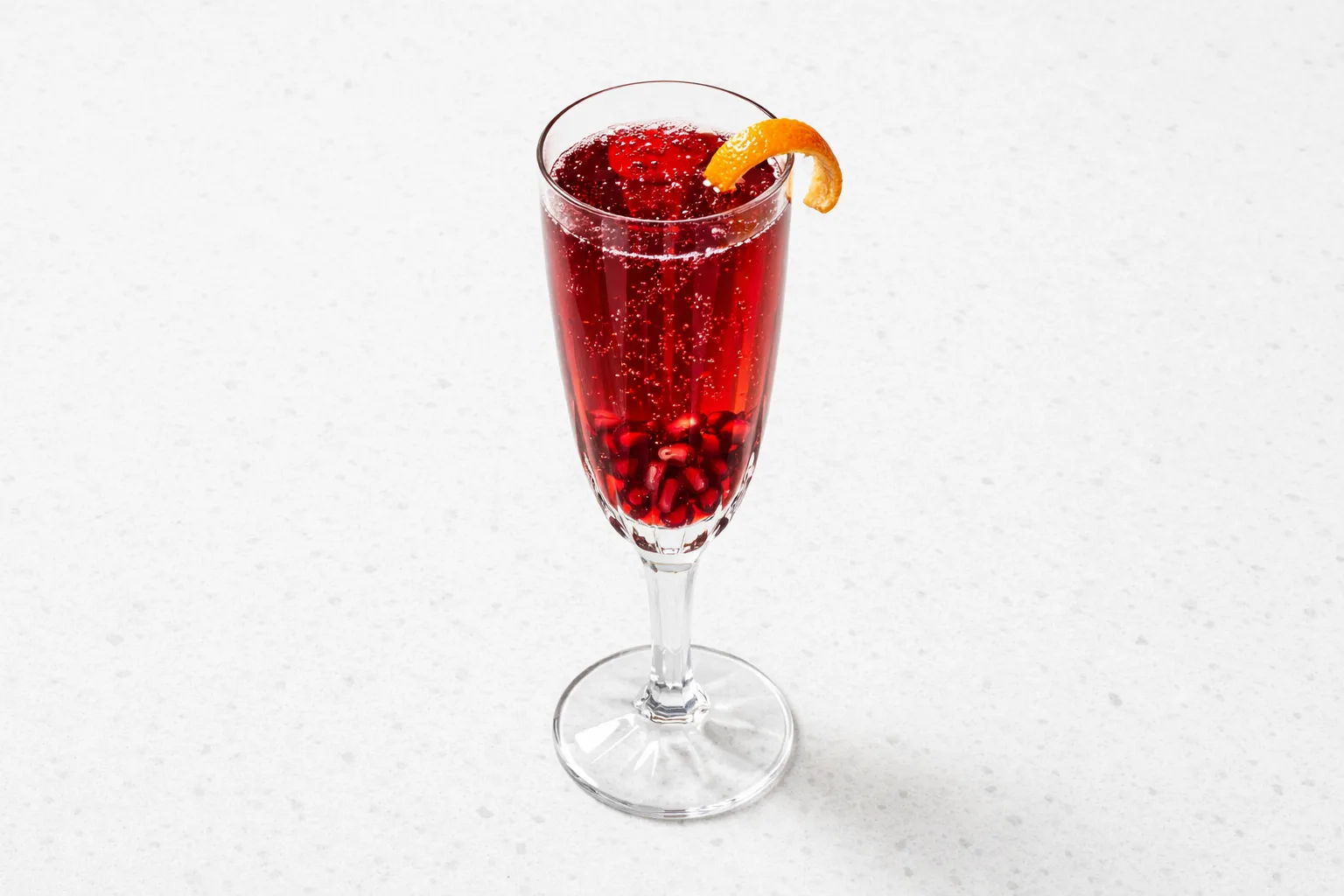
A Christmas champagne cocktail built around pomegranate juice is one of those drinks that looks like it took effort but takes about four minutes to make. The deep ruby color against rising champagne bubbles is genuinely striking in a glass, and the flavor is exactly right for the season: tart, lightly sweet, with a citrus lift from the Cointreau. It has become a modern holiday staple in American homes, though pomegranate and sparkling wine are a combination with roots in Persian and Mediterranean celebration drinking that stretches back centuries.
The key to getting this right is the ratio. Too much pomegranate juice and you lose the champagne's delicate effervescence and dryness; too little and the cocktail tastes like expensive sparkling water with a blush. The version here uses one part pomegranate to three parts sparkling wine, with a small measure of Cointreau to round the edges without overpowering. A pomegranate prosecco cocktail works just as well as champagne here; the slightly sweeter profile of prosecco pairs naturally with tart pomegranate.
Equipment
Instructions
Tap each step to track your progress
- 1
Chill your champagne flutes in the freezer for at least 10 minutes before serving. A cold glass keeps the cocktail colder longer and preserves the bubbles.
- 2
Combine the pomegranate juice, Cointreau, and lemon juice in a small pitcher or measuring cup. Stir briefly to combine. Taste and add simple syrup if the pomegranate juice is particularly sharp.
- 3
Add 1 teaspoon of pomegranate arils to the bottom of each chilled flute. They will sink and sit visibly at the base, which is the visual effect you want.
- 4
Pour the pomegranate mixture evenly between the 6 flutes, about 2.5 tablespoons per glass. Pour slowly down the inside wall of the glass to minimize fizzing when the champagne goes in.
- 5
Top each glass with cold champagne or prosecco, filling to about three-quarters full. Pour slowly at a tilt to preserve as many bubbles as possible. The pomegranate will bloom upward through the sparkling wine as the bubbles carry it.
- 6
Run an orange peel strip around the rim of each glass to release the oils, then drape it over the rim. Serve immediately.
Tips & Tricks
Use real pomegranate juice, not a blend
100% pomegranate juice (labeled as such, typically around 16 oz for 4-6 drinks) has the tartness and depth that makes this cocktail work. Pomegranate-flavored drinks or blends are too sweet and too mild to balance dry sparkling wine.
Chill everything before you start
Warm juice poured into warm glasses with cold champagne causes violent fizzing, uneven mixing, and rapid bubble loss. Chill the juice, chill the glasses, and keep the champagne in the coldest part of the refrigerator until the moment you open it.
Do not stir after adding the champagne
The gentle pour creates a natural gradient from ruby-red at the bottom to lighter pink at the top. Stirring collapses the bubbles and turns the cocktail a uniform pale pink, which is less interesting both visually and in terms of the layered sipping experience.
Add the arils last if your pomegranate is very juicy
If your pomegranate arils are bleeding juice into the glass before you pour the liquids, the color distribution gets murky. Drop them in just before the champagne hits the glass.
Make a batch for a crowd
Scale the pomegranate mixture (1 cup juice, 3 tablespoons Cointreau, 1 tablespoon lemon juice per 6 drinks) as a multiple of the above. Keep it in a chilled pitcher. Have two or three bottles of champagne ready. Top each glass individually so each drink gets fresh carbonation.
Troubleshooting
My cocktail is too sweet
Your pomegranate juice is likely a blend with added sugar rather than 100% juice. Check the label; many supermarket pomegranate juices are sweetened. Use a pure 100% pomegranate juice such as POM Wonderful and skip any simple syrup. The natural tartness of real pomegranate juice is what balances the cocktail.
The cocktail loses its bubbles too fast
The pomegranate juice was not cold enough when poured, or the glasses were warm. Both cause rapid CO2 release. Chill the juice and the glasses thoroughly before assembly, and pour the champagne as slowly as possible down the inside wall of the tilted flute.
The pomegranate arils float instead of sinking
Arils from a very fresh pomegranate are dense enough to sink; arils that have been sitting in juice for a while absorb liquid and float. Use freshly extracted arils straight from a pomegranate rather than pre-packaged ones stored in juice. If they still float, that is fine aesthetically; it just changes the look slightly.
The cocktail tastes flat and muddy
The pomegranate-to-sparkling ratio is off, likely too much juice. Stick to the 1:3 ratio (juice to wine). Also make sure your champagne or prosecco is fresh; a bottle opened more than a few hours ago will have lost significant carbonation and the drink will taste heavy.
The orange peel bitterness is overwhelming
You used too much white pith. Use a vegetable peeler or sharp paring knife to take only the thinnest layer of orange zest with minimal white pith attached. A strip about 2 inches long is enough; the goal is the aromatic oil on the rim and nose, not a mouthful of peel.
Variations
Prosecco Version (Christmas Prosecco Cocktail)
Swap the champagne for a dry prosecco such as a Conegliano Valdobbiadene. Prosecco has a slightly more floral, less yeasty profile than Champagne and a touch more residual sweetness, which softens the tart pomegranate without needing added syrup. Reduce or eliminate the simple syrup and skip the lemon juice if you want a gentler, more approachable drink.
Non-Alcoholic Pomegranate Mimosa
Replace the champagne with chilled sparkling water or a good sparkling white grape juice. Increase the lemon juice by half a teaspoon to compensate for the wine's natural acidity. The drink loses depth but keeps the visual drama and is fully family-friendly for holiday tables.
Pomegranate Cranberry Champagne Cocktail
Use half pomegranate juice and half 100% cranberry juice (not cranberry cocktail) for a deeper, more tannic base. Add a frozen cranberry to each glass alongside the pomegranate arils for garnish. This version has a sharper, more assertive flavor that stands up well next to rich holiday food.
Spiced Pomegranate Version
Steep 1 cinnamon stick, 2 cloves, and a strip of orange zest in the pomegranate juice for 30 minutes at room temperature, then strain and chill before using. The result is a festive champagne drink with warm spice notes that evoke mulled wine in a lighter, sparkling format.
Serving & Gifting
Pour these at the table just as guests sit down; a filled flute with rising bubbles and glowing red color is a better centrepiece moment than drinks assembled in a back kitchen. For a larger crowd, pre-measure the pomegranate mixture into a pitcher so you can top with champagne to order without fumbling. Pair with salted cheese straws, smoked salmon blini, or any salty, fatty appetizer that contrasts with the tartness in the glass.
Storage & Freezing
This cocktail cannot be made ahead once assembled; bubbles are lost within 20 minutes. You can prepare the pomegranate juice mixture (juice, Cointreau, lemon juice) up to 24 hours in advance and keep it tightly covered in the refrigerator. Open the champagne only when ready to pour. Leftover champagne or prosecco keeps its carbonation better if sealed with a champagne stopper and refrigerated; use within 24 hours.
Common Questions
Can I use prosecco instead of champagne for this cocktail?
Yes. A dry or extra-dry prosecco works very well and is typically less expensive than Champagne. The slightly sweeter, more floral character of prosecco pairs naturally with pomegranate and often needs no added simple syrup. Cava is another good alternative with a crisper, more mineral finish.
How far in advance can I make a Christmas champagne cocktail?
The pomegranate base (juice, Cointreau, lemon juice) can be mixed up to 24 hours ahead and kept refrigerated. Do not add the champagne until the moment of serving. Pre-assembled sparkling cocktails go flat within 15 to 20 minutes.
Is there a non-alcoholic version of this festive champagne drink?
Yes. Replace the champagne or prosecco with chilled sparkling water or sparkling white grape juice, and omit the Cointreau. Add an extra teaspoon of lemon juice and a small splash of orange juice to approximate the citrus note the Cointreau provides. The result is a pomegranate mimosa that is fully alcohol-free.
What type of pomegranate juice is best for cocktails?
Use 100% pure pomegranate juice with no added sugar or blending juices. POM Wonderful is the most widely available option that meets this standard. Freshly squeezed pomegranate juice also works well if you have the time. Avoid "pomegranate cocktail" or "pomegranate blend" products; they lack the acidity that makes the drink work.
Can I make a large batch of this holiday sparkling cocktail for a party?
Make the pomegranate mixture in a pitcher scaled to your guest count (use the 1:3 juice-to-champagne ratio as your guide). Keep the pitcher refrigerated. Open and pour the champagne into individual glasses at the last moment; never mix the champagne into a large punch bowl, as it will go flat within minutes. For 12 guests, prepare 2 cups of pomegranate mixture and have 2 bottles of champagne chilled and ready.
Does this cocktail work with frozen pomegranate arils?
Frozen arils work well as a garnish and double as a light chilling element that will not dilute the drink. Spread them on a baking sheet and freeze in a single layer before adding to the glass so they do not clump. They will thaw quickly and look nearly identical to fresh once submerged in the cocktail.