
 United Kingdom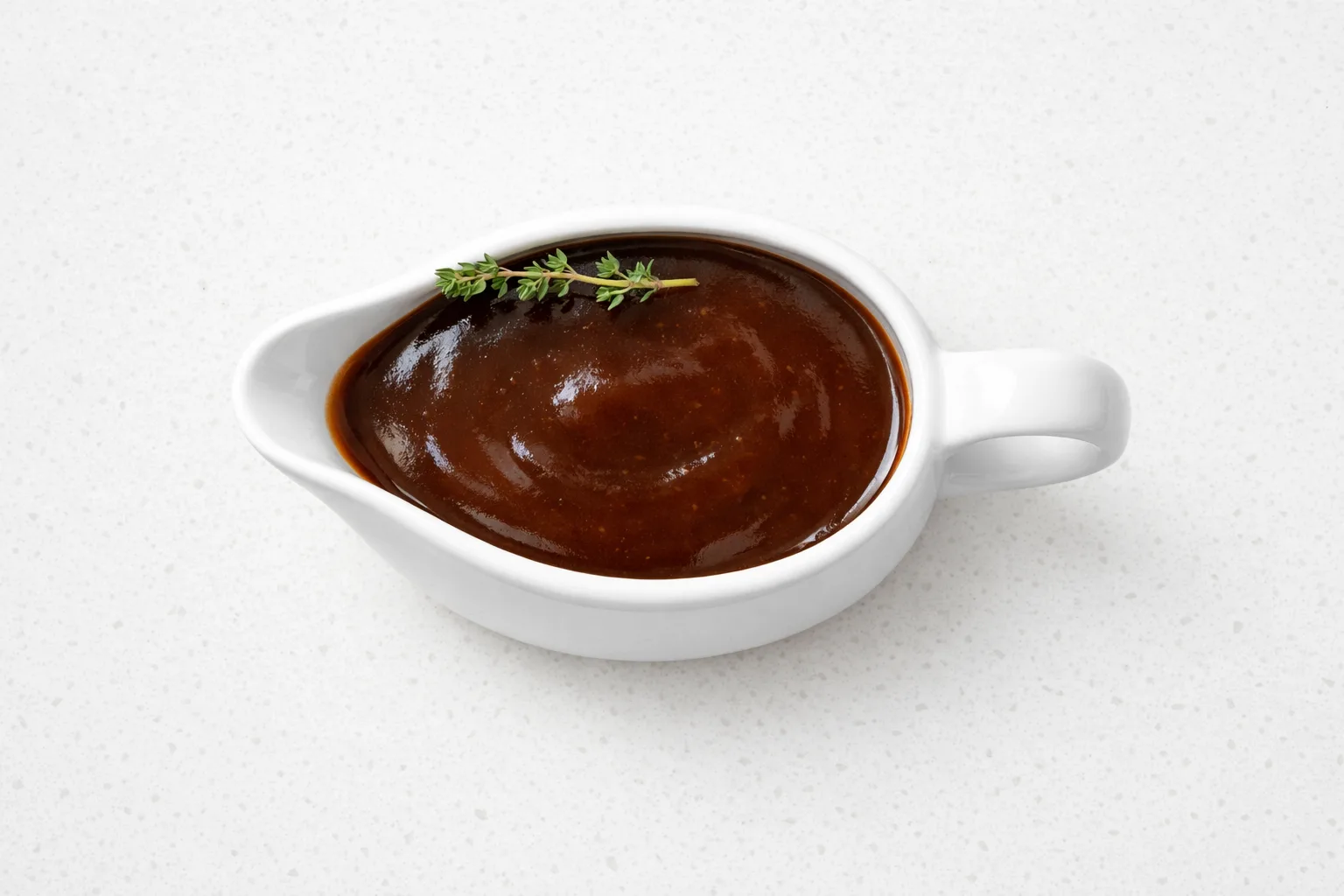
A proper Christmas gravy is the difference between a roast dinner that sings and one that just sits there. This recipe builds a rich Madeira gravy over a slow-roasted base of turkey giblets, onions, and celery, fortified with a generous pour of Madeira wine and a splash of port. It is the standard British approach for a reason: deep, glossy, and complex enough to pull together everything on the plate.
The Madeira is not negotiable. The fortified wine from the Portuguese island of the same name has been a fixture in British cooking since the 18th century, and its nutty, slightly oxidised flavour gives this gravy a backbone that plain stock cannot match. Dry or medium-dry Madeira works best here. Avoid anything labelled sweet or cream.
The entire base can be made the day before, which is the real point. On Christmas Day you are busy enough. Finish the gravy with the turkey pan drippings, a knob of butter, and five minutes on the hob, and it is done.
Equipment
Instructions
Tap each step to track your progress
- 1
Heat the oven to 400F (200C). Spread the turkey neck, giblets, onions, celery, carrots, and garlic in a large roasting tin. Drizzle with oil and roast for 40 to 45 minutes, turning once halfway, until everything is well browned with dark, slightly charred edges on the vegetables. The browning is what builds the flavour, so do not rush it.
- 2
Transfer the roasting tin to the stovetop over medium heat. Add the tomato paste and stir it into the vegetables and meat for 1 minute until it darkens slightly and smells caramelised.
- 3
Pour in the Madeira and port. It will sizzle and steam immediately. Scrape up every dark bit from the bottom of the tin with a wooden spoon. Those stuck-on bits are pure flavour.
- 4
Tip everything into a large saucepan. Add the stock, thyme, bay leaves, and peppercorns. Bring to a boil, then reduce to a steady simmer, uncovered. Simmer for 45 to 50 minutes until the liquid has reduced by about one-third and the flavour is concentrated and slightly syrupy.
- 5
Strain through a fine-mesh sieve into a clean saucepan, pressing firmly on the solids to extract every drop of liquid. Discard the solids. At this point you should have roughly 2 to 2.5 cups (500-600ml) of dark, glossy stock. Cool and refrigerate until needed, up to 3 days ahead.
- 6
On Christmas Day, once the turkey has rested and been carved, pour the turkey pan drippings into a jug. Spoon off most of the fat from the surface, keeping the dark meaty juices below.
- 7
Set the roasting tin (or a medium saucepan) over medium heat. Add 2 tbsp of the reserved fat from the drippings. Whisk in the flour and cook, stirring constantly, for 1 to 2 minutes until the roux turns a pale biscuit colour.
- 8
Gradually pour in the reserved gravy base, whisking continuously to prevent lumps. Add the defatted turkey drippings. Bring to a simmer and cook for 5 to 8 minutes until the gravy is glossy, coats the back of a spoon, and no floury taste remains.
- 9
Whisk in the butter off the heat for extra richness and sheen. Taste and adjust seasoning with salt and black pepper. Strain once more through a fine sieve into a warm gravy boat or jug and serve immediately.
Tips & Tricks
Brown hard, not fast
The roasting step in the oven is where the flavour is built. The vegetables and giblets need genuine browning with some dark, almost charred edges. Pale, steamed-looking vegetables produce a pale, flat gravy. Give everything 45 minutes and check at the halfway point.
Make the base up to three days early
The giblet stock base improves with an overnight rest in the fridge. The fat rises and solidifies so you can lift it off cleanly, and the flavours continue to develop. Do not skip the make-ahead advantage; it genuinely makes Christmas Day less stressful.
Keep drippings, not fat
Turkey drippings are the dark meaty juices that fall to the bottom of the roasting tin, not the pale fat that floats on top. Use a fat separator jug or spoon carefully: the drippings add flavour, the fat just makes the gravy greasy.
Warm the gravy boat
Cold ceramics drop the temperature of gravy within seconds. Rinse the gravy boat with boiling water and dry it quickly just before pouring in the gravy. It stays hotter at the table for noticeably longer.
Taste before seasoning
Turkey drippings vary enormously in saltiness depending on how the bird was brined or seasoned. Always taste the gravy before adding any salt after the drippings go in.
Troubleshooting
My gravy is too thin and watery
The gravy base was not reduced enough, or the turkey drippings were too lean. Return the gravy to the heat and simmer uncovered for another 5 to 10 minutes. Alternatively, mix 1 tablespoon of cornstarch with 2 tablespoons of cold water and whisk it in gradually until you reach the right consistency.
My gravy has lumps
The flour was added too quickly or the liquid was poured in too fast. Pass the gravy through a fine-mesh sieve and discard the lumps. For next time, keep whisking constantly while adding the liquid in a slow, steady stream, not all at once.
The gravy tastes bland
The vegetables and giblets were not browned enough in the oven, or the stock was too weak. Add a teaspoon of Marmite or a splash more Madeira and simmer for 5 more minutes. Good browning in Step 1 is the single biggest factor in a flavourful gravy.
My gravy is too salty
Over-reduction concentrates salt along with everything else. Next time, season only at the end. To fix an over-salted gravy, add a little more unsalted stock and a pinch of sugar to balance it.
The gravy tastes too boozy or sharp
The Madeira or port needs longer to cook down. Simmer the gravy uncovered for another 5 minutes to let the alcohol evaporate. The raw wine flavour should be completely gone in a properly reduced gravy.
Variations
Make-Ahead Stock Only (Finish Fresh)
Prepare the gravy base through Step 5 and freeze it in portions up to 1 month ahead. On Christmas Day, defrost overnight in the fridge, then proceed from Step 6. This gives you maximum flexibility and the freshest final result.
Port and Redcurrant Gravy
Increase the port to 1/2 cup (120ml) and stir in 2 tablespoons of redcurrant jelly with the butter at the end. The jelly adds a fruity tang that cuts through rich roast meat particularly well. Skip the Madeira or replace it with extra dry sherry.
Gluten-Free Christmas Gravy
Replace the plain flour in Step 7 with 2 tablespoons of cornstarch (cornflour) mixed to a slurry with 2 tablespoons of cold water. Whisk the slurry into the simmering gravy base rather than making a roux. The result is equally glossy but slightly lighter in body.
Vegetarian Christmas Gravy
Omit the giblets and turkey neck. Roast 2 portobello mushrooms alongside the vegetables in Step 1 for umami depth. Replace chicken stock with a good-quality vegetable stock. Add 1 tablespoon of soy sauce and 1 teaspoon of Marmite with the Madeira for colour and savouriness.
Serving & Gifting
Pour into a pre-warmed gravy boat and serve alongside the carved turkey, roast potatoes, and all the trimmings. Gravy cools quickly in a cold boat, so fill the boat with boiling water for a minute before adding the gravy. For a Christmas dinner party, keep a second batch warm in a small saucepan set over the lowest heat, stirring occasionally.
Storage & Freezing
The finished gravy keeps in the fridge for up to 4 days in an airtight container. It thickens considerably when cold; reheat gently in a saucepan over low heat, whisking in a splash of water or stock to loosen it. The unfinished gravy base (before adding drippings and flour) freezes well for up to 1 month in a sealed container. Freeze flat in zip-lock bags for faster defrosting.
Common Questions
Can I make Christmas gravy ahead of time?
Yes. The entire gravy base (Steps 1 through 5) can be made up to 3 days ahead and kept in the fridge, or frozen up to 1 month in advance. On Christmas Day, you finish it with the turkey drippings in about 10 minutes. This is exactly how most professional cooks approach it.
What Madeira wine should I use for gravy?
Use a dry or medium-dry Madeira such as Sercial or Verdelho. Avoid sweet Madeira labelled "Bual" or "Malmsey" as they will make the gravy cloying. A decent supermarket own-brand Madeira is perfectly fine for cooking.
Can I make this gravy without giblets?
You can, but you will lose significant depth. If no giblets are available, use a whole chicken leg or a couple of chicken wings in their place. A tablespoon of Marmite added to the base will also help replicate the savoury intensity that giblets provide.
How do I stop Christmas gravy going lumpy?
Add the liquid to the roux gradually and whisk constantly. Pouring in a full litre of liquid at once is what causes lumps. A slow pour in three or four stages while whisking vigorously prevents them entirely.
How long does homemade Christmas gravy keep?
The finished gravy keeps for 4 days in the fridge. The unfinished base (without drippings or flour) keeps for 3 days in the fridge or 1 month in the freezer. Reheat to a full boil before serving if it has been refrigerated for more than 24 hours.
Is this gravy suitable for a gluten-free Christmas dinner?
Not as written, because the roux uses plain flour. See the Gluten-Free variation above: swap the flour for a cornstarch slurry and the gravy is fully gluten-free with no compromise in texture or flavour.