
 Australia
  New Zealand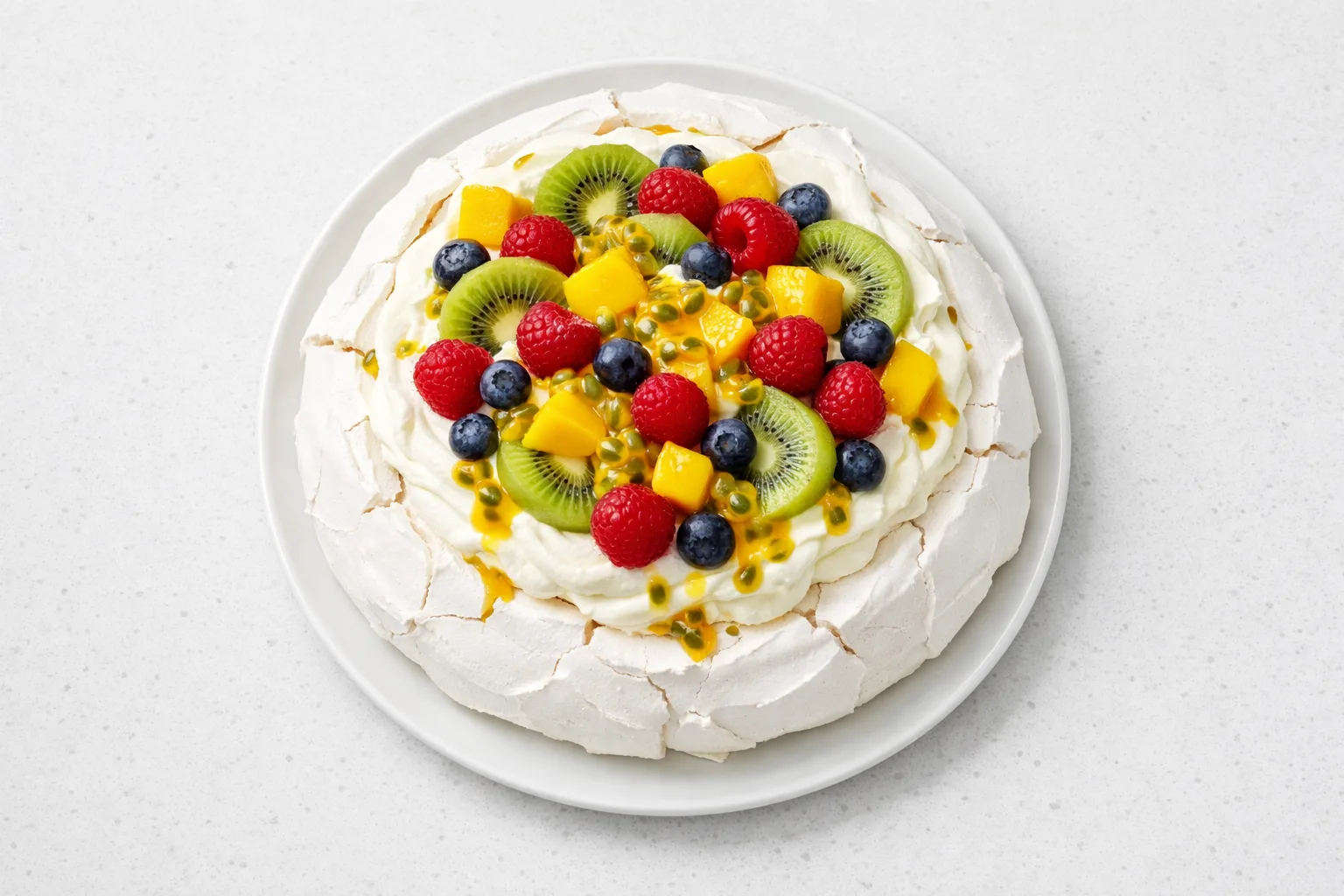
Christmas pavlova is the centrepiece of the Australian Christmas table. While the northern hemisphere bakes dense puddings and spiced cakes, Australians are eating lunch outdoors in 35-degree heat, and the pavlova suits the moment perfectly: a crisp meringue shell that shatters, a soft marshmallow interior, a blanket of cold whipped cream, and whatever fruit is at its peak in a southern hemisphere summer. Mangoes, passionfruit, kiwifruit, berries. The combination is unapologetically good.
The origin debate between Australia and New Zealand has been going since the 1920s, with both countries claiming they named the dessert after Russian ballerina Anna Pavlova during her 1926 tour. The argument will never be resolved. What is not disputed is that this version of pavlova, made correctly, has a fully cooked, dry, and audibly crisp shell with a centre that stays soft and slightly sticky. That texture contrast is the whole point. Achieving it requires low heat, a long bake, and patience letting it cool in the oven.
This recipe uses a vinegar and cornstarch method that stabilises the meringue and produces the marshmallow interior reliably. No mixer guesswork about stiffness; you will know the meringue is ready when it holds a firm peak and looks glossy. The tropical fruit topping doubles as the perfect Australian Christmas dessert for summer because the acidity of passionfruit and mango cuts through the sweetness of the meringue.
Equipment
Instructions
Tap each step to track your progress
- 1
Preheat the oven to 250F (120C). Line a large baking sheet with parchment paper. Using an 8-inch (20cm) round cake tin as a guide, trace a circle on the underside of the parchment.
- 2
Ensure your stand mixer bowl and whisk attachment are completely clean and grease-free. Any fat will prevent the egg whites from whipping. Wipe them down with a paper towel dampened with white vinegar.
- 3
Place the egg whites in the stand mixer bowl. Whip on medium speed until soft, foamy peaks form, about 2 minutes. The whites should look like shaving foam.
- 4
With the mixer running on medium-high, add the caster sugar one tablespoon at a time, waiting about 10 seconds between each addition. This takes roughly 8 minutes. Do not rush it. The sugar must fully dissolve into the whites.
- 5
Once all the sugar is incorporated, increase to high speed and beat until the meringue is very stiff and glossy, another 2-3 minutes. To test: rub a small amount between your fingers. If you feel any sugar granules, keep beating. The meringue should feel completely smooth.
- 6
Sprinkle the cornstarch and vinegar over the meringue, add the vanilla, and fold in gently with a large metal spoon using 3-4 deliberate folds. Do not overmix. A few streaks are fine.
- 7
Spoon the meringue onto the prepared circle. Spread it to the circle edge, then use a spatula to build the sides up slightly higher than the centre, creating a shallow well in the middle. This well holds the toppings.
- 8
Bake at 250F (120C) for 90 minutes. The pavlova should be dry and very pale cream coloured on the outside, not white and not browned. Turn off the oven, wedge the door ajar with a wooden spoon, and leave the pavlova inside to cool completely for at least 4 hours or overnight. Do not rush this step: rapid temperature changes crack the meringue.
- 9
Whip the chilled heavy cream with powdered sugar and vanilla on medium-high speed until it holds soft peaks. It should be thick enough to mound but not grainy or stiff.
- 10
Carefully peel the pavlova off the parchment and transfer to a serving plate. It will crack slightly on the sides; this is normal and correct. Spoon the whipped cream generously into the centre well and out towards the edges.
- 11
Arrange the mango and kiwifruit over the cream. Scatter the raspberries and blueberries, then spoon the passionfruit pulp over everything last. The seeds and juice run down the sides and this looks exactly right.
- 12
Serve immediately. Once topped, the pavlova softens within 1-2 hours. Top it at the table if you need to transport it.
Tips & Tricks
Room temperature egg whites are not optional
Cold egg whites from the fridge whip to lower volume and take much longer. Separate your eggs 30-60 minutes before you start and leave the whites in a clean bowl at room temperature. The difference in volume is significant.
Add the sugar slowly
This is the most common rush mistake. Adding the sugar too fast leaves undissolved granules that cause the pavlova to weep. One tablespoon every 10 seconds sounds slow. Do it anyway.
Shape the sides higher than the centre
The well you build in the centre matters. Without it, the cream and fruit slide off the sides. Use a spatula to pull the meringue up at the edges and create a defined lip before baking.
Cool in the oven overnight for certainty
4 hours minimum works, but overnight in the switched-off oven with the door ajar is foolproof. The meringue dries completely and there is no risk of cracking from the temperature change. Make it the night before and top it on the day.
Passionfruit goes on last
Passionfruit juice is acidic enough to slightly break down whipped cream if it sits on it for too long. Spoon it over right before serving, not during assembly.
Troubleshooting
My pavlova wept and became sticky overnight
Weeping happens when the sugar draws moisture from the air. Humidity is the main cause. Bake on a dry day if possible, and do not assemble the pavlova until you are close to serving. Storing a bare (untopped) baked meringue in a sealed airtight tin overnight keeps it dry.
The centre is completely hollow or collapses badly
The oven was too hot or the pavlova cooled too quickly. At 250F (120C), the centre stays marshmallowy because the heat is gentle. Cooling in the oven with the door ajar prevents the shock of cold air hitting the hot meringue. A small crack and slight dip in the centre is normal; a total collapse means the oven ran hot. Use an oven thermometer to verify your temperature.
My meringue won't whip to stiff peaks
Either there was grease in the bowl or the egg whites had yolk in them. Even a drop of yolk contains enough fat to prevent the whites from whipping properly. Start again with a clean bowl and fresh egg whites. Make sure the bowl and whisk are completely dry, as water also interferes.
The pavlova is browned on top
The oven ran too hot. True pavlova should be very pale cream at most. Reduce the temperature by 15F (10C) next time. A browned pavlova still tastes good but the crust can become brittle and crumbly rather than crisp.
The cream is sliding off the pavlova
The meringue centre is too warm or the cream was overwhipped. Cool the meringue to full room temperature before adding cream. Keep the whipped cream at soft-peak stage, not stiff; stiff cream looks lumpy and slides rather than anchors.
Variations
Pavlova with Berries Only
For a less tropical version closer to New Zealand style, skip the mango and passionfruit and use a combination of strawberries, raspberries, and blueberries. Hull and halve the strawberries. The berry version reads as more classic and pairs well with a small drizzle of lemon curd stirred through the cream.
Vegan Pavlova
Replace the egg whites with aquafaba: the liquid from one 400g can of chickpeas (about 3/4 cup). Whip aquafaba on high speed for 10-15 minutes until it forms firm glossy peaks. It takes longer than eggs but works. Use coconut cream instead of heavy cream for the topping, chilled overnight in the fridge and whipped only from the solid portion at the top of the can. Add `vegan:dietary` and `dairy-free:dietary` apply here.
Chocolate Pavlova
Sift 2 tbsp Dutch-process cocoa powder over the meringue before the vinegar fold, and add 100g of finely chopped dark chocolate (70%). The result is a richer, fudgier centre with a slightly darker shell. Top with whipped cream, cherries, and shaved chocolate for a Black Forest variation that works well at Christmas.
Mini Pavlovas
Divide the meringue into 10 individual rounds rather than one large pavlova. Reduce the bake time to 50-60 minutes, then cool in the oven the same way. Mini pavlovas are easier to transport and serve, and each guest gets their own crisp base.
Serving & Gifting
Carry the untopped pavlova to the table and add the cream and fruit in front of guests; it takes two minutes and the theatre is worth it. Serve with an extra drizzle of passionfruit pulp on the side for those who want more. The pavlova pairs beautifully with a glass of chilled sparkling wine, an Australian sparkling white, or a cold elderflower cordial for non-drinkers. Portion it at the table by cutting down through the meringue with a large knife; the shell shatters cleanly and each slice gets a share of crisp edge and soft centre.
Storage & Freezing
A bare baked pavlova (no toppings) keeps in an airtight container at room temperature for up to 2 days. In humid climates, eat it the day it is baked. Once topped with cream and fruit, eat within 2-3 hours; after that the meringue softens through. Pavlova does not freeze. Do not refrigerate an untopped pavlova; the moisture in the fridge will turn the crust soft within hours.
Common Questions
Can I make pavlova the day before Christmas?
Yes, and you should. Bake the meringue the day before, cool it in the oven overnight, then store the bare shell in an airtight container at room temperature. Add the cream and fruit on Christmas Day, no more than 2 hours before serving. This is the standard approach for Australian Christmas.
Why does my pavlova need vinegar and cornstarch?
The white wine vinegar reacts with the egg white proteins and helps stabilise the meringue structure, contributing to the soft marshmallow interior. The cornstarch does the same thing and absorbs a small amount of moisture inside the meringue during baking. Both are essential for the classic pavlova texture; meringue made without them bakes to a dry, brittle shell all the way through.
Can I use regular granulated sugar instead of caster sugar?
You can, but caster sugar (superfine sugar) dissolves faster into the egg whites, which reduces the risk of weeping and gives a smoother meringue. If you only have granulated sugar, pulse it in a food processor for 30 seconds to make it finer before using.
Is pavlova gluten-free?
Yes, this pavlova recipe is naturally gluten-free. Cornstarch (cornflour) is gluten-free. Always check your specific brand if you are cooking for someone with coeliac disease.
What fruit works best on a Christmas pavlova?
In Australia, the classic combination is passionfruit, mango, and strawberries or raspberries, because all three are in season in December. Kiwifruit and blueberries also work well. Avoid very watery fruits like watermelon, which makes the cream slide off. Use whatever is ripest.
How do I transport a pavlova to a Christmas party?
Transport the meringue and the cream and fruit separately. Place the bare meringue shell on a board in a large box, cushioned so it cannot slide. Carry the whipped cream in a chilled container. Assemble at the destination. A fully topped pavlova cannot survive a car trip without the cream shifting.