
 United Kingdom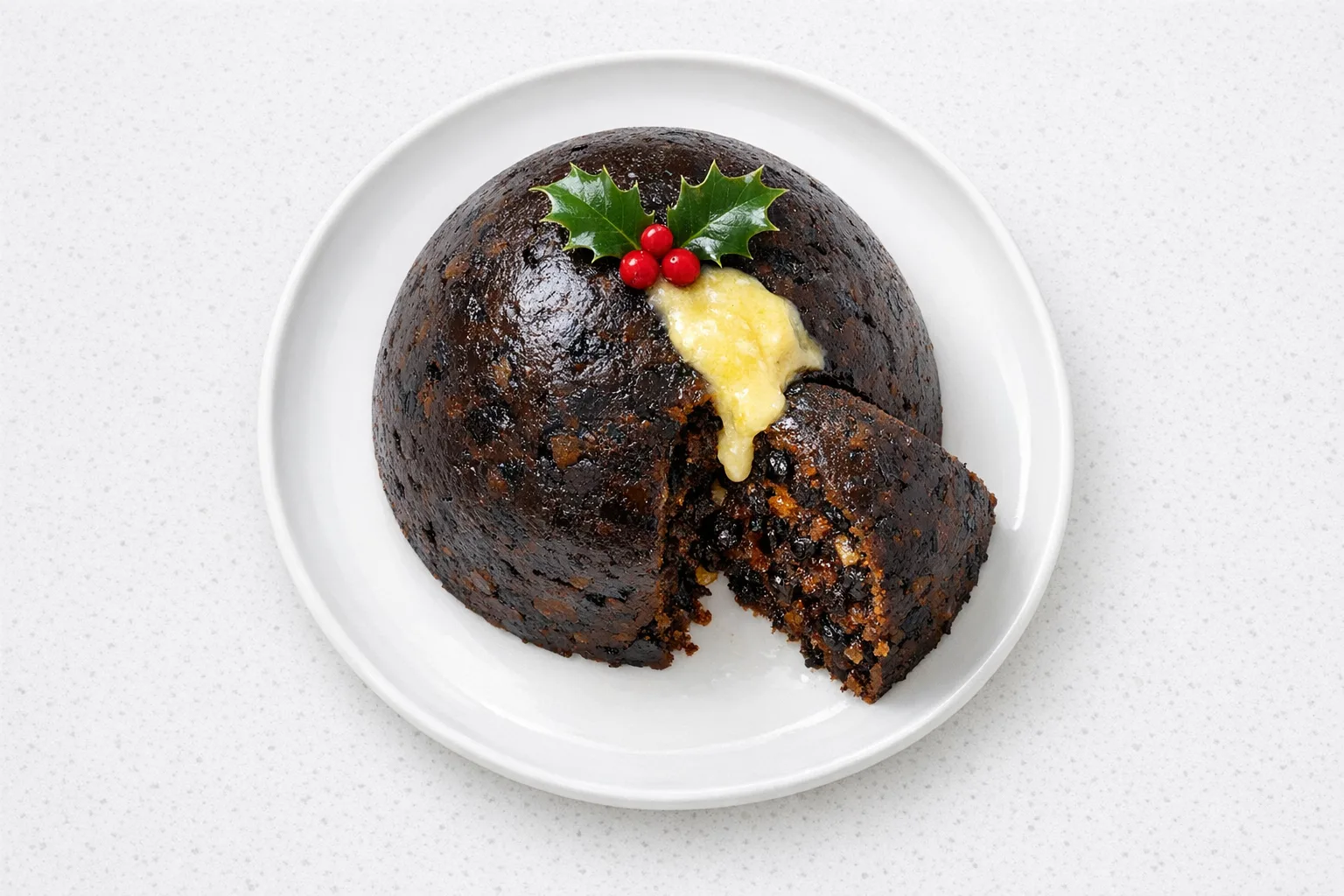
Christmas pudding is the centrepiece of the British Christmas table, a dense, dark, fruit-laden steamed pudding that has been served on 25 December for centuries. Its roots reach back to medieval England, where a porridge-like dish called frumenty evolved through Tudor and Georgian kitchens into the cannonball-shaped pudding the Victorians made famous. By the time Dickens described it in A Christmas Carol (1843), the recipe was largely what we know today: dried fruits, suet, breadcrumbs, eggs, spices, and a generous dose of brandy.
This traditional Christmas pudding recipe uses the classic method of overnight soaking, a long first steam, then weeks of maturation before a shorter re-steam on Christmas Day. The resting period is not optional decoration; the flavours genuinely transform as the alcohol, fruit acids, and spices meld. The result is a pudding that tastes complex and rounded rather than merely sweet.
What sets this version apart is the balance. Many recipes lean too hard on sugar or skimp on spice. Here, the treacle provides depth without cloying sweetness, the mixed peel adds bitter citrus notes, and a generous grating of nutmeg lifts everything. The brandy butter served alongside is not a garnish; it is the pudding's other half.
Equipment
Instructions
Tap each step to track your progress
- 1
Combine all the dried fruit (raisins, sultanas, currants, mixed peel, and glacé cherries) in a large mixing bowl. Add the orange and lemon zest and juice, then pour over the brandy. Stir well, cover tightly with cling film, and leave to soak at room temperature for at least 8 hours or overnight. The fruit will absorb the liquid and plump visibly.
- 2
Add the suet, muscovado sugar, and black treacle to the soaked fruit. Stir until the treacle is evenly distributed; it will be thick and sticky, so use a sturdy wooden spoon. Beat the eggs lightly in a separate bowl, then stir them into the fruit mixture.
- 3
In another bowl, combine the breadcrumbs, flour, mixed spice, cinnamon, cloves, nutmeg, and salt. Tip the dry mixture into the fruit bowl and fold everything together until no dry pockets remain. Fold in the grated apple and the blanched almonds last. The batter should be heavy, wet, and dark brown. If you are making this on Stir Up Sunday (the last Sunday before Advent), tradition says every family member takes a turn stirring and makes a wish.
- 4
Grease a 1.2-litre (5-cup) pudding basin generously with butter. Cut a small circle of baking parchment and press it into the bottom. Spoon the pudding mixture into the basin, pressing down firmly with the back of the spoon to eliminate air pockets. The basin should be filled to about 2 cm (3/4 inch) below the rim to allow for slight expansion.
- 5
Cut a large sheet of baking parchment and a matching sheet of aluminium foil. Lay the parchment on top of the foil and make a pleat across the centre (this allows the pudding to expand as it steams). Place the pleated sheets, parchment side down, over the top of the basin and secure tightly with kitchen string, tying it under the rim. Create a string handle across the top so you can lift the basin out of the pot safely.
- 6
Place an upturned saucer or a small trivet in the bottom of a large, deep saucepan. Set the pudding basin on top. Pour boiling water into the pan until it reaches halfway up the side of the basin. Cover the pan with a tight-fitting lid, bring to a gentle simmer, and steam for 5 to 6 hours. Check the water level every 45 minutes and top up with more boiling water from a kettle as needed. The water must never boil dry. The pudding is done when it has turned very dark, almost black, and feels firm to the touch through the parchment.
- 7
Carefully lift the basin out of the pan using the string handle. Let it cool completely in the basin, still covered. Once cool, remove the foil and parchment lid. Turn the pudding out just to check it releases cleanly, then place it back in the basin. Cover the top with fresh parchment, then wrap the entire basin tightly in a double layer of cling film.
- 8
Feed the pudding: once a week for the next 3 to 6 weeks, unwrap the top, poke 5 or 6 holes with a skewer, and spoon 1 to 2 tablespoons of brandy over the surface. Re-wrap each time. Store in a cool, dark cupboard. The pudding will darken further and develop a more complex flavour.
- 9
On Christmas Day, re-cover the basin with fresh pleated parchment and foil as before. Steam for 2 hours using the same method (saucer in pan, boiling water halfway up). This re-steam heats the pudding through and refreshes the texture.
- 10
While the pudding re-steams, make the brandy butter: beat the softened butter with an electric mixer until pale and creamy, about 2 minutes. Add the sifted powdered sugar gradually, beating after each addition. Pour in the brandy and add the nutmeg. Beat until light and fluffy, about 3 minutes total. Transfer to a serving dish and refrigerate until needed; it should be cold when served against the hot pudding.
- 11
To serve, remove the basin from the steamer and let it stand for 5 minutes. Remove the foil and parchment lid. Place a serving plate upside down on top of the basin, invert confidently, and lift the basin away. The pudding should release cleanly. If you want to flame it, warm 3 tablespoons of brandy in a small pan until just hot (do not boil), pour it over the top of the pudding, and ignite with a long match. Carry it to the table while still flaming. Serve in thick wedges with a generous spoonful of brandy butter.
Tips & Tricks
Start early, ideally on Stir Up Sunday
The traditional date for making Christmas pudding is the last Sunday before Advent, typically late November. This gives the pudding 4 to 5 weeks to mature, which makes a real difference to the depth of flavour. A pudding steamed on 23 December will taste one-dimensional compared to one that has been fed weekly for a month.
Use proper suet, not butter
Shredded beef suet gives the pudding its characteristic dense, moist texture. Butter is a passable substitute but melts differently during steaming and produces a slightly greasier result. Vegetable suet works well for a lighter option. Do not use lard; it adds an off flavour.
Do not skip the breadcrumb-to-flour ratio
The pudding relies on a high proportion of breadcrumbs to flour for its soft, yielding texture. If you flip the ratio (more flour, fewer crumbs), you will end up with something closer to a dense cake than a traditional pudding. Use fresh breadcrumbs, not dried, and make them from a day-old white loaf.
Control the steam, not the boil
The water in the pan should maintain a gentle, steady simmer, not a rolling boil. Violent boiling causes the water to splash over the pudding cover and can make the outside layer waterlogged. It also evaporates the water faster, increasing the risk of the pan boiling dry. Set the heat to low once simmering and check regularly.
Feed consistently but do not drown it
Weekly brandy feeds keep the pudding moist and add complexity, but over-feeding makes it boozy and soggy. One to two tablespoons per week is the target. Poke the holes with a skewer first so the brandy penetrates below the surface rather than pooling on top.
Troubleshooting
My pudding is dry and crumbly
The most likely cause is too little liquid or too much flour relative to fruit and suet. Make sure the dried fruit soaks for the full 8 hours so it plumps and releases moisture. Weigh your flour rather than scooping from the bag, which compacts it. If the batter looks dry before steaming, stir in another tablespoon of brandy or orange juice.
The pudding stuck to the basin
This happens when the basin was not greased thoroughly enough. Butter every surface generously, including the sides right up to the rim. The parchment circle at the bottom is essential. If the pudding does stick, place a hot wet cloth over the inverted basin for 2 minutes; the steam will loosen it.
My pudding tastes boozy and raw
The brandy flavour will mellow significantly during maturation and the Christmas Day re-steam. If you find it too strong, reduce the weekly feeding to just 1 tablespoon and skip the final flaming step. The alcohol cooks off during steaming, so the raw edge disappears; you are tasting the brandy you added in the last feed, which has not had time to meld.
The top is soggy or waterlogged
Water got into the basin during steaming. The parchment and foil lid must be secured tightly and the pleat should face upwards, not into the pudding. Make sure the string is tied snugly under the basin rim. The water in the pan should simmer gently, not boil violently, which can splash over the cover.
The pudding has mould on the surface after storage
If white or blue-green mould appears during the maturation weeks, the storage environment was too warm or humid. Scrape off the affected area with a knife, soak the surface with an extra tablespoon of brandy (the alcohol kills mould), re-wrap tightly, and move to a cooler spot. The interior of the pudding will be fine.
Variations
Chocolate and Cherry Christmas Pudding
Replace 2 tablespoons of the flour with Dutch-process cocoa powder and swap the sultanas for dried sour cherries. Add 1/2 cup dark chocolate chips folded in at the end. The cocoa deepens the colour and adds a faintly bitter edge that cuts through the sweetness. Serve with plain whipped cream instead of brandy butter.
Vegan Christmas Pudding
Use vegetable suet (Atora makes a widely available version) and replace the 3 eggs with 3 tablespoons of ground flaxseed mixed with 9 tablespoons of water, left to gel for 10 minutes. The pudding will be slightly denser but still moist and rich. The brandy butter can be made vegan by using a firm plant-based butter block and ensuring the powdered sugar is bone-char free.
Lighter, Quick-Steam Version
For a less dense pudding with a shorter steam time, reduce the dried fruit by a third, replace the breadcrumbs with the same weight of self-raising flour, and omit the suet entirely, using 1/2 cup melted butter instead. Steam for 3 hours instead of 5 to 6. The result is lighter and spongier, closer to a steamed sponge pudding than a traditional dense Christmas pudding. It will not keep as long; eat within 2 weeks.
Gluten-Free Christmas Pudding
Replace the self-raising flour with a gluten-free self-raising flour blend and use gluten-free breadcrumbs made from gluten-free white bread. The rest of the recipe stays the same. The texture is very close to the original since the pudding relies more on fruit and suet than flour for structure.
Serving & Gifting
Serve the pudding hot in thick wedges, each with a generous spoonful of cold brandy butter that melts slowly over the warm pudding. Pouring cream, custard (proper egg custard, not the powdered kind), or clotted cream are equally traditional accompaniments. For the full spectacle, flame the pudding at the table: warm the brandy first, pour it over, and light it in a darkened room. A sprig of holly on top is traditional but purely decorative; remove it before cutting.
Storage & Freezing
An un-cut, well-fed Christmas pudding keeps for up to 12 months in a cool, dark cupboard, still wrapped in its basin. Once cut, wrap leftovers tightly in cling film and refrigerate for up to 2 weeks. You can freeze slices individually, wrapped in cling film and then foil, for up to 6 months. Reheat frozen slices by steaming for 20 minutes or microwaving on medium power for 2 to 3 minutes. The brandy butter keeps in the fridge for 2 weeks or freezes well for up to 3 months.
Common Questions
What is Christmas pudding made of?
Christmas pudding is a steamed dessert made from dried fruits (raisins, sultanas, currants, mixed peel), shredded suet, breadcrumbs, flour, eggs, dark sugar, treacle, warm spices, and brandy. It is steamed for several hours, then aged for weeks before being re-steamed and served hot on Christmas Day.
How far in advance should I make Christmas pudding?
The ideal time is 4 to 6 weeks before Christmas, traditionally on Stir Up Sunday (the last Sunday before Advent). The pudding needs this resting period to develop its full flavour through weekly brandy feeds. You can make it up to 12 months in advance; longer maturation only improves it.
Can I make Christmas pudding without suet?
Yes. Replace the suet with the same weight of cold grated butter or solid coconut oil. The texture will be slightly different, denser with butter and a touch lighter with coconut oil, but the flavour remains rich. Vegetable suet (such as Atora brand) is another direct swap that works very well.
How long do you steam a Christmas pudding?
The first steam takes 5 to 6 hours at a gentle simmer. On Christmas Day, re-steam for 2 hours to heat it through. The long initial steam is what transforms the raw batter into the dark, rich pudding. Shortening the first steam significantly produces a paler, less developed result.
Is Christmas pudding the same as figgy pudding?
They are closely related. "Figgy pudding," as mentioned in the carol "We Wish You a Merry Christmas," refers to an older version that used figs as the primary dried fruit. Modern Christmas pudding typically uses raisins, sultanas, and currants instead, but the method and concept are the same. You can add chopped dried figs to this recipe if you want a more historically accurate version.
Can I make Christmas pudding without alcohol?
Yes. Replace the brandy with fresh orange juice for soaking the fruit and for the weekly feeds. The pudding will still taste rich and spiced, though it will not keep as long because the alcohol acts as a preservative. Without brandy, plan to eat the pudding within 4 weeks of making it, and store it in the fridge rather than the cupboard.