
 United Kingdom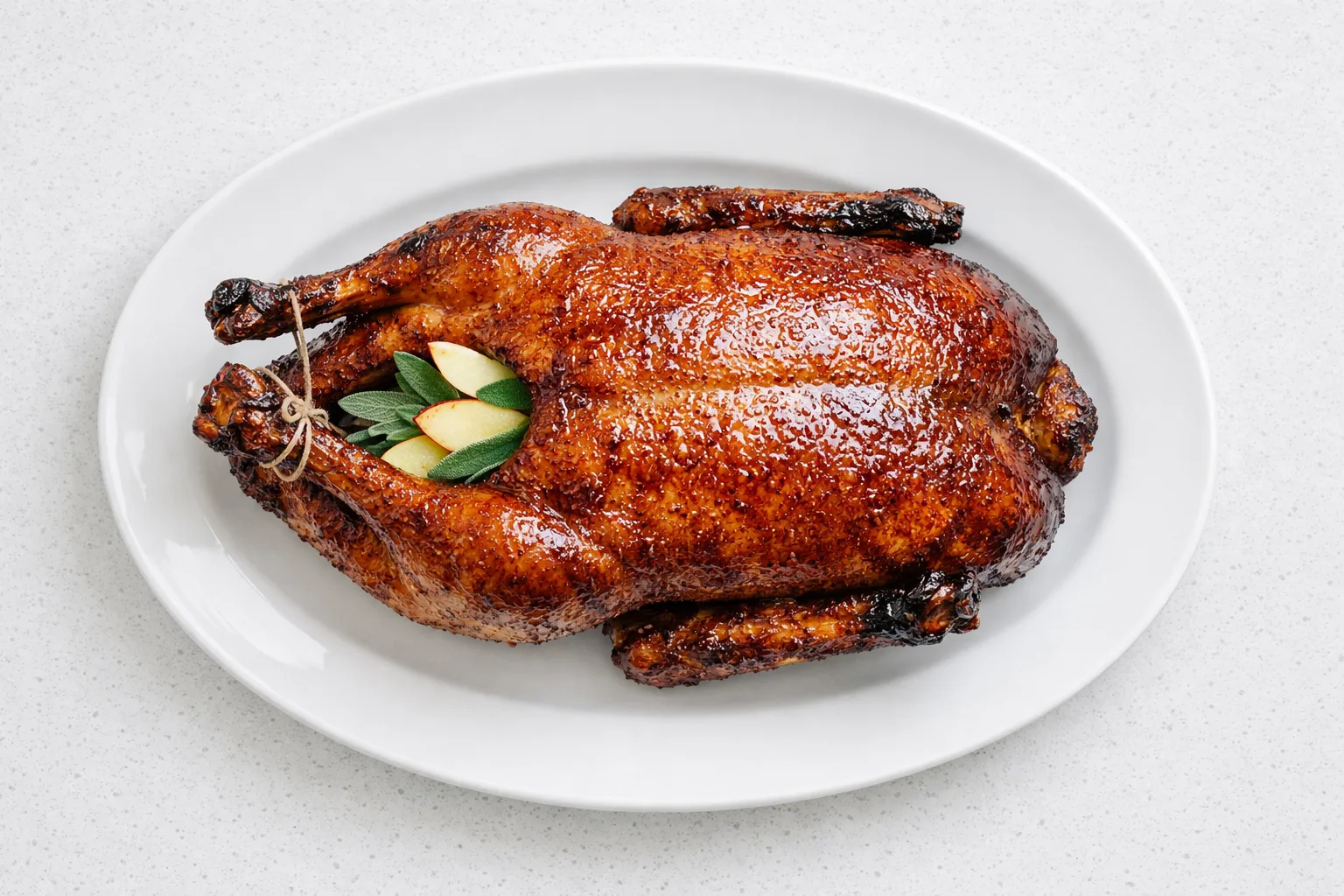
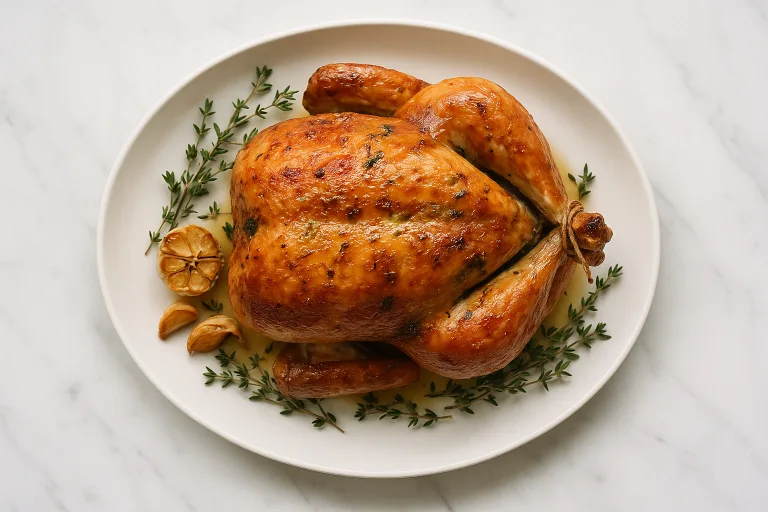
The Christmas roast goose was the centerpiece of the British holiday table long before turkey took over. Charles Dickens sealed its place in the cultural imagination when the Cratchit family sat down to their goose in A Christmas Carol, and for good reason: a well-roasted goose has a depth of flavor that turkey simply cannot match. The meat is dark, rich, and intensely savory, closer to duck than to any other poultry. The real prize, though, is the fat. A single goose yields about two cups of rendered fat, liquid gold for roasting potatoes for weeks to come.
The challenge with goose is all about rendering. A thick layer of subcutaneous fat sits between the skin and the meat, and if you do not coax it out slowly, you end up with flabby, greasy skin instead of the shatteringly crisp shell you want. This recipe handles that with a two-stage roast: low and slow first to render the fat, then high heat at the end to crisp the skin to a deep mahogany. The apple and sage stuffing cooks inside the bird, absorbing the juices without turning heavy.
This is not a quick weeknight recipe. Plan for about four hours of cooking and expect to drain the fat from the roasting tin at least twice. The payoff is a bird that genuinely justifies the effort, with skin that crackles when you cut it and meat that tastes like Christmas should.
Equipment
Instructions
Tap each step to track your progress
- 1
Remove the goose from the refrigerator 1 hour before cooking to bring it to room temperature. Pat the entire bird thoroughly dry with paper towels, paying close attention to the cavity. Use a sharp skewer or the tip of a small knife to prick the skin all over the breast, thighs, and the fatty deposits around the legs, piercing only the fat layer and not the meat beneath. You should make about 30 to 40 small holes. This is the single most important step for rendering the fat and achieving crisp skin.
- 2
Preheat the oven to 325 degrees F (160 degrees C). Mix the salt, pepper, and allspice together, then rub the mixture all over the goose, including inside the cavity. Place the goose breast-side down on a wire rack set inside a large, deep roasting tin.
- 3
Make the stuffing while the oven heats. Combine the chopped apples, onion, sage, thyme, breadcrumbs, lemon zest, egg, salt, pepper, and nutmeg in a large bowl. Toss until evenly mixed. The mixture should be moist but not wet. Pack the stuffing loosely into the goose cavity, filling it about three-quarters full. Tie the legs together with kitchen twine and tuck the wing tips under the body.
- 4
Roast the goose breast-side down at 325 degrees F for 1 hour. After 1 hour, carefully remove the roasting tin from the oven. Using tongs and a large fork or clean towels, flip the goose breast-side up. Drain the accumulated fat from the tin into a heatproof bowl. This first drain will yield the most fat. Return the goose to the oven and roast for another 1 hour.
- 5
After the second hour, drain the fat from the tin again. You should have collected roughly 2 cups total by now. Continue roasting breast-side up for 30 more minutes at 325 degrees F, then increase the oven temperature to 425 degrees F (220 degrees C). Roast at the higher temperature for a final 20 to 30 minutes until the skin is deep golden-brown and audibly crackling. The internal temperature at the thickest part of the thigh (not touching bone) should read 170 to 175 degrees F (77 to 80 degrees C).
- 6
While the goose roasts, make the giblet stock for the gravy. Place the reserved giblets, carrot, celery, and halved onion in a medium saucepan. Add 4 cups of cold water and bring to a gentle simmer over medium heat. Skim any foam that rises, then reduce heat to low and simmer for at least 1 1/2 hours. Strain through a fine-mesh sieve. You should have about 2 1/2 cups of stock.
- 7
When the goose is done, transfer it to a carving board and tent loosely with foil. Rest for at least 25 to 30 minutes. The bird will continue cooking as it rests, and the juices will redistribute through the meat. Do not skip this step.
- 8
Make the gravy while the goose rests. Pour off all but 2 tablespoons of fat from the roasting tin, keeping any dark caramelized bits stuck to the bottom. Place the tin over medium heat on the stovetop (across two burners if needed). Sprinkle in the flour and stir constantly with a wooden spoon for 1 to 2 minutes until the flour turns golden and smells toasty. Pour in the wine or cider and scrape up all the fond from the bottom. Let it bubble for 30 seconds, then gradually pour in the strained giblet stock, whisking to prevent lumps. Simmer for 5 to 8 minutes until the gravy thickens enough to coat the back of the spoon. Season with salt and pepper, then strain into a warm gravy boat.
- 9
Carve the goose by removing the legs and thighs first, then slicing the breast meat off the bone in long, even slices. Scoop the stuffing out of the cavity into a serving bowl. Serve immediately with the gravy alongside.
Tips & Tricks
Prick the skin obsessively
This is not optional. The fat layer on a goose is thick, and without dozens of small holes, the rendering will be uneven. Use a skewer or the tip of a sharp knife and prick at a shallow angle so you pierce the fat but not the meat underneath. If you hit meat, you will see a slightly pink tinge; pull back and go shallower.
Save every drop of goose fat
Strain the rendered fat through a fine-mesh sieve into a clean glass jar while it is still warm. Refrigerated, it keeps for months. This is the single best fat for roasting potatoes, far superior to olive oil or butter. Two tablespoons per pound of potatoes, roasted at 425 degrees F, will produce the crispiest potatoes you have ever made.
Rest the bird properly
A 25 to 30 minute rest is the minimum. The internal temperature will rise another 5 to 10 degrees during resting (carry-over cooking), and the juices that were driven toward the center during roasting will redistribute evenly through the meat. Cover loosely with foil, not tightly, or the steam will soften the crisp skin.
Start breast-side down
Roasting the goose breast-side down for the first hour allows the fat from the back to baste the breast as it renders. Since breast meat is leaner than thigh meat, this head start keeps it moist through the long cooking time. Flip carefully using sturdy tongs and a clean tea towel or large fork.
Order your goose early
Free-range geese are not as widely available as turkeys. In the UK, order from your butcher by early December at the latest. A 10 to 12 pound goose feeds 6 comfortably. Budget roughly 1 1/2 pounds of uncooked weight per person to account for the heavy bone structure and fat that renders away.
Troubleshooting
The skin is flabby and greasy
The fat did not render sufficiently. The most common cause is not pricking the skin enough before roasting. You need dozens of small holes across all the fatty areas, especially the breast and the thick pads near the legs. The holes must pierce through the fat layer but not into the meat. Another cause is skipping the fat draining step mid-roast, which leaves the goose sitting in its own fat rather than crisping up.
The breast meat is dry
Goose breast is lean once the fat renders out, and it dries out faster than the legs. If you find the breast overcooking, tent it with foil during the final high-heat stage while leaving the legs exposed. Flipping the goose breast-side down for the first hour (as this recipe does) also helps, since the breast bastes in the pooling juices.
The stuffing is soggy
You likely packed it too tightly. Stuffing needs air space to cook through. Fill the cavity only three-quarters full and keep the mixture loose. If the stuffing is still too wet after carving, spread it on a baking sheet and flash it under the broiler for 3 to 4 minutes to crisp the top.
The goose is not cooked through at the thigh joint
Goose legs need a higher internal temperature than chicken to become tender, around 170 to 175 degrees F. If the breast is done but the thighs are not, remove the breast portions first (cover and keep warm) and return the legs to the oven for an additional 15 to 20 minutes.
The gravy tastes greasy
You left too much fat in the roasting tin before adding the flour. Pour off nearly all of it, keeping only about 2 tablespoons. The fond (the dark caramelized bits) is where the flavor lives, not the liquid fat. If the gravy already tastes greasy, skim the surface with a spoon or drag a paper towel across the top to absorb the fat.
Variations
Goose with Prune and Chestnut Stuffing
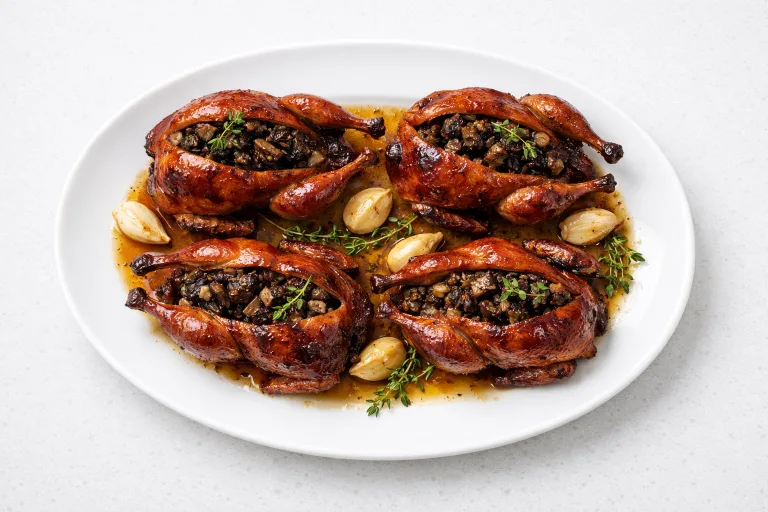
Replace the apples and breadcrumbs with 1 cup pitted prunes (roughly chopped), 1 cup cooked and peeled chestnuts (broken into halves), and 2 cups coarse fresh breadcrumbs. Add 2 tablespoons brandy to the mixture. Keep the sage and thyme. This is a richer, more Continental stuffing that suits the goose's deep flavor profile. Common across Germany and Scandinavia during the Christmas season.
Goose with Potato Stuffing
A traditional northern English and Irish variation. Stuff the cavity with 2 pounds of peeled, parboiled, and roughly mashed potatoes mixed with 1 large diced onion sauteed in goose fat, 2 tablespoons fresh sage, salt, and pepper. The potatoes absorb the goose juices and come out incredibly savory. Skip the egg and breadcrumbs entirely.
Slow-Roasted Goose (Lower Temperature Method)
If you prefer an even more gradual rendering, roast the goose at 275 degrees F (135 degrees C) for the first 2 1/2 hours before increasing to 425 degrees F for the final 30 minutes. This extends total cooking time by about 30 minutes but produces an even thicker, crispier skin. Best if your goose is particularly fatty.
Serving & Gifting
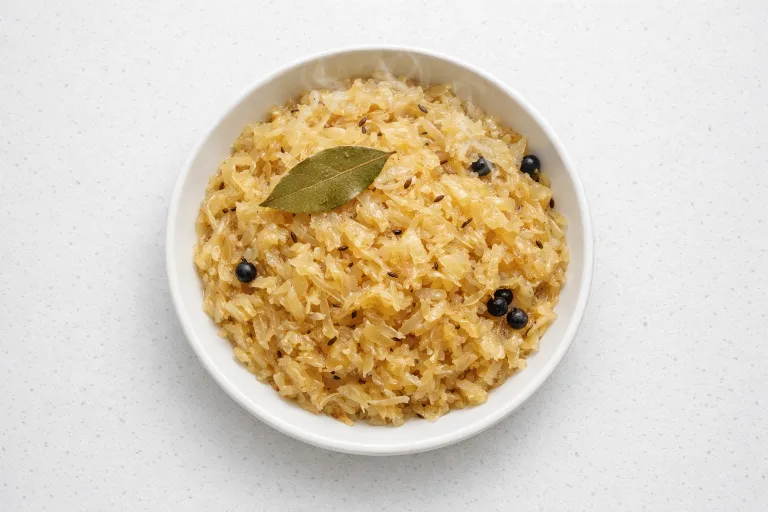
Bring the goose to the table whole on a warmed platter if you want the full dramatic effect, then carve tableside. Serve with the apple and sage stuffing spooned alongside, the giblet gravy in a boat, and traditional British accompaniments: roast potatoes (cooked in the rendered goose fat, naturally), braised red cabbage, steamed Brussels sprouts, and bread sauce. A glass of Burgundy or a full-bodied Rhone red stands up well to the richness of the meat.
Storage & Freezing
Leftover goose meat keeps well in an airtight container in the refrigerator for up to 4 days. The rendered goose fat should be strained through a fine-mesh sieve into a clean jar and refrigerated, where it will solidify and keep for up to 6 months (or freeze for up to a year). Leftover stuffing should be stored separately from the meat and eaten within 3 days. Goose does not freeze as gracefully as turkey due to its higher fat content in the dark meat; if you do freeze it, use within 2 months and reheat gently in a covered dish with a splash of stock.
Common Questions
How long does it take to roast a goose?
A 10 to 12 pound goose takes roughly 3 to 3 1/2 hours total. The first 2 to 2 1/2 hours are at 325 degrees F for slow fat rendering, followed by 20 to 30 minutes at 425 degrees F for crisping the skin. Always use an instant-read thermometer and target 170 to 175 degrees F at the thickest part of the thigh.
Can I roast a goose the same way as a turkey?
Not quite. Goose has far more subcutaneous fat than turkey, so it requires a longer, slower initial roast to render that fat out. If you roast a goose at typical turkey temperatures (325 to 350 degrees F the whole time), you will get flabby, greasy skin. The two-stage method in this recipe, low heat to render followed by high heat to crisp, is essential.
What size goose do I need for Christmas dinner?
Plan for about 1 1/2 pounds of raw goose per person. A 10 to 12 pound goose serves 6 adults comfortably. Goose has a larger bone structure and more fat than turkey relative to its weight, so it yields less meat per pound. For 8 or more guests, consider cooking two smaller geese rather than one very large bird.
What do I do with all the goose fat?
Strain it through a fine-mesh sieve into a glass jar and refrigerate it. Goose fat is one of the finest cooking fats, prized for roasting potatoes (the classic British use), frying eggs, sauteing vegetables, and making confit. It keeps in the refrigerator for up to 6 months or in the freezer for a year. A single goose yields about 2 cups, which is a genuine bonus of making this recipe.
Can I make the stuffing ahead of time?
You can prepare the stuffing components up to a day in advance. Chop the apples, dice the onion, and mix the dry ingredients, but keep the wet and dry components separate in the refrigerator. Combine and add the beaten egg just before stuffing the goose. Do not stuff the bird in advance; the raw cavity creates a food safety risk if left sitting with stuffing inside.
Is roast goose worth the effort compared to turkey?
If you value flavor over convenience, yes. Goose has a richer, more complex taste than turkey, with dark meat that stays moist and a depth of savory flavor that pairs brilliantly with fruit-based stuffings and robust gravies. The rendered fat alone is worth the effort. The tradeoff is that goose requires more active attention during roasting (pricking, draining, flipping) and yields less meat per pound.