
 United Kingdom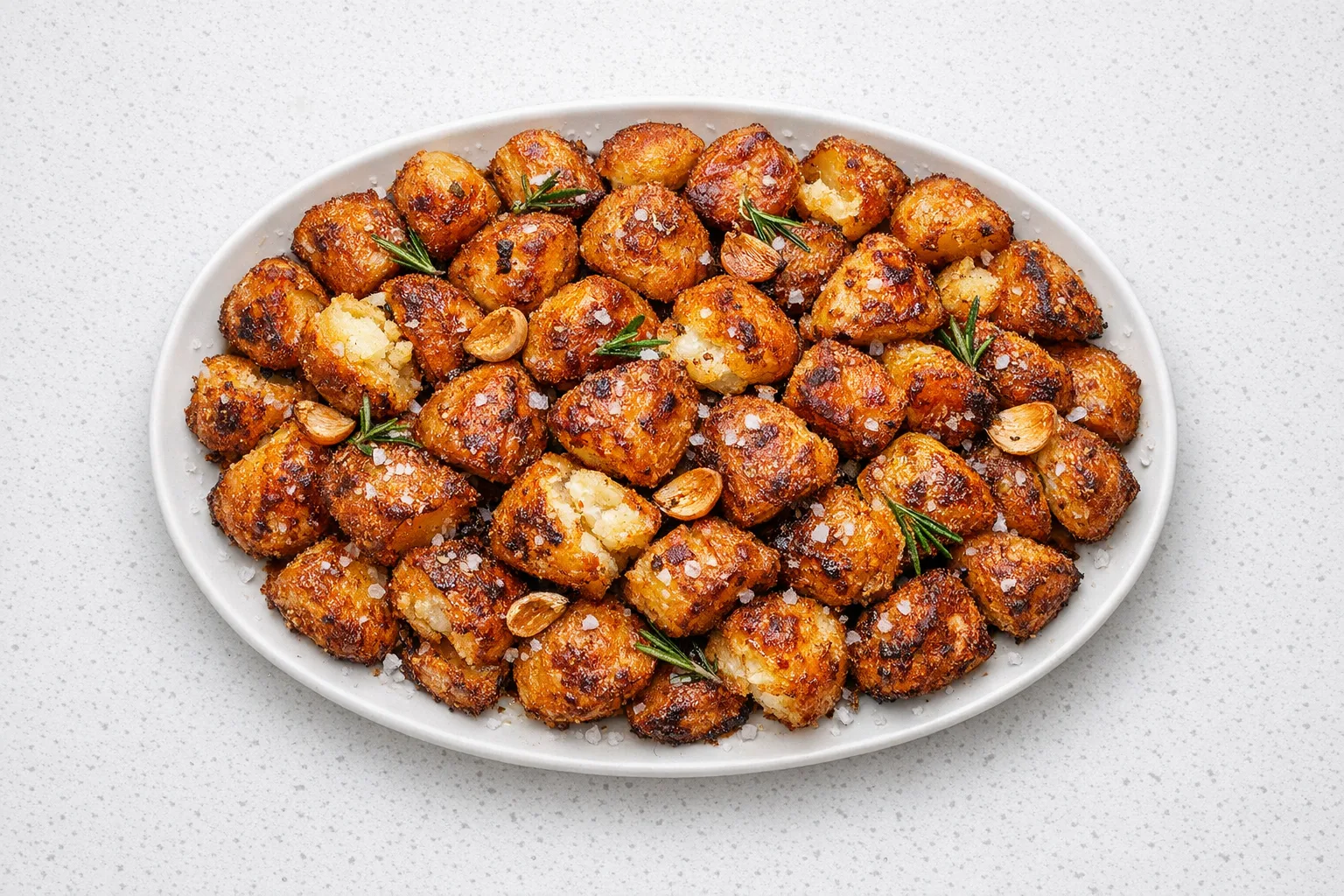
Christmas roast potatoes are the quiet backbone of every British Christmas dinner. The turkey gets the attention, the pudding gets the ceremony, but ask anyone what they look forward to most on the plate and the answer is almost always the potatoes. Getting them right means a shattering golden crust that splinters when you bite through it, giving way to a cloud of fluffy, steaming potato inside.
This recipe follows the classic British triple-cook method: boil until the edges fray, rough them up so the surface catches the fat, then roast in screaming-hot goose fat until deeply golden all over. The technique has been standard in British kitchens for generations, and for good reason. It works every single time.
What sets this version apart is the timing. Every step is built around a Christmas Day kitchen where the oven is shared with a roast and half a dozen other dishes. The potatoes can be parboiled and roughed up hours ahead, then blasted in the oven during the final stretch while the turkey rests.
Equipment
Instructions
Tap each step to track your progress
- 1
Peel the potatoes and cut them into roughly even pieces, about 2 inches across. Halve smaller potatoes; quarter larger ones. Consistent size matters more than exact shape because it controls even cooking.
- 2
Place the potatoes in a large pot of cold, salted water. Bring to a boil over high heat, then reduce to a steady simmer. Cook for exactly 8 to 10 minutes. The potatoes should be tender around the edges but still firm in the centre when you insert a knife. Undercooking is better than overcooking at this stage.
- 3
While the potatoes simmer, place a large rimmed baking sheet or roasting tin in the oven and preheat to 425F (220C). Add the goose fat to the pan so it heats along with the oven. You need the fat smoking hot when the potatoes go in.
- 4
Drain the potatoes thoroughly in a colander and let them steam-dry for 2 to 3 minutes. Steam escaping from the surface is exactly what you want because dry potatoes crisp better. Give the colander a few firm shakes to roughen the edges. You should see the surfaces go ragged and fluffy. If using semolina, sprinkle it over the potatoes now and toss gently to coat.
- 5
Carefully remove the hot roasting tin from the oven. The fat should be shimmering and almost smoking. Add the potatoes one by one, laying them away from you to avoid splashes. Turn each potato so it is coated in fat on all sides. Spread them out so none are touching.
- 6
Roast for 25 minutes without opening the oven door. Resist the urge to check. The bottom crust needs uninterrupted heat to form properly.
- 7
Remove the tin from the oven. Turn each potato with a spatula or tongs. The undersides should be deeply golden. Add the smashed garlic cloves and herb sprigs, tucking them between the potatoes. Return to the oven.
- 8
Roast for another 20 to 25 minutes until the potatoes are golden and crisp on all sides. The total roasting time will be 45 to 50 minutes. They should sound hollow when tapped.
- 9
Transfer to a warmed serving platter using a slotted spoon, leaving excess fat behind. Season immediately with flaky sea salt and a few grinds of black pepper while still glistening.
Tips & Tricks
Choose the right potato
Floury varieties are non-negotiable for crispy roast potatoes. In the UK, Maris Piper or King Edward are the standard. In the US, Russet or Yukon Gold work well. Waxy potatoes like Charlotte or fingerlings will never develop the same shattered crust because their lower starch content does not fray at the edges.
Get the fat smoking hot
The single biggest factor in crispy roast potatoes is the temperature of the fat when the potatoes hit the pan. Preheat the fat in the oven for at least 15 minutes. When you add the potatoes, you should hear an aggressive sizzle. If there is no sizzle, the fat is not hot enough and you should wait.
Do not skip the roughing step
Shaking the parboiled potatoes in the colander creates a rough, starchy surface that catches the hot fat and crisps into ridges. This is where the crunch comes from. If the surfaces look smooth, you have not shaken hard enough. The potatoes should look almost ragged.
Semolina is the secret weapon
A light dusting of semolina or fine polenta on the roughed-up potatoes creates an extra layer of crunch. It absorbs fat and hardens into a shell during roasting. This is a trick used in professional kitchens and makes a noticeable difference.
Prepare ahead for Christmas Day
Parboil and rough up the potatoes in the morning, then keep them on a tray in the fridge. When the turkey comes out to rest (it needs at least 30 to 45 minutes), crank the oven up and roast the potatoes. This way they come out fresh and crisp right when dinner is served.
Troubleshooting
My potatoes are not crispy
The most common cause is overcrowding the pan. Potatoes touching each other steam rather than roast. Use the largest baking sheet you have and cook in two batches if needed. The second cause is insufficient fat or fat that was not hot enough when the potatoes went in.
The potatoes fell apart during boiling
They were boiled too long or cut too small. Floury potatoes break down quickly once they pass the just-tender stage. Aim for 8 to 10 minutes of simmering from when the water reaches a boil. Test early and drain at the first sign of a knife sliding in easily at the edges.
The outsides are golden but the inside is still hard
The potato pieces were too large, or they were not parboiled long enough before roasting. Cut potatoes to no more than 2 inches across and ensure they are genuinely tender at the edges after boiling, even if the centres are still slightly firm.
The potatoes stuck to the pan
The fat was not hot enough, or the pan was not preheated. The fat needs to be shimmering and close to its smoke point before the potatoes go in. A cold pan with cold fat will bond to the starch. If they do stick, leave them a few more minutes. They will release naturally once the crust forms.
Variations
Olive Oil and Lemon Version
Replace the goose fat with extra virgin olive oil and add the zest of one lemon along with the herbs at the turning stage. Finish with a squeeze of fresh lemon juice and chopped flat-leaf parsley. The result is lighter and brighter, suited to a Mediterranean-influenced Christmas table.
Vegan Adaptation
Use refined coconut oil or a high-quality vegetable oil in place of the goose fat. Coconut oil gives the closest texture to animal fat because of its high saturated fat content, which means a crisper shell. Add nutritional yeast with the semolina coating for a savoury, almost cheesy edge.
Duck Fat and Thyme Version
Swap goose fat for duck fat, which has a slightly more pronounced flavour. Skip the rosemary and double the thyme. Add a handful of unpeeled shallots, halved, alongside the garlic at the turning stage. The shallots caramelize beautifully and make a rich accompaniment.
Smashed and Roasted
After parboiling, press each potato chunk flat with the bottom of a glass or a potato masher until about 1 inch thick. This creates maximum surface area for crisping. Roasting time stays the same, but the result is thinner, almost chip-like potatoes with an extreme crunch-to-fluff ratio.
Serving & Gifting
Pile the potatoes high on a warmed serving platter and let people help themselves. They go alongside roast turkey or goose, Brussels sprouts, pigs in blankets, bread sauce, and gravy. Serve within 10 to 15 minutes of leaving the oven because the crust softens as they cool. For a Christmas buffet, keep them warm in a low oven (250F/120C) uncovered so the crust stays intact.
Storage & Freezing
Leftover roast potatoes keep in an airtight container in the fridge for up to 3 days. Reheat in a single layer in a 400F (200C) oven for 10 to 12 minutes until the crust re-crisps. Microwaving will make them soggy, so avoid it. For make-ahead prep, parboil and rough the potatoes up to 6 hours before roasting, then spread on a tray and refrigerate uncovered. Let them come to room temperature for 20 minutes before adding to the hot fat.
Common Questions
Can I use olive oil instead of goose fat?
Yes, but the result will be different. Goose fat and duck fat have a higher saturated fat content, which produces a crisper, more shatteringly crunchy shell. Olive oil works but gives a lighter, less traditional result. Beef dripping is another excellent option if you are not cooking for vegetarians.
How do I make roast potatoes crispy every time?
Three things matter most: use floury potatoes, roughen the surface after parboiling, and make sure the fat is smoking hot before adding the potatoes. Overcrowding the pan is the most common mistake. Give every potato enough space so air circulates and moisture escapes rather than steaming.
Can I roast potatoes alongside the turkey?
You can, but the oven temperature for turkey (around 350F/180C) is lower than ideal for potatoes. The best approach is to parboil and prep the potatoes while the turkey roasts, then crank the oven to 425F/220C during the resting period and cook the potatoes then. The turkey needs 30 to 45 minutes of resting anyway, which is enough time for perfect potatoes.
What is the best potato variety for roasting?
Floury, high-starch varieties produce the crispiest results. Maris Piper and King Edward are the British standard. Russets work well in the US. Yukon Gold sits between floury and waxy and gives good results with slightly creamier interiors. Avoid waxy varieties like new potatoes or fingerlings.
How far ahead can I prep the potatoes?
You can parboil, drain, and rough up the potatoes up to 6 hours ahead. Spread them in a single layer on a tray and refrigerate uncovered. The surface drying in the fridge actually helps with crisping. Let them sit at room temperature for 20 minutes before adding to the hot fat so they do not cool the oil down too much.
Is this recipe suitable for vegetarians?
The base recipe uses goose fat, which is not vegetarian. For a vegetarian version, substitute with refined coconut oil, which has a similar saturated fat profile and produces a comparable crispy crust. Regular vegetable oil or olive oil will also work but gives a less crunchy result. All other ingredients are vegetarian.