
 Spain
Spain 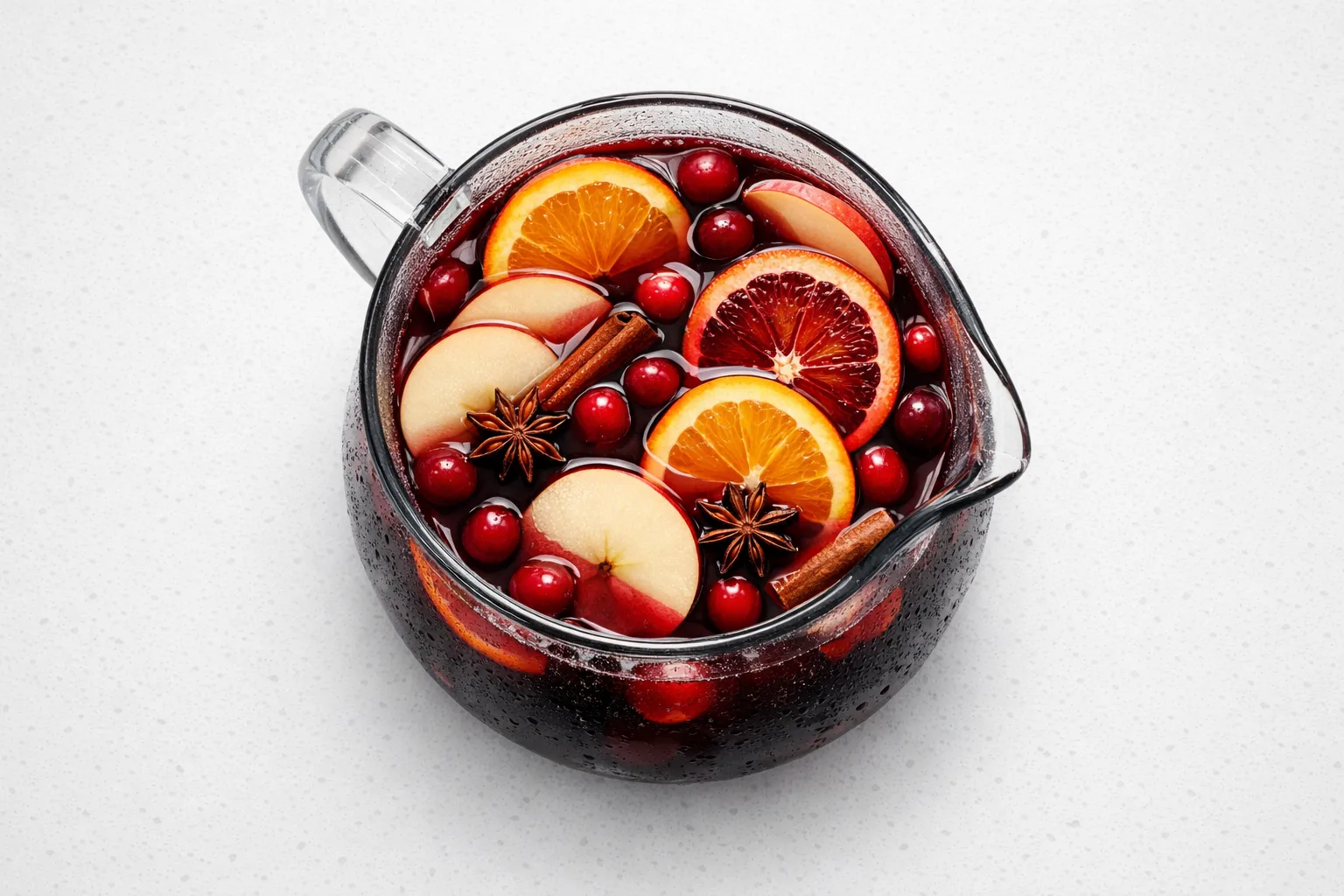
Christmas sangria takes the classic Spanish wine punch and steers it toward December. The base stays traditional: a full-bodied red wine, brandy, citrus, and sliced fruit left to mingle until the flavors merge. The holiday version adds warm spices (cinnamon, star anise, cloves) and seasonal fruit like cranberries and pomegranate seeds, turning an everyday sangria into something that tastes like the holidays smell.
Sangria has been a staple of Spanish entertaining for centuries, and Americans adopted it with enthusiasm after the 1964 World's Fair in New York. This recipe bridges both traditions: Spanish in structure, American in its love of a good holiday party punch. It works equally well as a make-ahead batch cocktail or a casual pour-and-serve drink.
What sets this version apart is the spiced simple syrup. Instead of dumping raw sugar into the pitcher and hoping it dissolves, you simmer sugar with cinnamon and star anise first. The result is a clean sweetness threaded with warm spice that integrates completely into the wine.
Equipment
Instructions
Tap each step to track your progress
- 1
Make the spiced simple syrup. Combine the sugar, water, cinnamon sticks, star anise, and cloves in a small saucepan over medium heat. Stir until the sugar dissolves completely, then simmer for 3 minutes. Remove from heat and let the spices steep while the syrup cools to room temperature, about 10 minutes.
- 2
Strain the syrup through a fine-mesh sieve into a large glass pitcher, discarding the whole spices.
- 3
Pour the entire bottle of red wine into the pitcher. Add the brandy and orange liqueur. Stir to combine.
- 4
Add the orange rounds, apple slices, cranberries, and pomegranate seeds to the pitcher. Drop in the 2 fresh cinnamon sticks.
- 5
Stir gently, cover the pitcher with plastic wrap or a lid, and refrigerate for at least 4 hours. Overnight is better; the fruit absorbs the wine and the flavors deepen considerably.
- 6
When ready to serve, taste the sangria and adjust sweetness. If it needs more sugar, stir in a tablespoon of the reserved simple syrup or a splash of orange juice.
- 7
If you prefer a lighter, effervescent sangria, add 2 cups of chilled sparkling water or ginger ale just before serving. Stir gently to combine without losing the fizz.
- 8
Serve over ice in wine glasses or tumblers, making sure each glass gets a scoop of the boozy fruit.
Tips & Tricks
Use inexpensive but drinkable wine
Sangria is not the place for your best bottle, but it is also not the place for wine you would not drink on its own. A $8 to $12 Garnacha or Tempranillo from Spain is ideal. If the wine tastes harsh or thin by itself, the sangria will too.
Make it a day ahead
This is the single best thing you can do for your sangria. Overnight maceration transforms it from "wine with fruit in it" to a cohesive, integrated drink where you cannot tell where the wine ends and the fruit begins. For a Christmas Eve party, assemble the sangria on the morning of the 23rd.
Cut fruit thin and uniform
Thin slices (about 1/4 inch) release more flavor into the wine and look better in the glass. Thick chunks just sit there. A mandoline works if you have one, but a sharp knife is fine.
Do not skip the brandy
The brandy is not optional; it is what gives sangria its backbone. Without it, you have spiced wine with fruit floating in it. Spanish brandy de Jerez is traditional and affordable, but any decent brandy (Cognac, domestic) works.
Control sweetness with the syrup
Make the full batch of spiced syrup but add it gradually. Start with half, taste, then add more. Sweetness preference varies, and you can always add more syrup but you cannot take it out. Extra syrup keeps in the fridge for 2 weeks and is excellent in coffee or tea.
Troubleshooting
The sangria is too sweet
You added too much syrup, or your wine was already on the sweeter side. Fix it by squeezing in the juice of half a lemon or adding a splash of sparkling water. Next time, start with half the syrup and taste before adding the rest.
The sangria tastes flat and one-dimensional
It has not had enough time to macerate. Sangria needs at least 4 hours in the fridge for the fruit and spices to infuse the wine. If you are short on time, muddle the fruit lightly in the pitcher before adding the wine to release more juice.
The fruit looks brown and unappealing
Apple slices oxidize quickly once cut. Toss them in a tablespoon of lemon juice before adding to the pitcher. Oranges do not have this problem, but apples will turn brown within 30 minutes if left untreated.
The wine tastes harsh or tannic
You used a wine that is too tannic or too young. Cabernet Sauvignon and Malbec can overpower sangria. Stick with medium-bodied, fruit-forward reds like Garnacha, Tempranillo, or Merlot. Avoid anything aged heavily in oak.
Variations
White Wine Christmas Sangria
Swap the red wine for a dry white (Albarino, Pinot Grigio, or Sauvignon Blanc) and use pear slices instead of apple. Replace the brandy with white rum. The result is lighter and pairs well with appetizer platters and cheese boards. Keep the cranberries for color contrast.
Non-Alcoholic Holiday Sangria
Replace the wine with unsweetened grape juice or pomegranate juice, skip the brandy and orange liqueur, and add 2 tablespoons of fresh lemon juice to keep the acidity balanced. Top with sparkling water at serving time. The spiced syrup and fruit still deliver genuine flavor.
Warm Winter Sangria
Heat the wine gently in a pot (do not boil) with the spiced syrup, brandy, and orange liqueur. Add the fruit and whole spices, then hold at a low simmer for 20 minutes. Serve warm in mugs. This is essentially a sangria-mulled wine hybrid that works well for outdoor gatherings and cold nights.
Sparkling Rose Sangria
Use a dry rose instead of red wine and replace the brandy with elderflower liqueur. Add fresh raspberries and sliced strawberries alongside the citrus. Top with Prosecco or Cava at serving time. This version is lighter and festive for a Christmas brunch.
Serving & Gifting
Pour over generous ice into wine glasses or sturdy tumblers, spooning in fruit with each glass. Set the pitcher on the table with a long spoon so guests can help themselves. For a party, double or triple the batch and serve from a large glass dispenser. Pair with Spanish-style appetizers like manchego, marcona almonds, or cured chorizo, or with any holiday appetizer spread.
Storage & Freezing
Sangria keeps well in the refrigerator for up to 3 days; the flavor actually peaks around the 24-hour mark. Do not add sparkling water or ginger ale until just before serving, as it goes flat. The fruit softens after the first day but remains edible and boozy. Sangria does not freeze well due to its alcohol content and fruit pieces.
Common Questions
Can I make christmas sangria ahead of time?
Yes, and you should. Sangria improves dramatically with time. Make it 12 to 24 hours before serving for the best flavor. Add any sparkling water or ginger ale just before serving to preserve the fizz.
What is the best wine for christmas sangria?
Use a dry, fruit-forward red wine with moderate tannins. Spanish Garnacha and Tempranillo are traditional and work perfectly. Merlot is a reliable alternative. Avoid heavily oaked Cabernets or very tannic wines, as the tannins become bitter when mixed with citrus.
How do I make a non-alcoholic version?
Replace the wine with unsweetened grape juice or pomegranate juice, omit the brandy and orange liqueur, and add extra lemon juice for acidity. The spiced simple syrup and macerated fruit still deliver plenty of flavor. Top with sparkling water for effervescence.
How long does christmas sangria last in the fridge?
Sangria keeps in the refrigerator for up to 3 days. The flavor is best between 12 and 48 hours. After 3 days the fruit starts to break down and the sangria can taste overly tannic from the seeds and peels.
Is sangria actually Spanish?
Yes. Sangria originated in Spain and Portugal, where it has been made for centuries using local red wines, fruit, and sweeteners. The name comes from the Spanish word <em>sangre</em> (blood), referring to its deep red color. It gained international popularity after being featured at the 1964 World's Fair in New York.
Can I use frozen cranberries instead of fresh?
Absolutely. Frozen cranberries work just as well and have the added benefit of acting like flavor-infusing ice cubes that keep the sangria cold as they thaw. Do not thaw them before adding; drop them in frozen.