
 United Kingdom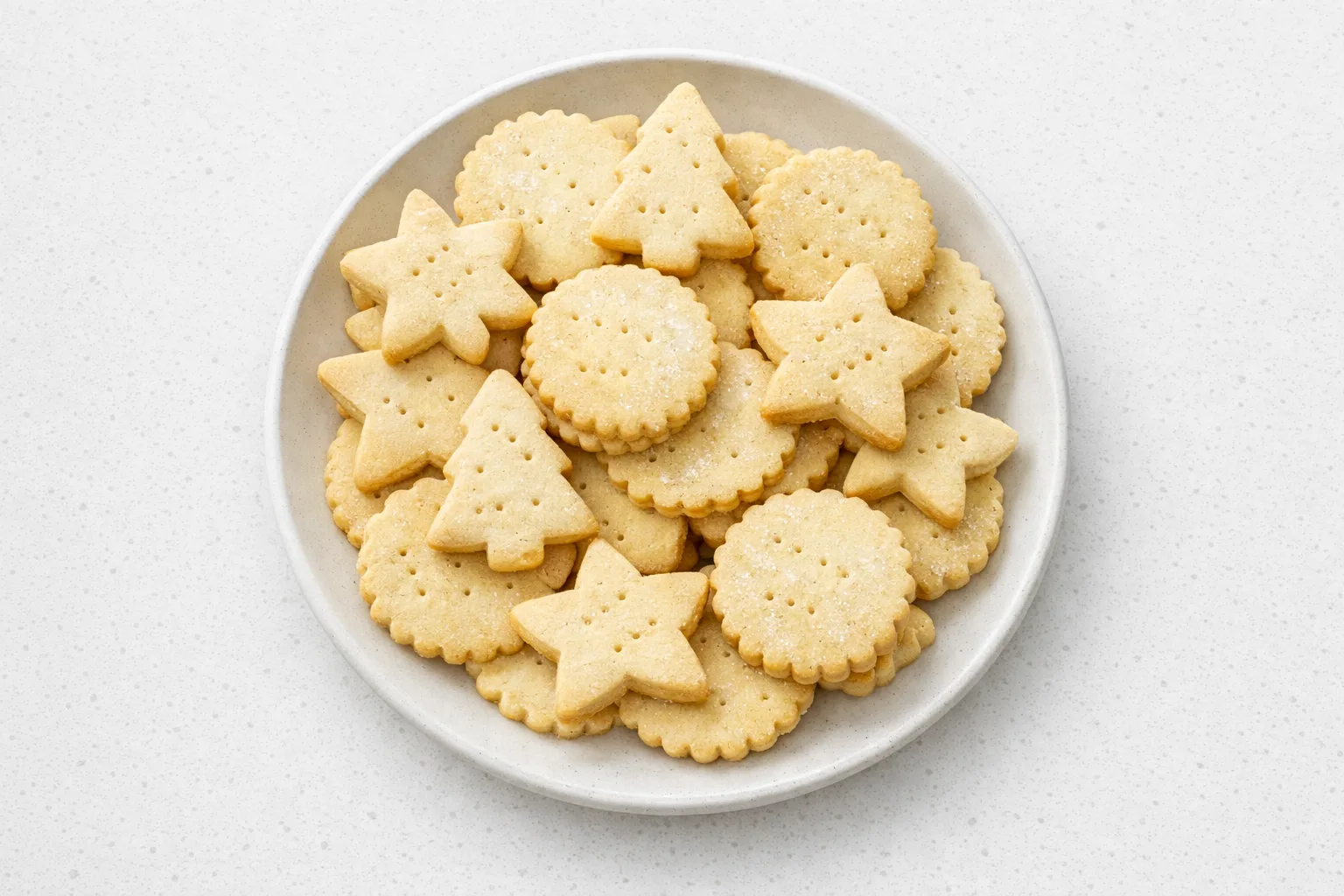
Christmas shortbread cookies are a Scottish tradition that dates back to at least the 12th century, when leftover bread dough was dried out with butter and sugar to create a crisp biscuit. By the 16th century, Mary Queen of Scots had refined the recipe into the buttery, crumbly shortbread we know today, and it became inseparable from Hogmanay and the Christmas season. In Scotland, offering shortbread to guests during the holidays is a gesture of hospitality that has never gone out of practice.
Real shortbread depends on ratio and technique, not a long ingredient list. The classic Scottish formula is 1 part sugar, 2 parts butter, 3 parts flour by weight. There are no eggs, no leavening, and no vanilla. The butter does all the heavy lifting, which means the quality of your butter is the single biggest variable. This recipe uses rice flour alongside all-purpose flour, a traditional Scottish addition that gives shortbread its signature sandy, melt-in-the-mouth crumble rather than a tough, cookie-like snap.
Equipment
Instructions
Tap each step to track your progress
- 1
Cut the butter into 1-inch cubes and place in a large bowl or stand mixer fitted with the paddle attachment. Beat on medium speed for about 1 minute until smooth and creamy but not whipped or fluffy. Over-beating incorporates air, which you do not want in shortbread.
- 2
Add the powdered sugar and salt. Mix on low speed until just combined, about 30 seconds. Scrape down the sides of the bowl.
- 3
Whisk together the all-purpose flour and rice flour. Add to the butter mixture all at once. Mix on the lowest speed (or fold by hand with a spatula) until the dough just comes together in clumps. Stop the moment there are no dry streaks. The dough will look slightly crumbly but should hold together when pressed.
- 4
Turn the dough out onto a clean surface and press it together into a cohesive disc. Do not knead. Divide in half and shape each piece into a flat disc about 1 inch thick. Wrap tightly in cling film and refrigerate for at least 30 minutes, or up to 2 days.
- 5
Preheat your oven to 325F (160C). Line two baking sheets with parchment paper.
- 6
Roll out one disc of dough on a lightly floured surface to about 1/3 inch (8mm) thickness. If the dough cracks at the edges, let it warm up for 2-3 minutes. Use cookie cutters to cut shapes (stars, rounds, Christmas trees), re-rolling scraps once. Place on the prepared baking sheets, leaving 1 inch of space between cookies. Prick each cookie 2-3 times with a fork.
- 7
Bake for 18-22 minutes, rotating the tray halfway through. The shortbread is done when the edges are barely golden and the tops still look pale. Shortbread should not brown significantly; it continues to firm up as it cools. If you see golden-brown color, the batch is already overbaked.
- 8
Remove from the oven and immediately sprinkle the warm cookies with caster sugar. Let cool on the baking sheet for 5 minutes, then transfer to a wire rack to cool completely. The cookies will feel soft when hot but become firm and crumbly once cool.
Tips & Tricks
Use the best butter you can find
Shortbread is 50% butter by weight. There is nowhere for mediocre ingredients to hide. European-style butter with 82-85% fat content produces noticeably richer, more tender shortbread than standard American butter (80% fat). The extra fat and lower water content make a real difference in a recipe this simple.
Do not cream the butter until fluffy
Unlike most cookie recipes, you do not want to beat air into shortbread dough. Mix the butter just until smooth and pliable, about 1 minute. Over-creaming creates a cakey texture instead of the dense, sandy crumb that defines proper shortbread.
Chill before cutting and baking
Cold dough holds its shape in the oven. If the dough gets soft and sticky while you roll and cut, slide the whole sheet of cut cookies into the fridge for 10 minutes before baking. This single step is the difference between clean-edged stars and shapeless blobs.
Make it ahead for Christmas week
Shortbread is one of the best make-ahead Christmas cookies because it actually improves over the first day or two as the flavors meld. Bake your shortbread 1-2 weeks before Christmas and store in a tin. It will taste just as good, or better, than the day it came out of the oven.
Prick the surface evenly
Those little fork holes are not just decorative. They let trapped steam escape during baking, which prevents the shortbread from puffing up in the center and cracking. Prick each cookie 2-3 times, pressing all the way through to the bottom.
Troubleshooting
My shortbread is tough and hard, not crumbly
You overworked the dough. Shortbread relies on minimal gluten development for its tender texture. Mix the flour in only until the dough just holds together. Kneading or re-rolling scraps more than once toughens it. The rice flour also matters; if you skipped it and used all plain flour, the crumb will be firmer.
The cookies spread and lost their shape
The butter was too warm when the dough went into the oven. Shortbread dough must be cold when it hits the heat. If your kitchen is warm, chill the cut shapes on the baking sheet for 10 minutes before baking. Also check your oven temperature with a thermometer; if it runs low, the butter melts before the flour sets.
The shortbread tastes bland
Salt and butter quality. If you used unsalted butter without adding salt separately, the cookies will taste flat. Shortbread also amplifies butter flavor, so cheap butter with high water content produces bland results. Use a European-style butter with at least 82% fat if you can find it (Kerrygold, Plugra, or President are widely available).
My shortbread browned too much
The oven was too hot or the cookies baked too long. Shortbread should be pale gold at most. Pull them when they look almost underdone; they firm up considerably as they cool. Lower your oven by 10-15 degrees if this keeps happening, since many ovens run hot.
Variations
Chocolate-Dipped Shortbread
Melt 4 ounces of dark chocolate (70% cocoa) and dip each cooled cookie halfway. Set on parchment until the chocolate hardens. For a festive touch, sprinkle with crushed candy cane or flaky sea salt before the chocolate sets. The bitter chocolate contrasts well with the buttery sweetness of the shortbread.
Lemon and Rosemary Shortbread
Add the finely grated zest of 1 lemon and 1 tablespoon of finely minced fresh rosemary to the butter before adding the flour. This combination is sharp and herbal, less traditionally Christmas but excellent on a mixed cookie plate where you want contrast.
Vegan Shortbread
Replace the butter with the same weight of high-quality vegan block butter (not margarine in a tub; you need the fat content). Use the same method. Vegan block butters with at least 80% fat content work best. The texture will be slightly less tender than the butter version but still crumbly and satisfying.
Millionaire's Shortbread Base
Press the dough into a 9x13 inch pan instead of cutting shapes. Bake at 325F for 25-30 minutes until just set. Cool completely, then top with a layer of caramel (homemade or store-bought dulce de leche) and a layer of tempered dark chocolate. Cut into bars once set. This is the classic Scottish traybake found in every bakery from Edinburgh to Inverness.
Serving & Gifting
Stack shortbread on a cake stand or arrange on a white platter for afternoon tea or after-dinner coffee. In Scotland, shortbread is traditionally served with a dram of whisky on Christmas Day and Hogmanay. For cookie swaps, shortbread is ideal because it holds up to transport without breaking easily. Package individual stacks in cellophane bags tied with ribbon, or layer in a tin with parchment paper between layers for a classic Christmas gift.
Storage & Freezing
Shortbread keeps exceptionally well. Store in an airtight tin or container at room temperature for up to 3 weeks. Do not use a plastic container if you can avoid it; tins keep the cookies crisper. The unbaked dough freezes for up to 3 months when wrapped tightly in cling film and placed in a freezer bag. Thaw overnight in the fridge before rolling. Baked shortbread also freezes well for 2 months; thaw at room temperature in the sealed container to prevent condensation from softening the surface.
Common Questions
Can I use salted butter instead of unsalted?
Yes, but omit the added salt from the recipe. Salted butter works fine in shortbread and is actually traditional in many Scottish recipes. The only risk is inconsistency, since different brands have different salt levels. Taste the dough before baking and adjust if needed.
Why does Scottish shortbread use rice flour?
Rice flour (or "ground rice" as it is labelled in the UK) interrupts gluten formation and absorbs less moisture than wheat flour. The result is a shorter, more crumbly texture. Without it, shortbread can veer toward a firm butter cookie. If you cannot find rice flour, cornstarch works as a substitute in the same quantity, though the texture will be slightly different.
How thick should shortbread be?
About 1/3 inch (8mm) is the sweet spot for cut-out shapes. Thinner than that and the cookies become too crisp and fragile. Thicker, and the center may not bake through before the edges color. For petticoat tails (the traditional Scottish round), you can go up to 1/2 inch since the larger surface area bakes more evenly.
Can I make shortbread without a mixer?
Absolutely. Shortbread was made by hand for centuries before stand mixers existed. Use a wooden spoon to cream the butter and sugar, then switch to your hands to work the flour in. Press and fold rather than kneading. The warmth of your hands actually helps bring the dough together. Just work quickly so the butter does not get too soft.
How long do Christmas shortbread cookies last?
Properly stored in an airtight tin at room temperature, shortbread lasts 2-3 weeks with no loss in quality. In the fridge, it keeps for a month. Frozen, up to 3 months. Shortbread is one of the longest-lasting Christmas cookies, which is why it has always been popular for holiday gifting and shipping.
Is shortbread the same as a sugar cookie?
No. Sugar cookies use eggs and leavening (baking powder), which give them a lighter, slightly puffy texture. Shortbread uses no eggs and no leavening. The higher butter-to-flour ratio and the absence of eggs is what gives shortbread its dense, crumbly, melt-on-the-tongue quality. They are fundamentally different cookies despite similar ingredients.