
Christmas strata is the rare make-ahead egg bake that earns its place on the table by solving a real problem: nobody wants to stand at the stove cracking eggs on Christmas morning. A strata is a savory bread pudding, built in layers of bread, fillings, and egg custard, assembled the night before and refrigerated overnight so the bread absorbs every bit of the custard. Come morning, you pull it from the fridge, let it sit while the oven heats, and bake it while the gifts get opened.
This version uses Italian sausage, sauteed shallots, and aged Gruyere for a filling that is both deeply savory and crowd-pleasing. The bread choice matters: a sturdy, slightly stale country loaf or ciabatta holds its structure through the overnight soak without turning to mush. A soft sandwich bread will collapse and give you a dense, wet result. The overnight rest is not optional here. It is what makes this a proper strata rather than a rushed casserole.
Equipment
Instructions
Tap each step to track your progress
- 1
In a large skillet over medium-high heat, cook the sausage, breaking it into small pieces with a wooden spoon, until browned and cooked through, about 8 minutes. Transfer to a paper towel-lined plate, leaving the rendered fat in the pan.
- 2
Reduce heat to medium. Add the diced shallots to the same skillet and cook, stirring occasionally, until softened and translucent, about 4 minutes. Add the garlic and cook for another 60 seconds until fragrant. Remove from heat and let cool slightly.
- 3
Grease a 9x13 inch baking dish with the butter. Spread half the bread cubes in an even layer on the bottom.
- 4
Scatter half the cooked sausage and shallot mixture over the bread. Sprinkle half the grated Gruyere over the top. Repeat with the remaining bread, sausage mixture, and all but a handful of the remaining cheese (reserve a small amount for the top).
- 5
In a large bowl or pitcher, whisk together the eggs, milk, cream, Dijon mustard, salt, pepper, and nutmeg until fully combined and the yolks are completely incorporated. Pour the custard evenly over the layered bread and fillings, pressing down gently with a spatula to help the bread absorb the liquid.
- 6
Scatter the reserved Gruyere over the top. Cover tightly with plastic wrap and refrigerate for at least 8 hours or overnight, up to 24 hours.
- 7
Remove the strata from the refrigerator 30 minutes before baking to take the chill off. Heat the oven to 350 degrees F (175 degrees C).
- 8
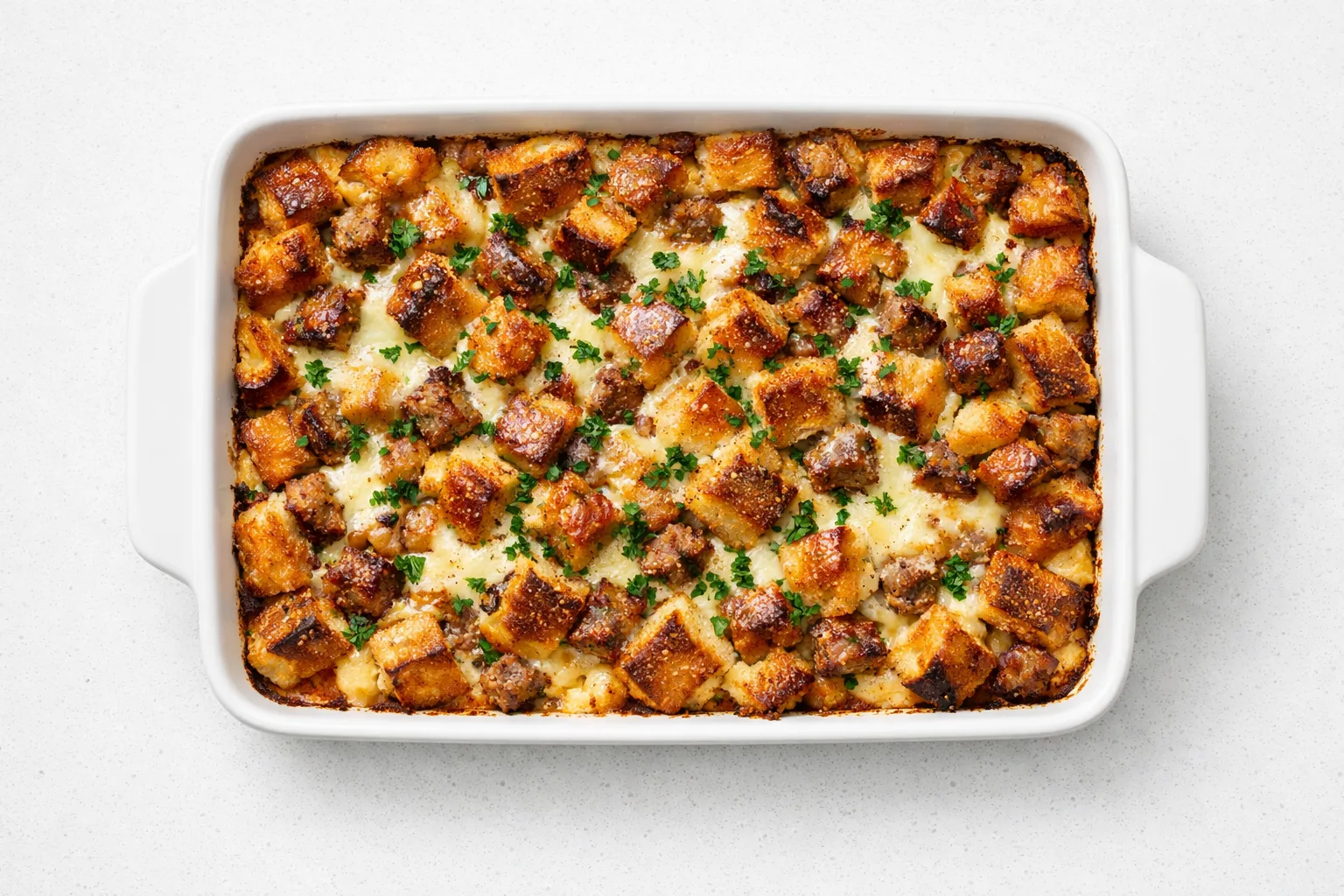
Bake uncovered for 50 to 60 minutes, until the top is deeply golden and puffed, the custard is fully set in the center (a knife inserted in the middle should come out clean, not custardy), and the edges are pulling away from the sides of the dish. If the top browns too quickly, tent loosely with foil for the last 15 minutes.
- 9
Let the strata rest for 10 minutes before cutting. Scatter chopped parsley over the top and serve directly from the baking dish.
Tips & Tricks
Use day-old bread and cut it large
Fresh bread turns to mush overnight. Day-old bread, cut into generous 1-inch cubes, holds its structure through the long soak and gives you distinct layers with a crispy top. If your bread is fresh, spread the cubes on a baking sheet and dry them in a 300 degree F oven for 15 minutes before assembling.
Do not skip the overnight rest
Eight hours is the minimum; twelve is better. The custard needs that time to penetrate every piece of bread fully. A strata assembled and baked in the same day will have dry pockets in the center and a wet, unset custard around them.
Press the layers down, but not the top
When you pour the custard, use a spatula to press the bread pieces down so they absorb the liquid. But leave the top layer sitting just above the custard surface so it can crisp up during baking. The contrast between the custardy interior and the crunchy top is what makes strata worth eating.
Brown the sausage in batches if needed
Crowding the pan causes the sausage to steam instead of brown. Work in two batches if your skillet is smaller than 12 inches. The browned, caramelized bits of sausage are where most of the flavor lives.
Grate your own cheese
Pre-shredded cheese is coated in cellulose and starches that prevent it from melting smoothly into the custard. Gruyere grated on a box grater will melt cleanly into pools throughout the strata.
Troubleshooting
The center is still jiggly after an hour
The strata was not at room temperature when it went into the oven, or the custard ratio to bread is off. Let it rest out of the fridge for at least 30 minutes before baking, not just 10. Cover with foil and continue baking in 10-minute increments, testing with a knife each time until the center is set.
The top is soggy, not crispy
The top layer of bread was submerged in custard overnight instead of sitting above the liquid. When assembling, press the bottom layers down firmly but leave the top layer of bread cubes slightly exposed. When you cover with plastic wrap, press gently so the wrap does not push the top pieces into the custard.
The bread has completely dissolved and the texture is mushy
A soft or fresh bread was used instead of a sturdy, day-old loaf. Soft sandwich bread, fresh baguette, or brioche will absorb too much liquid and turn to paste. Use bread that is at least one day old and has a tight, chewy crumb: ciabatta, sourdough, or a sturdy Italian country loaf work best.
The custard is rubbery and dense, not creamy
The strata was overbaked or the oven temperature was too high. The egg proteins have seized up. Pull it when the center is just barely set (a small amount of wobble is fine, it will firm as it rests). A thermometer inserted in the center should read around 160 degrees F.
Variations
Vegetarian Spinach and Mushroom
Omit the sausage. Saute 12 oz sliced cremini mushrooms over high heat until they release their liquid and it evaporates, about 8 minutes. Add 2 cups fresh baby spinach to the pan and cook until wilted. Use this mixture in place of the sausage. The strata will be slightly lighter but still deeply savory with the Gruyere custard.
Smoked Salmon and Cream Cheese
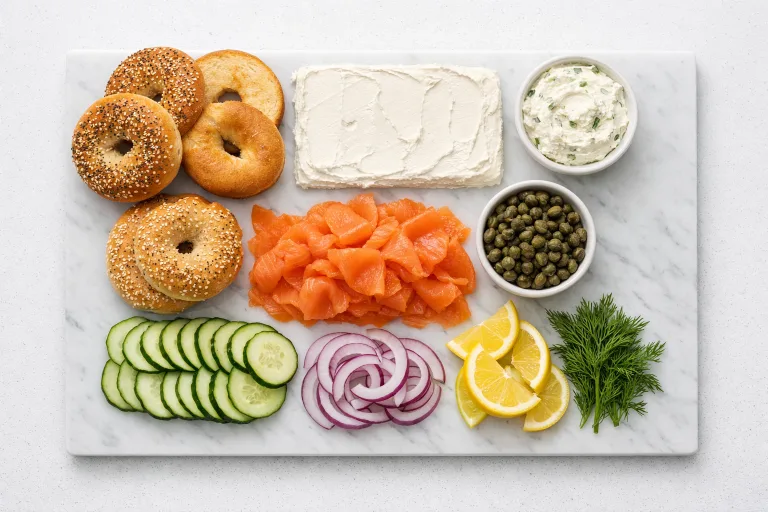
Replace the sausage with 8 oz cold-smoked salmon, torn into pieces, and scatter small dollops of cream cheese (about 4 oz) between the layers. Swap the Gruyere for a mild white cheddar or fontina. Add 2 tbsp capers and 3 thinly sliced scallions to the custard. Bake as directed but reduce the salt to 1/2 tsp since smoked salmon is already salty.
Dairy-Free Adaptation
Replace the whole milk and cream with full-fat oat milk or a 50/50 mix of unsweetened oat milk and canned coconut cream. Omit the Gruyere or use a dairy-free shredded cheese alternative. The custard will be slightly less rich but will still set properly. Use dairy-free butter to grease the pan.
Spiced Ham and Swiss
Replace the Italian sausage with 2 cups diced cooked ham (no cooking required) and swap the Gruyere for Swiss or Emmental. Add 1 tsp smoked paprika and 1/2 tsp dry mustard powder to the custard mixture. This version is slightly sweeter and milder, and works well if you have leftover Christmas ham to use up.
Serving & Gifting
Bring the baking dish straight to the table and cut into squares with a spatula. Strata is rich enough to stand alone, but a sharply dressed green salad with a lemon vinaigrette cuts through the fat well. For a Christmas morning spread, pair it with fresh fruit, mimosas or orange juice, and strong coffee. Each square is generous, so you can cut 10 to 12 pieces if serving alongside other dishes.
Storage & Freezing
Leftover strata keeps covered in the refrigerator for up to 3 days. Reheat individual portions in the microwave at 70 percent power for 2 minutes, or cover the dish with foil and warm in a 325 degree F oven for 20 minutes. The strata can also be frozen after baking: cool completely, wrap individual portions tightly in plastic wrap and then foil, and freeze for up to 2 months. Thaw overnight in the refrigerator before reheating. The texture softens slightly after freezing but remains perfectly edible.
Common Questions
Can I assemble christmas strata and bake it the same day?
You can, but the result will be noticeably inferior. The bread will not absorb the custard evenly, giving you dry interior pockets and a dense, wet layer at the bottom. The overnight rest is what separates a proper strata from a rushed egg casserole. If you are in a hurry, at minimum give it 2 hours in the refrigerator.
What bread works best for an overnight strata recipe?
Sturdy, day-old bread with a tight crumb is the right choice: ciabatta, sourdough, or a country Italian loaf. Avoid soft sandwich bread, brioche, or any bread with an open, airy crumb, these absorb too much liquid and collapse into mush. If your bread is fresh, dry it out in a low oven before assembling.
Can I make this christmas brunch strata with different cheeses?
Yes. Gruyere is the gold standard for its nutty flavor and clean melt, but sharp white cheddar, fontina, or Emmental all work well. Avoid fresh mozzarella (too wet) or aged Parmesan alone (too salty and it does not melt the same way). A mix of Gruyere and sharp cheddar is a good middle ground if Gruyere is not available.
How do I know when the strata is done baking?
The top should be deep golden brown and the custard should be fully set with no liquid wobble when you shake the pan. Insert a thin knife or toothpick into the center; it should come out clean, not coated in raw egg. An instant-read thermometer inserted in the center should read at least 160 degrees F.
Can I use milk instead of heavy cream in the egg bake?
Yes. Replacing the cream entirely with whole milk will make the custard slightly less rich but it will still set properly. Do not use skim or 2 percent milk, the custard needs enough fat to set smoothly without becoming rubbery. Whole milk only, if you are skipping the cream.
How far in advance can I make this make ahead egg bake?
You can assemble the strata up to 24 hours before baking. Beyond that, the bread begins to break down too much and the texture suffers. Once baked, leftovers keep in the refrigerator for up to 3 days and reheat well.