
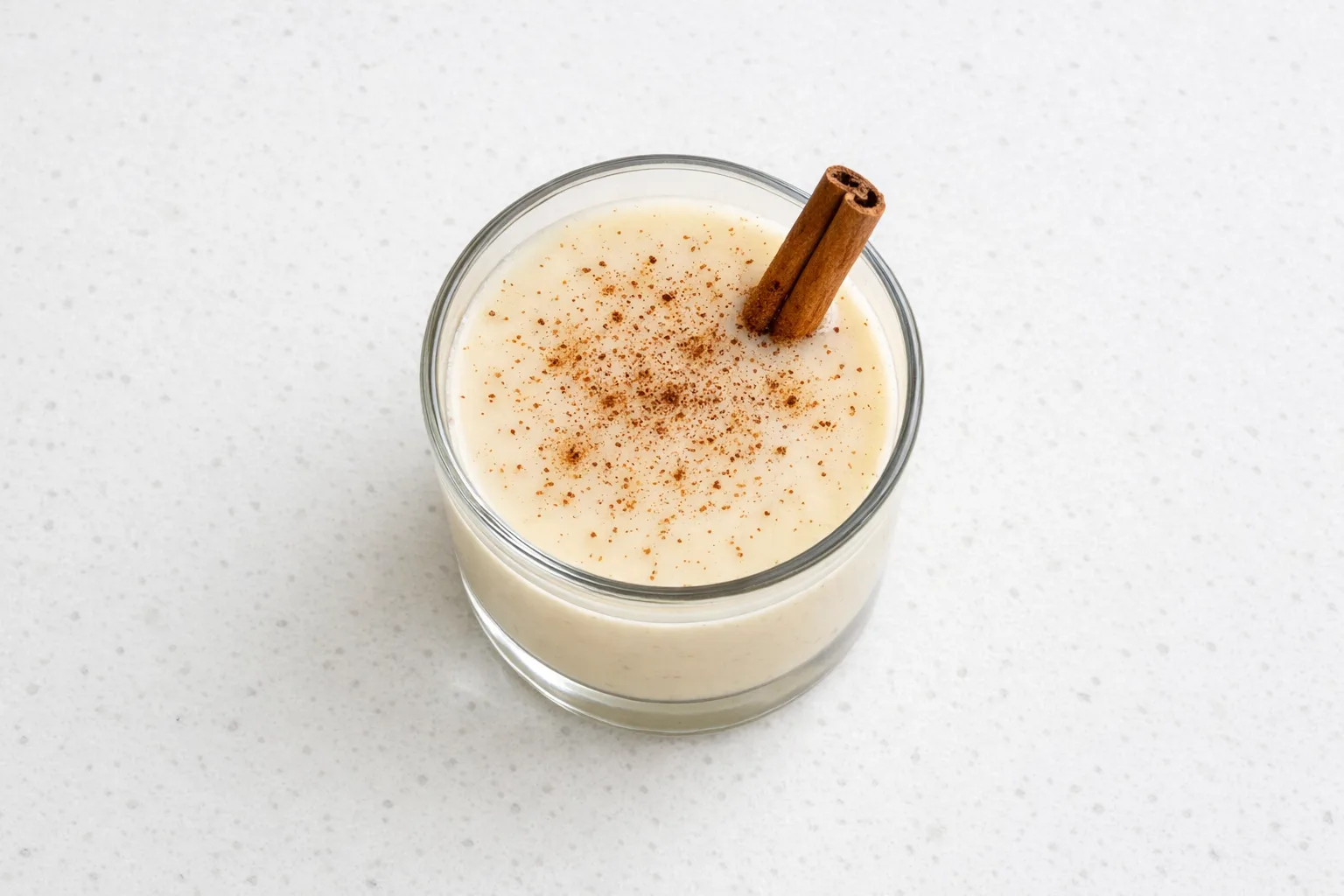
Coquito is Puerto Rico's Christmas drink, a coconut-based eggnog that shows up at every holiday gathering from Thanksgiving through Three Kings Day in January. The name means "little coconut" in Spanish, and the drink has been part of Puerto Rican Navidad celebrations for generations. Unlike American eggnog, coquito gets its body from coconut milk and coconut cream rather than heavy dairy, with sweetened condensed milk pulling everything together into something dangerously smooth.
Every Puerto Rican family has a version. Some add eggs, some skip them. Some use evaporated milk, others do not. This recipe is the traditional coquito built on the coconut-and-condensed-milk foundation, spiked with white rum and spiced with cinnamon, vanilla, and nutmeg. It takes 15 minutes, a blender, and zero cooking. The result is thick, cold, and spiced just enough that you taste warmth without heat.
Equipment
Instructions
Tap each step to track your progress
- 1
Add the cream of coconut, coconut milk, sweetened condensed milk, and evaporated milk to a blender. Blend on medium speed for about 30 seconds until the mixture is completely smooth and uniform with no lumps from the cream of coconut.
- 2
Add the rum, vanilla extract, ground cinnamon, nutmeg, and cloves. Blend for another 15 seconds until everything is fully incorporated.
- 3
Taste the mixture. It should be sweet, coconut-forward, with a gentle warmth from the rum and spices. Adjust the rum up or down by a tablespoon or two based on your preference.
- 4
Pour the coquito into clean glass bottles or a large pitcher. Seal tightly and refrigerate for at least 4 hours, preferably overnight. The flavors develop and meld as it chills, and the texture thickens slightly.
- 5
When ready to serve, shake the bottle well (the coconut fat tends to separate as it sits). Pour into small glasses, dust the top with ground cinnamon and freshly grated nutmeg, and add a cinnamon stick to each glass.
Tips & Tricks
Use cream of coconut, not coconut cream
These are two different products. Cream of coconut (Coco Lopez is the most common brand) is sweetened and thick, almost like a syrup. Coconut cream is the unsweetened fat layer from a can of coconut milk. Using the wrong one will throw off both the sweetness and the texture of the entire batch.
Chill overnight for the best flavor
The spices need time to infuse into the coconut base. Coquito made and served immediately tastes flat compared to a batch that has rested overnight in the fridge. Plan to make it at least one day before you need it.
Start with less rum and adjust
One cup of rum is standard, but everyone's tolerance for boozy drinks differs. Start with 3/4 cup, blend, taste, and add more in small pours. You can always add rum, but you cannot take it out. The sweetness of the condensed milk should balance the alcohol so neither dominates.
Freshly grate your nutmeg
Pre-ground nutmeg from a jar has a fraction of the aroma and flavor of freshly grated whole nutmeg. Whole nutmegs are inexpensive, last for years, and take seconds to grate on a Microplane. This one swap makes the biggest difference in the finished drink.
Troubleshooting
The coquito is too thick and gloopy
The cream of coconut is the usual culprit. Some brands are extremely dense and sweet. If the mixture is too thick after blending, thin it with a splash of regular coconut milk or whole milk, a tablespoon at a time, until it reaches a pourable consistency similar to melted ice cream.
The coconut fat separates and floats to the top
This is normal, especially after refrigerating overnight. Coconut fat solidifies when cold. Give the bottle a vigorous shake before every pour. If the fat has formed a solid plug at the top, let the bottle sit at room temperature for 10 minutes, then shake.
It tastes too boozy
You likely used more than 1 cup of rum, or your rum is higher-proof than standard. Blend in an additional 1/4 can of condensed milk to bring the sweetness back into balance. Next time, start with 3/4 cup of rum and adjust upward after tasting.
The spice flavor is too faint
Ground spices lose potency over time. If your cinnamon and nutmeg have been in the pantry for over a year, they may have gone flat. Freshly grated whole nutmeg makes a significant difference. You can also steep 2 cinnamon sticks in the finished coquito overnight (remove before serving) for a stronger spice presence.
Variations
Egg Coquito
Some families add eggs for a richer, more custard-like body. Blend in 2 large egg yolks with the milks in step 1. The texture becomes noticeably thicker and more reminiscent of traditional eggnog. Use pasteurized eggs if you are concerned about consuming raw eggs.
Chocolate Coquito (Coquito de Chocolate)
Add 1/3 cup Dutch-process cocoa powder and 2 tablespoons of chocolate syrup to the blender. Reduce the ground cinnamon to 1/2 teaspoon so the chocolate flavor comes through cleanly. The result is a rich, mocha-colored drink that tastes like a boozy coconut hot chocolate served cold.
Dairy-Free Coquito
Replace the sweetened condensed milk with sweetened condensed coconut milk (available at most grocery stores) and swap the evaporated milk for an additional can of full-fat coconut milk. The drink becomes fully dairy-free and vegan if you also skip the egg variation. The texture is slightly thinner, so increase the cream of coconut by 2 tablespoons to compensate.
Spiced Rum Coquito
Swap the white rum for dark or spiced rum (Kraken or Diplomatico work well here). The drink takes on deeper caramel and molasses notes that complement the coconut. Add an extra pinch of ground cloves and a small pinch of ground allspice to lean into the darker flavor profile.
Serving & Gifting
Pour coquito into short glasses or small tumblers. This is a rich, sweet drink, so portions should be modest, around 4 to 6 ounces per serving. Dust each glass with cinnamon and grate fresh nutmeg directly over the top. In Puerto Rico, coquito is often served alongside other holiday foods like <em>pernil</em> (roast pork shoulder) and <em>arroz con gandules</em> at <em>parrandas</em>, the Puerto Rican version of Christmas caroling where groups move from house to house. Bottles of homemade coquito are also a classic holiday gift; pour into clean glass bottles, tie a ribbon around the neck, and hand them out to friends and neighbors.
Storage & Freezing
Coquito keeps in the refrigerator for up to two weeks in sealed glass bottles. Shake well before every pour, as the coconut will separate. The flavor actually improves over the first 2 to 3 days as the spices infuse into the mixture. Do not freeze coquito; the emulsion breaks when thawed and the texture becomes grainy and separated. If making ahead for a party, prepare it 1 to 3 days in advance for the best flavor.
Common Questions
What is the difference between coquito and eggnog?
Coquito is built on coconut milk and cream of coconut, giving it a tropical, dairy-light base. Traditional American eggnog uses heavy cream and eggs as its foundation. Coquito is also typically made with white rum rather than bourbon or brandy, and the spice profile leans heavier on cinnamon and nutmeg. The texture is similar, but the flavor is distinctly Caribbean.
Can I make coquito without alcohol?
Yes. Simply omit the rum entirely or replace it with 1 teaspoon of rum extract mixed into 1/2 cup of additional coconut milk. The drink will be sweeter without the alcohol to balance it, so you may want to reduce the condensed milk by 2 to 3 tablespoons. Non-alcoholic coquito is common at family gatherings where children are drinking it too.
How long does homemade coquito last in the fridge?
Properly stored in sealed glass bottles, coquito lasts up to two weeks refrigerated. Versions without eggs tend to keep slightly longer than versions with raw eggs. Always shake before pouring, and if the coquito develops an off smell or unusual texture, discard it.
Does coquito contain eggs?
The traditional recipe varies by family. Some Puerto Rican coquito recipes include egg yolks for a richer, more custard-like body, while others skip eggs entirely and rely on the coconut and condensed milk for thickness. This recipe does not use eggs in the base version, but an egg variation is provided above.
Can I use light coconut milk instead of full-fat?
You can, but the coquito will be noticeably thinner and less rich. Full-fat coconut milk is what gives the drink its characteristic velvety body. If you use light coconut milk, compensate by adding an extra 2 tablespoons of cream of coconut to restore some of the lost richness.
What rum is best for coquito?
Puerto Rican white rum is traditional. Don Q Cristal and Bacardi Superior are the two most commonly used brands on the island. A clean, light white rum lets the coconut and spice flavors come through without competing. Avoid flavored rums (coconut rum in particular makes it cloyingly sweet) unless you reduce the condensed milk to compensate.