
 Czech Republic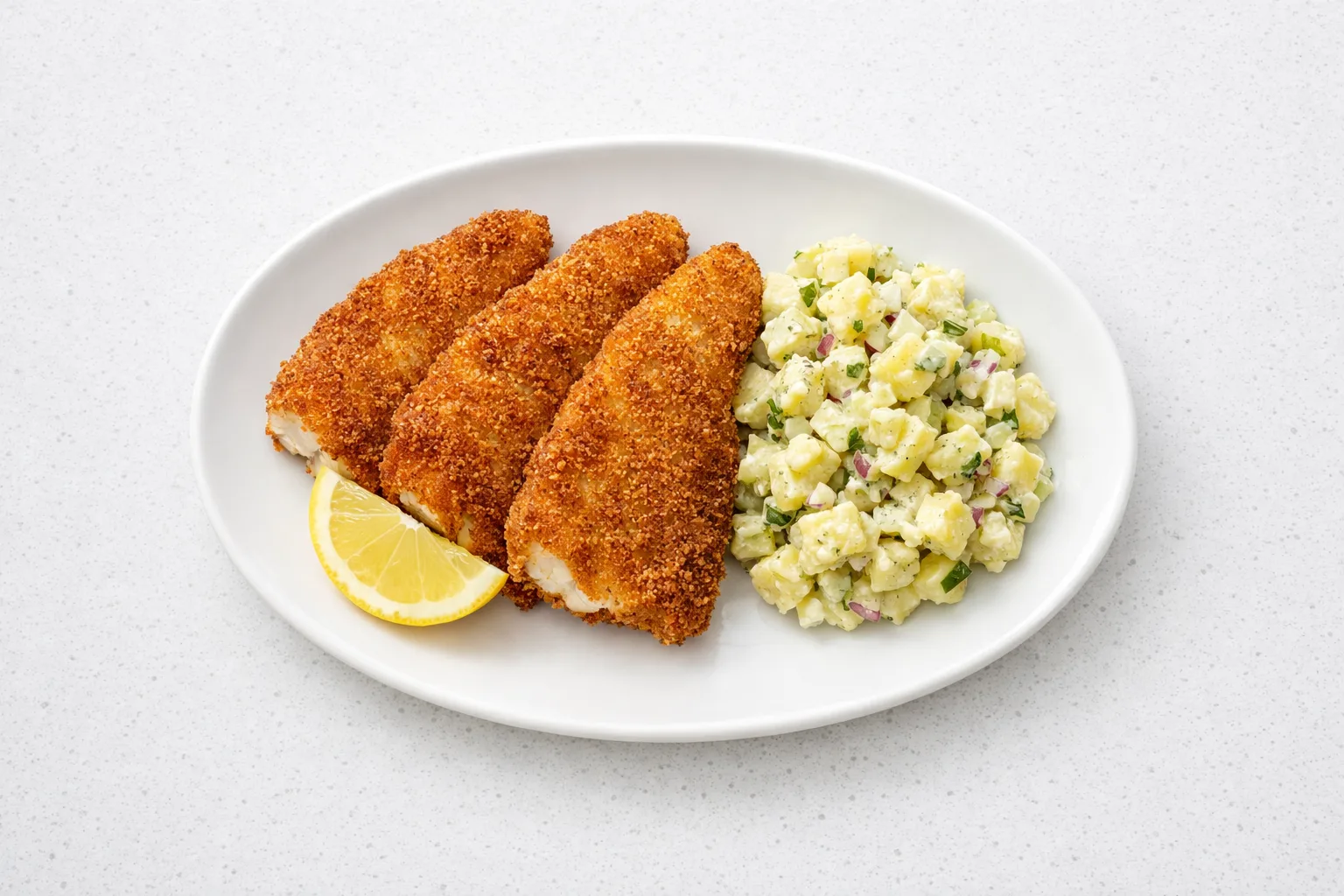
Czech Christmas carp, known as smažený kapr, is the defining dish of Christmas Eve dinner in the Czech Republic. Every 24th of December, millions of Czech households sit down to plates of freshly fried carp, a tradition that dates back centuries when the Catholic Church mandated fish on fast days. Carp, cheap to breed and easy to keep alive in pond water through winter, became the practical answer. It has stayed ever since, now a matter of national identity as much as religion.
The fish are sold live in the days before Christmas from large street-side tanks, and many Czechs still buy a whole fish, keep it in the bathtub for a day or two, then take it to the fishmonger for butchering. The flesh is mild, slightly sweet, and takes a simple breadcrumb crust exceptionally well. Brine the fillets overnight and the texture firms up completely, eliminating any muddiness that gives freshwater fish a bad reputation.
This recipe uses bone-in carp steaks, the traditional cut, breaded in the classic Czech way: flour, egg, fine breadcrumbs. The key is getting the oil temperature right so the crust sets before the fish overcooks. Served with bramborový salát (Czech potato salad), it is the meal Czechs wait all year for.
Equipment
Instructions
Tap each step to track your progress
- 1
Prepare the brine: combine 4 cups cold water, 2 tablespoons coarse salt, and the vinegar in a large bowl or deep dish. Submerge the carp pieces fully. Cover and refrigerate for at least 8 hours or overnight. This firms the flesh, seasons it through, and removes any trace of muddy flavour.
- 2
Remove the carp from the brine and rinse each piece briefly under cold running water. Pat thoroughly dry with paper towels. The surface needs to be dry or the flour won't adhere properly.
- 3
Season the carp on both sides with the fine salt and black pepper. Set up a breading station: a plate of flour, a shallow bowl with the eggs beaten with the tablespoon of milk, and a plate of breadcrumbs.
- 4
Dredge each piece of carp in flour, shaking off any excess so only a thin, even coat remains. Dip into the egg wash, letting any drips fall back into the bowl. Press firmly into the breadcrumbs on both sides, making sure every part of the surface is coated. Set the breaded pieces on a clean plate and let them rest for 5 minutes. This helps the coating adhere during frying.
- 5
Pour the oil into a large heavy-bottomed frying pan (cast iron or stainless works best) to a depth of about 1/3 inch. Heat over medium-high until the oil reaches 350°F (175°C). If you don't have a thermometer, drop a pinch of breadcrumbs into the oil. They should sizzle immediately and turn golden within 20 seconds.
- 6
Add the carp pieces to the pan in a single layer without crowding. If your pan is not large enough, fry in two batches and keep the first batch warm in a 200°F (90°C) oven. Do not move the fish for the first 2 minutes. The crust needs time to set and release naturally from the pan.
- 7
Fry for 4 to 5 minutes on the first side until the crust is deep golden brown. Flip carefully using a wide spatula and cook the second side for another 4 to 5 minutes. The internal temperature should reach 145°F (63°C) and the flesh should be opaque and flake cleanly with a fork.
- 8
Transfer the fried carp to a wire rack set over a baking sheet, not to paper towels, which trap steam and soften the crust. Serve immediately with lemon wedges and Czech potato salad alongside.
Tips & Tricks
Buy the freshest fish you can find
Carp is a freshwater fish and freshness makes a significant difference. If you have access to a live fish market or a fishmonger who sells same-day-butchered carp around Christmas, use them. The flesh should smell clean and slightly aquatic, not fishy or sour.
Overnight brining is not optional
Eight hours is the minimum. Overnight is better. The brine firms the texture and seasons the flesh evenly from the inside out. Skipping it or shortening it significantly will result in mushy, underseasoned fish with a muddier taste.
Use fine, dry breadcrumbs, not panko
Japanese panko breadcrumbs give a chunkier, less uniform crust. Traditional Czech smažený kapr uses fine, dry breadcrumbs that form a tight, smooth shell. If your breadcrumbs are coarse, pulse them briefly in a food processor or blender.
Manage the oil temperature between batches
After frying the first batch, give the oil 2 to 3 minutes to come back up to temperature before adding the next batch. Cold fish going into cooled oil is the most common cause of a greasy crust.
Rest on a rack, not paper towels
Placing fried fish on paper towels traps steam under the crust and makes it soggy within minutes. A wire rack allows air to circulate underneath and keeps the bottom crust crisp while you finish cooking.
Troubleshooting
The breadcrumb crust is falling off during frying
The fish was not dry enough before breading, or the crust did not rest long enough before hitting the oil. Pat the fish completely dry after brining, and let the breaded pieces sit on a plate for at least 5 minutes before frying. Also check that the oil is hot enough. Oil that is too cold causes the coating to absorb fat and slip off rather than set.
The carp tastes muddy or has an off smell
Freshwater carp can have a pronounced earthy flavour if the brine step is skipped or too short. A full overnight brine in salted water draws out the compounds responsible for this taste. If the fish still smells strongly before brining, a splash of white wine vinegar in the brine helps further.
The crust is burning before the fish is cooked through
The oil is too hot, or the pieces are too thick. Lower the heat to medium once the crust has set on the first side. For thick bone-in steaks, you can finish them in a 375°F (190°C) oven for 5 minutes after the crust is golden to ensure the centre cooks through without scorching the outside.
The fish is sticking to the pan
The pan or oil was not hot enough when the fish went in, causing the crust to bond to the surface. Get the oil properly up to temperature before adding the carp. A well-seasoned cast iron pan or stainless steel pan both work better than a cold non-stick for this crust.
The crust is greasy rather than crisp
Too much oil was absorbed, which happens when the oil temperature drops too far after adding the fish. Fry in smaller batches and allow the oil to come back up to temperature between batches. Drain on a wire rack, not paper towels, to keep the underside crisp.
Variations
Boneless Fillet Version
Ask your fishmonger to fillet the carp completely and remove pin bones. Fillets fry faster (3 to 4 minutes per side) and are easier to eat, especially for children. The crust-to-fish ratio is different from the traditional steak cut, but the flavour is identical.
Oven-Baked Adaptation
Brush breaded carp pieces generously with melted butter on both sides and bake on a rack-lined sheet at 425°F (220°C) for 18 to 22 minutes, flipping once halfway. The crust won't be as uniformly golden as the fried version, but the method works well if you're cooking for a large group and managing multiple dishes at once.
Gluten-Free Version
Replace the all-purpose flour with rice flour and the regular breadcrumbs with fine gluten-free breadcrumbs or ground cornmeal. The crust will be slightly grainier in texture but crisps up well. Make sure your baking powder (if using gluten-free breadcrumb blends) is also certified gluten-free.
Herb-Breadcrumb Crust
Mix 2 tablespoons of finely chopped flat-leaf parsley and 1 teaspoon of lemon zest into the breadcrumbs before coating. This is a mild departure from the strictly traditional recipe but brightens the flavour considerably without masking the carp.
Serving & Gifting
In Czech tradition, smažený kapr is served on Christmas Eve alongside a generous portion of bramborový salát, Czech potato salad made with vegetables and mayonnaise. A wedge of lemon on the plate is essential. The fish is eaten directly from the plate with a fork, and the crispy skin, eaten along with the flesh, is considered the best part. For a more formal presentation, arrange the fillets slightly overlapping on a warm platter with the lemon wedges fanned at one end and a small dish of the potato salad on the side.
Storage & Freezing
Fried carp is best eaten immediately. The crust softens significantly within an hour of frying. Leftovers can be refrigerated in an airtight container for up to 2 days and reheated in a 400°F (200°C) oven on a rack for 8 to 10 minutes to restore some crispness. Do not reheat in a microwave, the crust turns completely soft. Uncooked brined fish should be cooked within 24 hours of coming out of the brine.
Common Questions
Why do Czechs eat carp for Christmas?
The tradition goes back to medieval Central European Catholicism, when Christmas Eve was a fast day and meat was forbidden. Carp was widely farmed in Bohemian ponds, affordable, and available fresh throughout December, making it the practical choice. Over centuries the custom became cultural and persisted long after religious observance faded.
Can I use a different fish if I can't find carp?
Yes. Tilapia, catfish, or any firm-fleshed white freshwater fish can be substituted using the same breading and frying technique. The flavour will be different but the method is identical. Saltwater fish like cod or haddock also work and require no brining since they don't carry the earthiness of carp.
How long should I brine the carp?
A minimum of 8 hours, but overnight (12 to 16 hours) gives the best result. The brine seasons the fish from the inside and draws out compounds that cause an earthy or muddy flavour. Do not brine for longer than 24 hours or the texture starts to break down from the salt.
Is smažený kapr served with any specific side dish?
Traditionally, it is served exclusively with bramborový salát, Czech Christmas potato salad. This is a creamy, mayonnaise-dressed potato salad with diced vegetables (carrot, parsley root, pickles, hard-boiled eggs). The richness of the salad balances the fried fish.
Can I make the carp ahead of time?
The brining can be done up to 24 hours ahead. The actual frying must be done just before serving, as the crust softens quickly. If you need to manage timing for a large meal, fry the carp in batches and hold them on a rack in a 200°F (90°C) oven for up to 20 minutes, which keeps them hot without making the crust soggy.
Does carp have a lot of bones?
Bone-in carp steaks have a central spine and small rib bones. Experienced eaters navigate them easily. If you are serving children or anyone uncomfortable with bones, ask your fishmonger to fillet the fish and remove the pin bones, then use the boneless fillet variation described above.