
 Italy
Italy 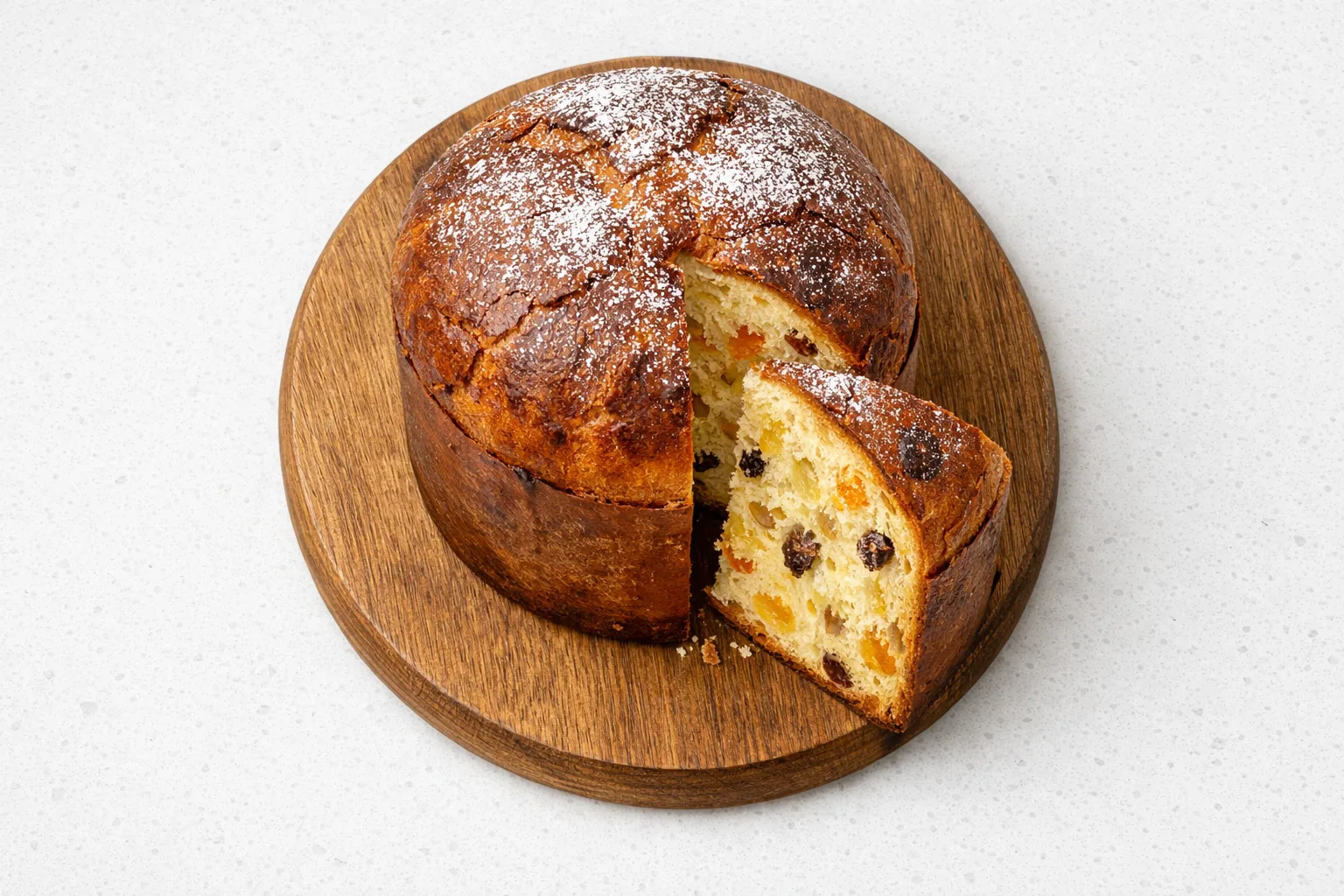
Panettone is the undisputed king of Italian Christmas baking. This tall, dome-shaped bread, rich with butter, eggs, candied citrus peel, and raisins, has been a holiday staple in Milan since at least the 15th century. Every December, Italians gift elaborately boxed panettone to friends, family, and colleagues. The good ones have a crumb so soft and stringy it pulls apart like cotton candy; the bad ones taste like dry cardboard with stale fruit.
This traditional panettone recipe uses a two-stage dough, sometimes called biga or starter method, where a portion of the dough ferments overnight before the final mix. That slow fermentation builds the complex, slightly tangy flavor and the signature open, airy texture. The dough is enriched with a generous amount of butter and egg yolks, which makes it feel closer to brioche than bread. It takes patience, but the technique is straightforward if you respect the timing.
The result is a panettone with a deep golden crust, a moist interior that stays fresh for days, and real candied citrus flavor rather than the artificial notes of mass-produced versions. Once you have made it from scratch, the supermarket boxes lose their appeal entirely.
Equipment
Instructions
Tap each step to track your progress
- 1
Make the starter the evening before. Warm the milk to about 95F/35C, sprinkle the yeast over it, and let it sit for 5 minutes until foamy. In the bowl of a stand mixer, combine the starter flour, sugar, egg yolks, and the yeast mixture. Mix with the dough hook on low speed until a sticky, cohesive dough forms, about 3 minutes. Cover tightly with plastic wrap and refrigerate for 10 to 14 hours overnight.
- 2
Remove the starter from the refrigerator and let it sit at room temperature for 30 minutes. It should have at least doubled in size and smell yeasty and slightly tangy.
- 3
Add the final dough flour, sugar, and salt to the starter in the mixer bowl. Mix on low speed with the dough hook for 2 minutes to combine. Add the 4 egg yolks and vanilla extract one at a time, mixing after each addition until absorbed. Increase to medium speed and knead for 8 minutes until the dough is smooth and elastic, pulling cleanly from the sides of the bowl.
- 4
With the mixer on medium-low, add the softened butter a few pieces at a time, waiting until each addition is fully absorbed before adding more. This takes about 8 to 10 minutes. The dough will look slippery and broken at first, then come together into a silky, stretchy mass. Add the orange and lemon zest in the last minute of mixing.
- 5
Perform a windowpane test: pull off a small piece of dough and stretch it gently between your fingers. It should stretch thin enough to see light through without tearing. If it tears, knead for another 3 to 4 minutes.
- 6
Drain the raisins and toss them with the candied orange peel and citron. Add the fruit mixture to the dough and mix on low speed for 1 to 2 minutes, just until evenly distributed. Do not overmix or the fruit will break apart and streak the dough.
- 7
Shape the dough into a smooth ball on a lightly floured surface, tucking the edges underneath. Place it seam-side down into a buttered panettone mold or a 6-inch round, tall-sided baking pan lined with parchment paper. The dough should fill the mold about one-third of the way up.
- 8
Cover loosely with plastic wrap and let rise in a warm, draft-free spot (about 78F/26C) until the dough reaches the top rim of the mold, about 3 to 4 hours. Do not rush this rise; the texture depends on it.
- 9
Preheat the oven to 350F (175C) with a rack in the lower third. Score a shallow cross on top of the dough with a very sharp knife or razor blade. Brush the top lightly with beaten egg.
- 10
Bake for 50 to 55 minutes, rotating the pan halfway through. The panettone is done when the top is deeply golden brown and an instant-read thermometer inserted into the center reads 190F (88C). If the top browns too quickly, tent loosely with aluminum foil after 30 minutes.
- 11
Immediately insert two long wooden skewers horizontally through the base of the panettone, about 2 inches from the bottom, forming an X. Invert the panettone and suspend it between two tall objects (like pot handles or stacked books) so it hangs upside down. This prevents the soft crumb from collapsing under its own weight as it cools. Let it cool completely upside down for at least 2 hours.
- 12
Once fully cooled, remove the skewers, turn the panettone right-side up, and brush the top with melted butter for a soft sheen. Dust lightly with powdered sugar before serving if desired.
Tips & Tricks
Respect the overnight starter
The 10 to 14 hour cold ferment is not optional. It develops both flavor and gluten structure that you cannot replicate with a quick rise. Plan accordingly: start the starter the evening before you want to bake.
Butter temperature matters
The butter must be soft enough to smear easily (about 65F/18C) but not melted or greasy. If it is too cold, it will not incorporate into the dough; if it is too warm, it will melt the gluten network and make the dough slack. Leave it at room temperature for about 1 hour before starting the final dough.
Use quality candied peel
Most store-bought candied peel is artificially colored and overly sweet. Look for imported Italian candied peel (Cedro and Arancio) at specialty shops, or make your own by simmering citrus peel strips in sugar syrup over several days. The flavor difference is enormous.
Do not skip the upside-down cooling
Hanging the baked panettone upside down is the single most important post-bake step. Without it, the soft, steam-filled crumb will collapse under gravity and you will end up with a dense, flat-topped result after all that work.
Use bread flour, not all-purpose
Bread flour has a higher protein content (12-14%) than all-purpose flour (10-12%), and that extra protein creates the strong gluten network needed to support the tall, domed shape and trap the gas from the long fermentation. All-purpose flour will produce a flatter, denser panettone.
Troubleshooting
My panettone collapsed or sank in the middle
You either skipped the upside-down cooling step or removed it from the inverted position too early. Panettone must cool completely while hanging upside down, at least 2 hours. The enriched dough structure needs to set fully before it can support its own weight right-side up.
The dough won't come together after adding butter
This is normal and not a reason to panic. Heavily enriched doughs always look greasy and broken during butter incorporation. Keep mixing on medium speed and it will eventually become smooth and pull away from the bowl. This can take a full 10 minutes. If the dough feels warm and greasy, stop the mixer, chill the bowl for 15 minutes, then resume.
The fruit sank to the bottom
The raisins or candied peel were too wet, or the dough did not have enough strength to hold them suspended. Drain soaked raisins thoroughly and pat them dry with paper towels before adding. Tossing the fruit with a tablespoon of flour can also help. Additionally, make sure your dough passes the windowpane test before adding fruit, because a weak gluten network cannot support heavy mix-ins.
The crust is too dark but the inside is raw
Your oven temperature is too high, or the pan is positioned too close to the top heating element. Always bake panettone on the lower third rack. Tent with foil after 30 minutes if the top is browning aggressively. Use a thermometer; color alone is not a reliable indicator of doneness for this bread.
The crumb is dense and cakey, not fluffy and stringy
The most likely causes are insufficient kneading (the gluten was not developed enough) or a rise that was cut short. The dough needs a solid 8 minutes of kneading after the flour stage, plus the full butter incorporation time. The final proof should triple the dough volume. Room temperature below 75F/24C will slow the rise significantly.
Variations
Chocolate Chip Panettone (Panettone al Cioccolato)
Replace the candied fruit and raisins with 1 1/2 cups (250g) of bittersweet chocolate chips or coarsely chopped dark chocolate (70% cacao). Add 2 tbsp Dutch-process cocoa powder to the final dough flour. The result is richer and darker, popular with anyone who finds candied fruit off-putting.
Panettone with Chocolate and Pear
Use 3/4 cup (130g) dark chocolate chips and 1 cup (150g) of diced firm pears (peeled, cored, and patted very dry). Omit the raisins and candied peel entirely. The pear adds moisture, so reduce the egg yolks in the final dough by one.
Dairy-Free Panettone
Substitute the butter with high-quality vegan block butter (such as Miyoko's or Naturli) at a 1:1 ratio. Replace the milk in the starter with oat milk. Use the egg yolks as written; they are essential for structure. The crumb will be slightly less rich but still tender. This is not a fully vegan version because of the eggs.
Plain Panettone (Panettone Bianco)
Omit all candied fruit and raisins for a simple, buttery bread. Increase the vanilla to 2 tsp and add seeds scraped from half a vanilla bean to the final dough. This version highlights the pure butter-and-egg richness and works beautifully sliced and toasted for breakfast.
Serving & Gifting
Slice panettone into tall, narrow wedges with a serrated knife. Italians serve it after Christmas Eve dinner or Christmas Day lunch alongside a glass of sparkling <em>spumante</em>, Moscato d'Asti, or a cup of strong espresso. For a dessert course, toast thick slices and serve with mascarpone cream or a scoop of gelato. Leftover panettone makes outstanding French toast and bread pudding.
Storage & Freezing
Wrap the cut surface tightly in plastic wrap and store at room temperature for up to 5 days; the high butter and egg content keeps it moist longer than lean breads. Do not refrigerate, as cold temperatures accelerate staling. For longer storage, wrap uncut panettone in plastic and then aluminum foil and freeze for up to 2 months. Thaw overnight at room temperature, still wrapped, to prevent condensation from making the crust soggy.
Common Questions
How long does homemade panettone take from start to finish?
Plan for about 24 hours total. The starter ferments overnight (10 to 14 hours), then the final dough requires about 1 hour of active mixing and kneading, 3 to 4 hours of proofing, 55 minutes of baking, and at least 2 hours of cooling. Active hands-on time is roughly 90 minutes.
Can I make panettone without a stand mixer?
Technically yes, but it is extremely difficult by hand. The dough requires prolonged kneading with butter incorporation that is physically demanding and can take 30 or more minutes of continuous hand kneading. A stand mixer with a dough hook is strongly recommended for this recipe.
Why does panettone need to cool upside down?
The enriched dough is extremely soft when hot. If cooled right-side up, gravity pulls the dome downward and the panettone deflates, losing its tall shape and airy texture. Cooling upside down allows the crumb structure to set while the bread hangs from its crust, preserving the lift.
Can I use instant yeast instead of active dry yeast?
Yes. Use the same amount (2 1/4 tsp) but skip the step of dissolving it in warm milk first. Mix the instant yeast directly into the flour for the starter, then add the milk at room temperature. Rise times will be similar.
How do I store panettone to keep it fresh?
Keep it wrapped in plastic at room temperature for up to 5 days. Do not refrigerate. For longer storage, freeze the whole uncut panettone wrapped in plastic and foil for up to 2 months. Thaw overnight at room temperature while still wrapped.
Is panettone the same as pandoro?
No. Both are Italian Christmas breads, but they are different. Pandoro, from Verona, contains no candied fruit or raisins and has a distinctive star-shaped cross-section. It is typically dusted heavily with powdered sugar. Panettone, from Milan, is taller, round, and always contains candied citrus peel and raisins in the traditional version.