
 United Kingdom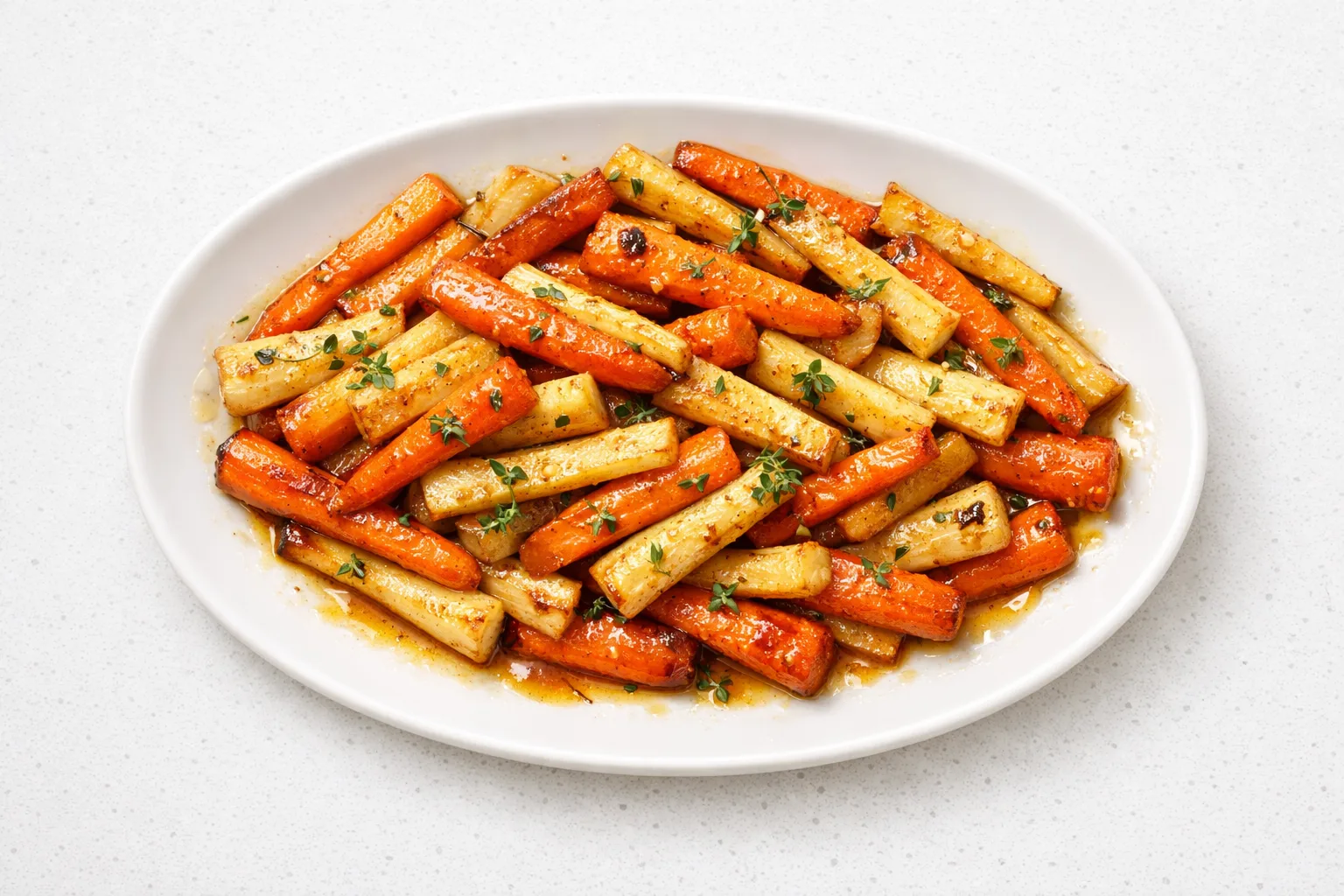
Honey glazed carrots and parsnips are one of those Christmas side dishes that earn a permanent spot on the table after a single appearance. In British kitchens, this combination of sweet root vegetables roasted with butter, honey, and thyme has been a fixture of the Christmas dinner spread for generations, sitting alongside the roast turkey and crispy potatoes. The natural sweetness of parsnips and the earthiness of carrots, amplified by a sticky honey glaze, makes this pairing far greater than the sum of its parts.
What sets this recipe apart is the two-stage approach: the vegetables roast dry first to build proper caramelisation, then the honey butter glaze goes on for the final stretch. This prevents the common problem of soggy, steamed-not-roasted roots that plague most glazed vegetable recipes. The result is tender centres with edges that have gone slightly crisp and deeply golden, coated in a thin, tacky glaze that clings rather than pools.
Equipment
Instructions
Tap each step to track your progress
- 1
Preheat the oven to 200C (400F) fan, or 220C (425F) conventional. Line a large rimmed baking sheet with parchment paper. The sheet needs to be large enough that the vegetables sit in a single layer with space between them.
- 2
Toss the carrot and parsnip batons with the olive oil, fine sea salt, and black pepper directly on the baking sheet. Spread them out so no pieces overlap. Crowding causes steaming, not roasting.
- 3
Roast for 20 minutes without touching them. The undersides should be starting to turn golden and the edges should be drying out.
- 4
While the vegetables roast, make the glaze. Melt the butter in a small saucepan over medium-low heat. Add the honey, wholegrain mustard, and thyme leaves. Stir until combined and warmed through, about 1 minute. Remove from the heat.
- 5
After 20 minutes, remove the baking sheet from the oven. Drizzle the honey butter glaze evenly over the vegetables, then toss gently with a spatula or tongs to coat. Work quickly so the tray stays hot.
- 6
Return to the oven and roast for another 12 to 15 minutes, until the glaze has turned sticky and the vegetables are tender when pierced with a knife, with deep golden-brown caramelised patches on the edges.
- 7
Transfer to a warmed serving platter. Scatter with a few extra fresh thyme leaves and a pinch of flaky sea salt. Serve immediately while the glaze is still tacky and warm.
Tips & Tricks
Cut to uniform thickness
Every baton should be roughly the same thickness so they roast at the same rate. Tapered parsnip ends will overcook while thick carrot chunks stay raw if sizes vary too much. Spend the extra minute trimming them evenly.
Dry roast first, glaze later
Resist the temptation to add the glaze from the start. The initial 20 minutes of dry roasting drives off surface moisture and begins the Maillard reaction. Adding honey too early creates a wet environment that prevents proper browning.
Prep the night before
Peel and cut the vegetables the day before Christmas, store them in a bowl of cold water in the fridge. Drain and pat them completely dry with a clean kitchen towel before roasting. Any surface water will cause splattering and reduce caramelisation.
Use a hot oven
Root vegetables need high heat to caramelise properly. Anything below 190C (375F) will cook them through but leave them pale and bland. A properly preheated oven at 200C (400F) fan is the sweet spot for this recipe.
Troubleshooting
My vegetables are soft and soggy, not caramelised
The most common cause is overcrowding the baking sheet. Root vegetables release moisture as they cook, and if they are packed tightly, they steam rather than roast. Use two baking sheets if needed, and make sure there is at least half an inch of space around each piece. Also check that your oven is fully preheated before the tray goes in.
The honey glaze has burnt and turned bitter
Honey burns easily at high temperatures because of its high sugar content. If your oven runs hot, reduce the temperature by 10C (20F) for the glazed stage. Also, make sure the glaze is evenly distributed. Pools of honey on the parchment will scorch faster than a thin coating on the vegetables.
The parsnips are mushy but the carrots are still hard
Parsnips cook faster than carrots because they are less dense. Cut the carrots slightly thinner than the parsnips (about 1/4 inch thinner) so they cook at the same rate. Alternatively, add the carrots to the oven 5 minutes before the parsnips.
The vegetables stuck to the baking sheet
Use parchment paper, not a bare metal tray. If the glaze still sticks, your parchment may have shifted during tossing. Press it down before adding the glaze. Silicone baking mats also work well and prevent sticking entirely.
Variations
Maple and Rosemary Version
Swap the honey for pure maple syrup and replace the thyme with 2 sprigs of finely chopped fresh rosemary. Drop the mustard. Maple brings a deeper, more complex sweetness that works well with the rosemary's piney aroma. Roast times stay the same.
Vegan Adaptation
Replace the butter with 2 tablespoons of extra-virgin olive oil in the glaze. The glaze will be slightly thinner, so add an extra teaspoon of honey to compensate for the lost richness. The caramelisation actually improves since olive oil can handle higher heat without burning.
Spiced Orange Glaze
Add the finely grated zest of 1 orange and 1/2 teaspoon of ground cumin to the honey butter glaze. The citrus lifts the sweetness and the cumin adds an earthy warmth that pairs well with parsnips. A good option if you want something slightly less traditional.
With Root Vegetable Medley
Add 8 oz (225g) of peeled, cubed beetroot or sweet potato to the mix. Cut them slightly smaller than the carrots and parsnips since they take longer to cook through. The colour contrast on the serving platter is striking. Increase the glaze quantities by half.
Serving & Gifting
Pile the glazed carrots and parsnips on a warmed oval platter and serve alongside roast turkey, goose, or a nut roast for a vegetarian Christmas dinner. They pair well with anything that benefits from a sweet counterpoint: rich gravy, sharp cranberry sauce, or a peppery watercress salad. For a dinner party, you can arrange the batons in neat parallel rows for a more polished look.
Storage & Freezing
Leftover glazed carrots and parsnips keep in an airtight container in the fridge for up to 3 days. Reheat on a baking sheet at 190C (375F) for 8 to 10 minutes to restore some crispness; the microwave will make them soft. They can be frozen for up to 2 months, but the texture will be softer after thawing. Best used in soups or mashed into a root vegetable puree after freezing rather than served as a side.
Common Questions
Can I make honey glazed carrots and parsnips ahead of time?
You can peel and cut the vegetables up to 24 hours ahead, stored in cold water in the fridge. The glaze can also be made ahead and kept in a jar at room temperature. Roasting should be done fresh, as close to serving as possible, since the caramelised texture does not hold well after sitting.
What can I use instead of honey for a vegan version?
Maple syrup is the best substitute because it caramelises in a similar way and has enough body to form a sticky glaze. Agave syrup works but is thinner and sweeter, so use about 2 tablespoons instead of 3. Golden syrup is another option that gives good colour and stickiness.
How do I know when the parsnips are done?
Pierce the thickest part with a small knife. It should slide in with no resistance. The outside edges should be deep golden brown, almost amber in places. If the parsnips are browning too fast on the outside but still firm inside, loosely cover with foil for the last 5 minutes.
Is wholegrain mustard necessary in the glaze?
It adds a subtle savoury depth that balances the sweetness of the honey, but you can leave it out if you prefer a purely sweet glaze. Dijon mustard works as a smoother alternative. The recipe is still good without any mustard at all; just increase the thyme slightly for extra flavour.
Can I roast other root vegetables with this glaze?
This honey glaze works with almost any root vegetable: beetroot, sweet potato, celeriac, turnips, and swede all roast well with it. Adjust cut sizes so everything finishes at the same time. Harder vegetables like celeriac and turnips need smaller pieces than carrots.
How many servings does this make as a Christmas dinner side?
This recipe serves 6 as a side dish alongside other vegetables, potatoes, and a main course. If it is the only vegetable side, plan for 4 generous servings. Double the recipe for larger gatherings, using two baking sheets on separate oven racks and swapping their positions halfway through.