
 Germany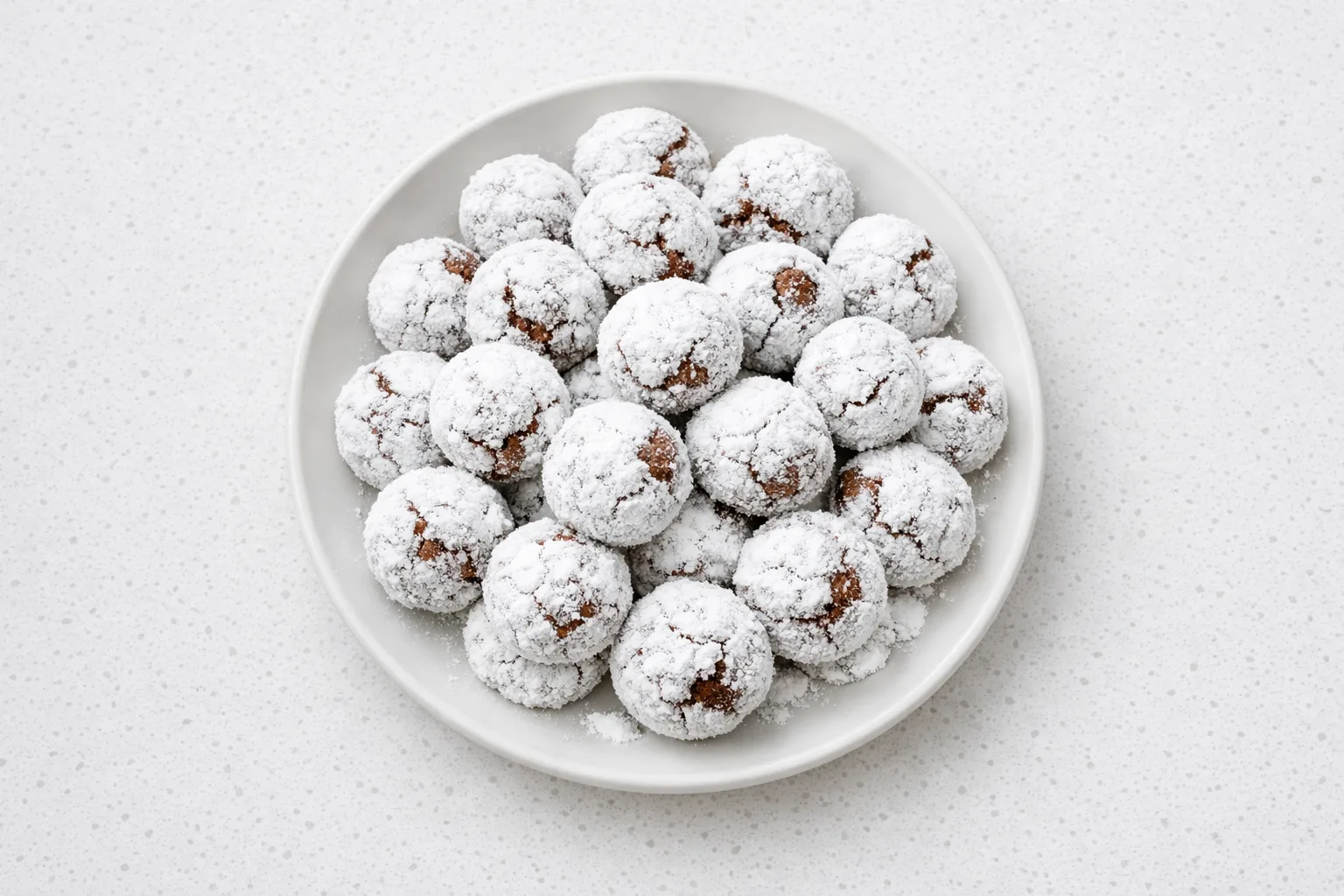
Pfeffernusse ("pepper nuts") are one of Germany's oldest and most recognizable Christmas cookies. These small, dense spice cookies have been baked across Germany, Denmark, and the Netherlands since at least the 16th century, appearing in markets and home kitchens alike from the first week of Advent. The name refers not to heat but to the traditional inclusion of white pepper and black pepper alongside anise, cinnamon, cloves, cardamom, and allspice, a spice blend that produces a cookie with genuine depth rather than generic sweetness.
Traditional pfeffernusse are hard when they come out of the oven. This is correct. They soften over 24 to 48 hours in an airtight tin as the moisture inside the cookie redistributes, eventually reaching a pleasantly chewy texture. The powdered sugar coating clings to that soft, slightly tacky surface and sets into a matte white crust. Patience is the actual technique here: bake them at least two days before serving.
This version uses blackstrap molasses (or dark treacle) for depth and a small amount of white pepper, which gives the classic Pfeffernusse its faint lingering warmth without registering as spicy. The result is 60 uniform, bite-sized cookies that improve every day they sit in the tin.
Equipment
Instructions
Tap each step to track your progress
- 1
Whisk together the flour, baking soda, salt, anise, cinnamon, cloves, cardamom, allspice, nutmeg, white pepper, and black pepper in a large bowl until the spices are evenly distributed. Set aside.
- 2
In a stand mixer fitted with the paddle attachment, beat the butter on medium speed for 1 minute until smooth. Add the dark brown sugar and beat on medium-high for 2 to 3 minutes until the mixture lightens slightly and looks creamy.
- 3
Add the molasses and beat on medium speed for 30 seconds until fully incorporated. Scrape down the bowl. Add the egg and milk and beat for another 30 seconds until smooth.
- 4
Add the flour-spice mixture all at once and mix on low speed until just combined. The dough will be stiff and slightly sticky, similar to a soft play-dough. Do not overmix.
- 5
Turn the dough out onto a lightly floured surface and divide into four equal portions. Roll each portion into a log about 1 inch in diameter. Wrap tightly in plastic wrap and refrigerate for at least 2 hours or overnight. The dough must be cold and firm before slicing.
- 6
Preheat the oven to 350 F (175 C). Line two baking sheets with parchment paper.
- 7
Slice the cold logs into rounds about 3/4 inch thick. Roll each round briefly between your palms to form a smooth ball. Place on the prepared baking sheets about 1 inch apart; these cookies do not spread much.
- 8
Bake for 12 to 14 minutes until the cookies are firm to the touch on top and show slight cracking on the surface. The bottoms should be a deep golden brown but not dark. They will feel quite hard; this is expected. Do not overbake.
- 9
Transfer immediately to a wire rack and let cool for exactly 5 minutes, until they are still warm but handleable.
- 10
While still warm, toss a small batch of cookies in the bowl of sifted powdered sugar and roll to coat completely. The warmth helps the sugar adhere. Transfer to a rack to finish cooling. Repeat with remaining cookies.
- 11
Once fully cooled, transfer to an airtight tin and seal. Leave for at least 24 hours, ideally 48, before serving. The cookies will soften noticeably as they rest.
Tips & Tricks
Grind your own anise if possible
Pre-ground anise loses its volatile oils quickly. If you have a spice grinder, grind whole anise seeds just before mixing the dough. The difference in aroma is immediate and the cookies will taste significantly more complex.
Make the dough at least a day ahead
Pfeffernusse dough benefits from resting overnight in the refrigerator. The spices hydrate and meld, and the dough firms up completely, making it much easier to slice cleanly. You can refrigerate the wrapped logs for up to 3 days before baking.
Do not overbake
These cookies continue to harden as they cool, and they need to be slightly yielding when you pull them from the oven so they soften correctly after resting. If they are fully firm in the oven, they will end up too hard even after 2 days in the tin.
Work in small batches when sugar-coating
Do not dump all the cookies into the powdered sugar at once. Work in groups of 10 to 12 while they are still warm. Cookies that have cooled before coating need to be slightly warmed or lightly misted to get the sugar to stick properly.
Label the tin with the bake date
Because pfeffernusse improve so much over time, it helps to know when they were made. Mark the tin with a date. The flavor at day 1 and day 7 are noticeably different, with day 7 being better by most measures.
Troubleshooting
The cookies are still rock-hard after 2 days
They need moisture to soften, and a dry environment (especially in winter with heating running) can slow this down. Place a small piece of apple or a slice of bread in the tin alongside the cookies and seal. Within 12 hours the cookies will begin to absorb ambient moisture and soften.
The powdered sugar coating is falling off
The sugar must be applied while the cookies are still warm, not cold. Cold cookies have a dry surface and the sugar does not adhere. If your cookies have already cooled, lightly mist them with water from a spray bottle, then roll in the sugar immediately.
My dough logs are crumbling when I slice them
The dough is too cold. Take the log out of the refrigerator and let it sit at room temperature for 5 to 10 minutes. Use a sharp, thin-bladed knife and cut with a single decisive downward press rather than a sawing motion.
The cookies spread into flat discs
The butter was too soft or the dough was not chilled properly before baking. Reform the dough into logs and refrigerate for a full hour before attempting to slice and bake again. The dough must be cold and firm.
The cookies taste too bitter
Blackstrap molasses is significantly more bitter than regular dark molasses. If you used blackstrap and find the flavor too sharp, reduce it to 2 tablespoons next time and add 1 additional tablespoon of dark brown sugar to compensate. Regular dark molasses produces a milder, sweeter cookie.
Variations
Anise-Forward Pfeffernusse
If you want the anise flavor to be more pronounced, add 1/2 teaspoon of whole anise seeds to the dough along with the ground anise. Whole seeds give occasional bursts of licorice flavor that taste closer to very old traditional recipes from northern Germany. Do not use star anise, which has a stronger, more medicinal quality.
Glazed Rather Than Sugar-Coated
Instead of rolling in powdered sugar, brush each warm cookie with a thin glaze made from 1 cup powdered sugar whisked with 2 to 3 tablespoons of warm water and 1/2 teaspoon of vanilla extract. The glaze sets hard and shiny, giving the cookies a more polished look closer to Danish <em>pebernodder</em>. Apply the glaze while cookies are warm and let set on a rack for 30 minutes.
Gluten-Free Adaptation
Replace the all-purpose flour with a 1:1 gluten-free baking flour blend that contains xanthan gum. The dough will be slightly stickier; refrigerate for a full 3 hours before rolling. The texture will be a little more crisp and less chewy, but the spice flavor comes through cleanly.
Vegan Adaptation
Replace the butter with refined coconut oil (solid, not melted) and use a flax egg (1 tablespoon ground flaxseed mixed with 3 tablespoons water, rested for 5 minutes). Swap the milk for oat milk. The cookies will be slightly crispier and less chewy after resting, but hold their shape and take the powdered sugar coating well.
Serving & Gifting
Pfeffernusse are best served at room temperature, piled into a bowl or arranged on a plate for guests to take freely, which is how they appear at German Christmas markets alongside Gluehwein. They pair naturally with a cup of black coffee, strong black tea, or hot spiced cider. For gifting, pack them in a metal tin with parchment between layers; they travel extremely well since they are dry and firm, and the flavor actually improves the longer they sit.
Storage & Freezing
Pfeffernusse keep in an airtight tin at room temperature for up to 4 weeks and improve for the first week as the spices mellow and the texture softens. They do not need refrigeration. For longer storage, freeze uncoated cookies in a sealed freezer bag for up to 3 months; thaw at room temperature for 1 to 2 hours, then coat in fresh powdered sugar before serving. Do not freeze already-coated cookies, the powdered sugar turns sticky and dissolves as they thaw.
Common Questions
What does pfeffernusse mean?
Pfeffernusse translates literally from German as "pepper nuts," referring to the use of both white and black pepper in the spice blend. The "nuts" part refers to the small, round, nut-like shape of the cookies, not to any nut ingredient. They are related to Danish pebernodder and Dutch pepernoten.
Why are pfeffernusse so hard when they come out of the oven?
Pfeffernusse are intentionally baked to be firm because they are meant to rest in a sealed tin for 24 to 48 hours before eating. During that resting period, moisture inside the cookie redistributes and the texture softens to pleasantly chewy. Eating them fresh from the oven is like eating underprepared gingerbread; they are not ready yet.
Can I use star anise instead of ground anise?
No. Star anise and anise seed come from different plants and taste noticeably different. Star anise has a more medicinal, intense licorice flavor and will make the cookies taste off. Use ground anise seed or anise extract. If you cannot find either, you can omit the anise entirely, though the cookies will lose some of their traditional character.
How long do pfeffernusse last?
Stored in an airtight tin at room temperature, pfeffernusse last up to 4 weeks. They are one of the longest-keeping Christmas cookies precisely because they are dry and low in moisture, which makes them ideal for baking well in advance or shipping as gifts.
What is the difference between pfeffernusse and lebkuchen?
Both are German Christmas spiced cookies, but lebkuchen are typically larger, softer, and sometimes chocolate-coated or glazed. Pfeffernusse are small, round, and more intensely spiced with pepper and anise. Lebkuchen often contain nuts or marzipan; pfeffernusse do not. They come from different regional traditions within German baking.
Can I make pfeffernusse without molasses?
Molasses (called treacle in the UK and much of Europe) gives pfeffernusse their characteristic dark color and slightly bitter depth. If you cannot find it, substitute an equal amount of dark honey or golden syrup, but be aware the flavor will be sweeter and less complex. The color will also be lighter.