
 United Kingdom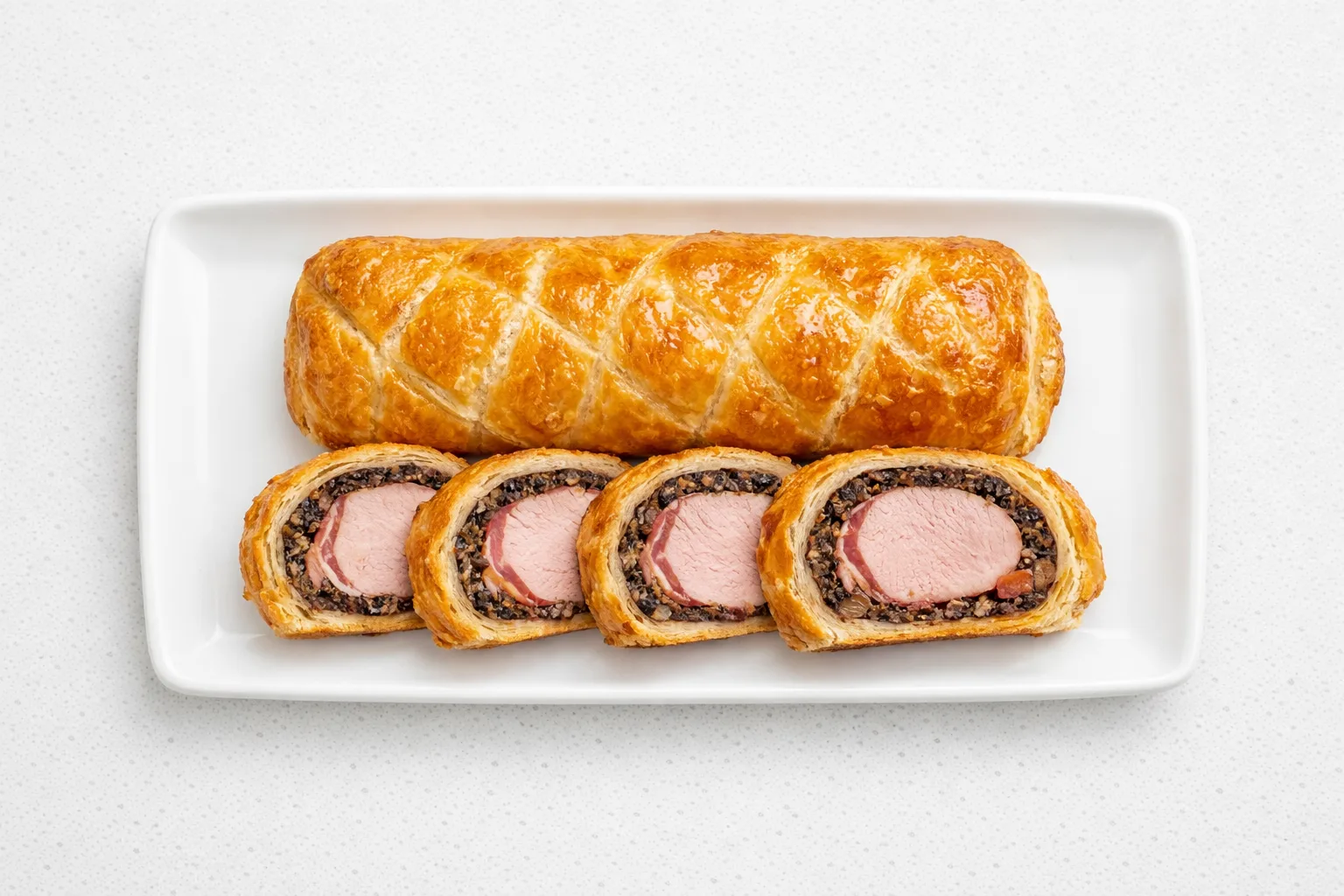
Pork wellington is the Christmas main that does everything beef wellington does but at a fraction of the cost and with a more forgiving cook window. A pork tenderloin, lean and quick-cooking, gets coated in a savory layer of mushroom duxelles, wrapped in prosciutto to keep moisture in, then sealed in buttery puff pastry and roasted until the outside is shatteringly crisp and the inside hits a perfect blush pink. It is classic pork en croute technique applied to the most elegant cut on the animal.
The mushroom duxelles is the flavor engine here. Cremini or chestnut mushrooms get cooked down hard with shallots, thyme, and a splash of dry sherry until completely dry, concentrated, and almost paste-like. Skipping this step is the single most common mistake: wet duxelles turns the pastry to cardboard from the inside out. Get it dry, then get it cold before it touches the prosciutto.
This recipe is built for the Christmas table. The entire wellington can be assembled a day ahead and refrigerated unbaked, then goes into a hot oven 30 minutes before you want to serve. No resting guesswork, no last-minute stress. Slice it at the table and the layers do the presentation work for you.
Equipment
Instructions
Tap each step to track your progress
- 1
Make the duxelles: pulse the mushrooms in a food processor in two batches until finely chopped (not pureed). Melt the butter with olive oil in a large skillet over high heat. Add the shallots and cook for 2 minutes until softened. Add the garlic and cook 30 seconds. Add the mushrooms, thyme, salt, and pepper. Cook over high heat, stirring often, for 12 to 15 minutes until all moisture has evaporated and the mixture is dark, dry, and paste-like. Add the sherry and cook until evaporated, about 2 more minutes. Transfer to a plate, spread thin, and refrigerate until completely cold, at least 30 minutes.
- 2
Season and sear the pork: pat both tenderloins dry with paper towels. Season all over with fine sea salt and pepper. Heat a heavy skillet over high heat with 1 tbsp oil until smoking. Sear the tenderloins for 2 to 3 minutes, turning to color on all sides, but do not cook through. The internal temperature should be no more than 95 F (35 C) at this point. Transfer to a plate, brush all over with Dijon mustard, and refrigerate for 20 minutes to cool completely.
- 3
Build the prosciutto layer: lay a large sheet of plastic wrap on a clean surface. Arrange the prosciutto slices in a rectangular sheet, overlapping slightly, large enough to fully wrap one tenderloin. Spread half the cold duxelles in an even layer over the prosciutto, leaving a 1-inch border at the top and bottom. Set the cold tenderloin across the bottom edge of the prosciutto and roll it up tightly, using the plastic wrap to help form a tight log. Twist the ends closed and refrigerate for at least 15 minutes. Repeat with the second tenderloin.
- 4
Wrap in pastry: on a lightly floured surface, roll the puff pastry into a rectangle large enough to wrap both logs side by side, or use two separate sheets if preferred. Unwrap the prosciutto logs and place them in the center of the pastry. Brush the pastry edges with egg wash. Roll the pastry around the logs, pressing the seam firmly to seal. Tuck the ends under and press to seal. Place seam-side down on a parchment-lined baking sheet.
- 5
Chill again: refrigerate the assembled wellington for at least 20 minutes (or up to 24 hours, covered loosely with plastic wrap). Cold pastry going into a hot oven is what produces maximum lift and flake. Do not skip this rest.
- 6
Preheat and score: preheat the oven to 425 F (220 C). Remove the wellington from the refrigerator. Brush the top and sides generously with egg wash. Using a sharp knife, score the top in a crosshatch or leaf pattern, cutting only 1/8 inch deep into the pastry. Sprinkle with flaky sea salt.
- 7
Bake: place the baking sheet in the middle of the oven. Bake for 25 to 30 minutes until the pastry is deep golden brown and the internal temperature of the pork reads 145 F (63 C) on an instant-read thermometer inserted into the center of the thickest part. If the pastry is browning too fast, tent loosely with foil.
- 8
Rest and make the sauce: remove from the oven and rest for 8 minutes before slicing. Meanwhile, if making the pan sauce, combine stock and sherry in a small saucepan over medium-high heat. Reduce by half, about 5 minutes. Whisk in the cold butter and Dijon, season, and keep warm.
- 9
Slice and serve: use a sharp serrated knife to cut the wellington into 1.5-inch rounds. Each slice should reveal distinct concentric layers of pastry, prosciutto, duxelles, and pink pork. Serve with the pan sauce alongside.
Tips & Tricks
Dry duxelles is non-negotiable
The mushrooms must lose all their water before you use them. Cook over high heat, spread thin, and keep stirring. It should look almost like a dark paste, not a saute. Even one tablespoon of trapped moisture will steam the pastry from inside and ruin the bottom.
Chill every layer before the next one goes on
Cold duxelles on cold pork in cold prosciutto, then into cold pastry. Each chill step is 15 to 30 minutes minimum. The whole process takes time, but none of the active steps are difficult. Plan the assembly for the morning or the day before.
Use all-butter puff pastry
Butter-based puff pastry (look for "pur beurre" or "all-butter" on the label) shatters when baked and has a clean, rich flavor. Vegetable oil-based pastry is softer, less flavorful, and more prone to sogginess. The difference is significant.
Score lightly and brush generously
Score only the surface of the pastry, not all the way through. Deep cuts open up and let steam escape unevenly. Two coats of egg wash (one before scoring, one after) give a deep mahogany color.
Let it rest before slicing
Eight minutes of rest is enough for a tenderloin this size. Slicing too early pushes the juices out and compresses the pork. The internal temperature will rise a degree or two during the rest, finishing the cook without the oven.
Troubleshooting
The pastry is soggy on the bottom
The duxelles was not cooked dry enough, or the assembled wellington went into the oven too cold. Cook the mushrooms until there is zero visible moisture in the pan, let the log chill fully before wrapping in pastry, and always bake on a preheated rack or heavy baking sheet to drive heat from below.
The pork is overcooked and dry
The tenderloin was too warm when it went into the pastry (from insufficient chilling after searing), or the oven temperature was too low. Aim for 145 F (63 C) internal; carryover heat will bring it to 150 F (65 C) during the rest. Use a thermometer, not time alone.
The pastry won't seal properly
The edges got smeared with egg wash before sealing, which acts as a barrier. Apply egg wash only after sealing. Press the seam firmly with your fingers first, then use a fork to crimp if needed. Chilling the sealed wellington sets the pastry and helps the seam hold.
The duxelles leaks out when slicing
The log was not rolled tightly enough in the prosciutto, leaving air pockets. The plastic wrap roll technique is key: pull it as tight as a roulade, twist the ends until the log is firm, and refrigerate until it holds its shape before removing the wrap.
The pastry browns before the pork is cooked through
Your oven runs hot, or the wellington was too thick. Check internal temperature from 22 minutes onward. If the pastry is dark but the pork needs more time, cover loosely with a foil tent and continue. Next time, roll the pastry slightly thinner or use a smaller diameter log.
Variations
Beef Wellington (Classic Upgrade)
Swap the pork tenderloins for a center-cut beef tenderloin (2 lbs, whole). Follow the same sear-and-chill method but target an internal temperature of 125 F (52 C) for medium-rare. Increase the bake time to 30 to 35 minutes. The duxelles and prosciutto quantities stay the same.
Pork Wellington with Spinach and Ricotta
Add a thin layer of ricotta cheese (3 oz) mixed with 1/2 cup wilted, squeezed-dry spinach and 1/4 cup grated Parmesan between the prosciutto and duxelles layers. This adds a lighter, Italian-leaning flavor profile and a bit more bulk, making it stretch to 8 servings.
Dairy-Free Adaptation
The recipe is naturally dairy-free if you use a dairy-free all-butter puff pastry (check the label; many commercial puff pastry sheets are made with vegetable fats). Omit the butter in the duxelles and pan sauce, using olive oil throughout. The pan sauce can be finished with a drizzle of good olive oil instead of cold butter.
Individual Pork Wellingtons
Cut each tenderloin into 3 equal medallions (about 4 oz each) and wrap each individually. Reduce the bake time to 18 to 20 minutes. Individual wellingtons are easier to serve at a dinner party and eliminate slicing at the table. Sear each medallion for 90 seconds per side before coating.
Serving & Gifting
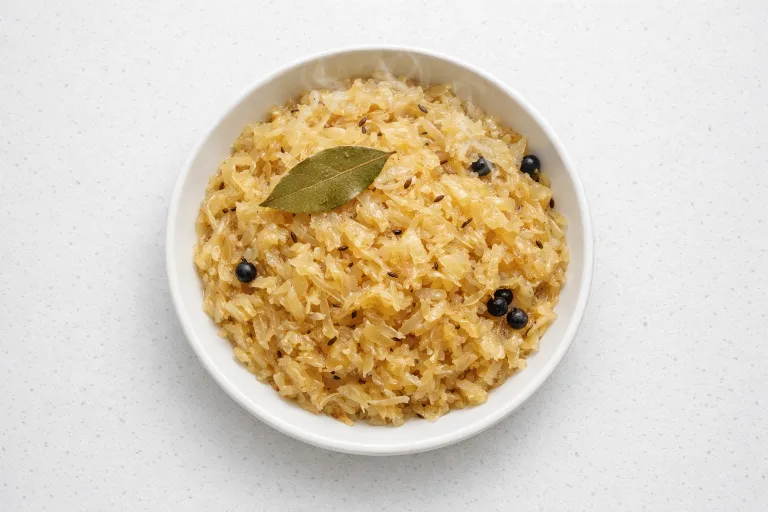
Slice the wellington at the table; the reveal of layered pastry, prosciutto, duxelles, and pink pork is the visual centerpiece. Serve with the Dijon pan sauce, roasted potatoes, and steamed green beans or braised red cabbage. For Christmas dinner, a pour of sharp apple cider or a Pinot Noir is the right match for the pork.
Storage & Freezing
Leftover slices keep refrigerated in an airtight container for up to 3 days. Reheat in a 375 F (190 C) oven for 8 to 10 minutes to revive pastry crispness; the microwave will make the pastry soft. The assembled, unbaked wellington (before egg wash) freezes well for up to 1 month, tightly wrapped; thaw overnight in the refrigerator before baking. Do not freeze baked slices; the pastry becomes leathery.
Common Questions
Can I make pork wellington the day before?
Yes. Assemble the wellington up through the pastry wrap, cover loosely with plastic wrap, and refrigerate for up to 24 hours. Add the egg wash and score marks just before baking. Pull from the refrigerator 10 minutes before it goes into the oven (but keep it cold; this is just to avoid shocking a very cold dish into a very hot oven).
What internal temperature should pork wellington be?
Pull the wellington from the oven when the pork center reads 145 F (63 C) on an instant-read thermometer. After 8 minutes of resting, carryover cooking will bring it to around 150 F (65 C), which gives slightly pink, juicy pork. Above 160 F (71 C), the tenderloin becomes dry.
Can I use pork loin instead of pork tenderloin?
You can, but it requires adjustments. Pork loin is larger in diameter and takes longer to cook, which risks burning the pastry before the center is done. If using loin, cut it lengthwise to reduce thickness, and use a thermometer obsessively. Tenderloin is the better choice for this preparation.
What is mushroom duxelles?
Duxelles is a French preparation of finely chopped mushrooms, shallots, and herbs cooked over high heat until all moisture has evaporated, leaving a dry, intensely flavored paste. In a wellington, it acts as a flavor layer and also helps the prosciutto adhere to the meat. It is pronounced "dook-SELL."
Is pork wellington the same as pork en croute?
They are essentially the same thing. <em>En croute</em> is the French term meaning "in crust," and refers to any meat or filling wrapped and baked in pastry. Pork wellington is the English-influenced version of the same technique, named after the Wellington preparation popularized with beef in the 19th century.
Can pork wellington be made gluten-free?
Yes. Use a gluten-free puff pastry (available in many supermarkets, often in the freezer section). The rest of the recipe is naturally gluten-free. Note that gluten-free pastry does not puff as dramatically and may be slightly more fragile when slicing; let it rest a full 10 minutes before cutting.