
Christmas in Norway
Norwegian Christmas, or Jul, stretches from Advent through January 13 and revolves around family, food, and the long polar night. Julenissen, Norway's gnome-like gift bringer, arrives on Christmas Eve with presents. The Julbord (Christmas table) groans under the weight of ribbe (roast pork belly), lutefisk, and at least seven types of Christmas cookies.
Norway celebrates Christmas in near-total darkness. In December, the northernmost regions see no sunrise at all, and even Oslo gets barely six hours of pale light. Against this backdrop, Jul becomes an act of defiance against the dark: every window holds a candle or star, every table is laden with food, and the entire country seems to collectively decide that if winter will not offer light, they will make their own.
The Julebord Season
Before Christmas itself arrives, Norwegians celebrate with julebord, festive buffet dinners held by workplaces, friend groups, and organizations throughout December. A julebord features the classic Norwegian Christmas menu in miniature: ribbe or pinnekjott, lutefisk, meatballs, sausages, and generous quantities of aquavit. The aquavit toasts follow a specific protocol, and the evening typically ends with dancing. Restaurants across Norway are fully booked for julebord season by October.
The Great Ribbe vs. Pinnekjott Debate
Norway's most contentious Christmas question is not about gifts or carols. It is about meat. Eastern Norway eats ribbe, roast pork belly with crackling so crisp it shatters. Western Norway eats pinnekjott, salted and dried lamb ribs steamed over birch sticks until tender. Annual surveys confirm the country is split roughly 50-50, with ribbe holding a slight edge nationally. Both sides consider the other's choice incomprehensible.
The third option, lutefisk (dried cod treated with lye until it becomes gelatinous), is less popular but fiercely defended by its devotees. It is typically served with bacon, pea stew, and potatoes. Opinions on lutefisk tend toward the extreme: people love it or find it genuinely disturbing.
Julaften: Christmas Eve
December 24 is the main event. Many families attend a church service in the early afternoon. At home, the Christmas meal is served around 5 or 6 PM. After dinner, the family joins hands and walks in a circle around the Christmas tree, singing carols. Then Julenissen arrives, either in person (a family member in costume) or having left gifts under the tree while everyone was distracted.
Norwegian television broadcasts Disney cartoons on Christmas Eve, a tradition borrowed from Sweden. The 3 PM broadcast is not quite as sacred as in Sweden, but it has a loyal audience.
Seven Sorts and Baking Season
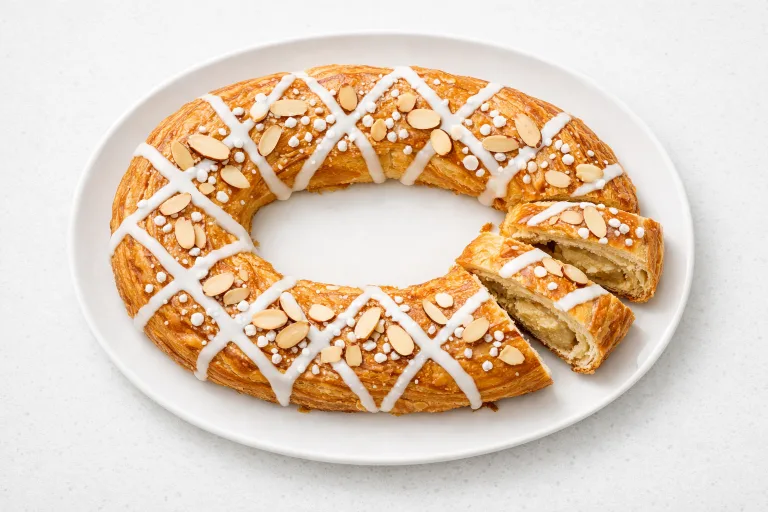
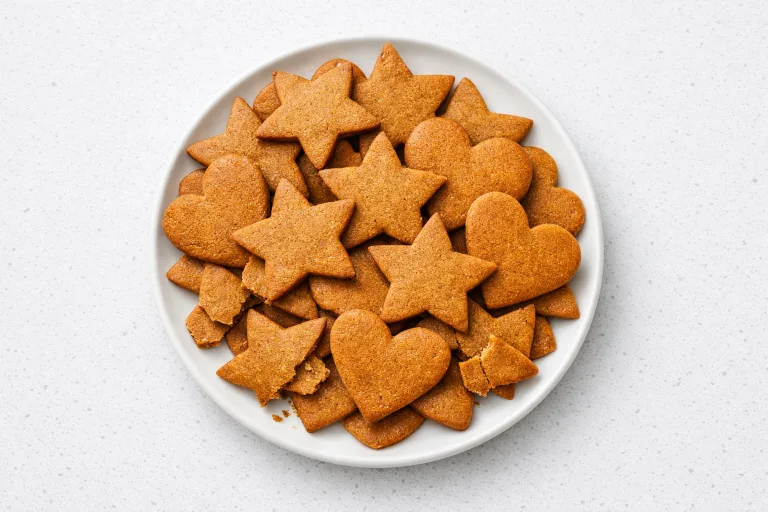
The tradition of syv slags kaker (seven sorts of cookies) means that Norwegian Advent kitchens run at full capacity. The minimum is seven varieties, but competitive bakers aim for fourteen or more. Classics include krumkaker (thin, cone-shaped waffle cookies), berlinerkranser (butter cookies shaped like wreaths), sandkaker (almond tarts baked in fluted tins), fattigmann (deep-fried cardamom cookies), and goro (embossed waffle cookies). Pepperkaker, the Norwegian gingerbread, are both eaten and used to build elaborate pepperkakebyer (gingerbread towns) displayed in public spaces.
Frequently Asked Questions
What is ribbe?
Ribbe is roast pork belly with crispy crackling, the most popular Christmas dinner in eastern Norway. The pork is slow-roasted until the fat renders and the skin becomes glass-crisp. It is served with sauerkraut, boiled potatoes, and lingonberry jam.
What is a julebord?
A julebord is a festive Christmas buffet dinner held during December by workplaces, friend groups, and organizations. It features traditional Norwegian Christmas foods, aquavit toasts, and often dancing. Restaurants across Norway are booked for julebord season months in advance.
Who is Julenissen?
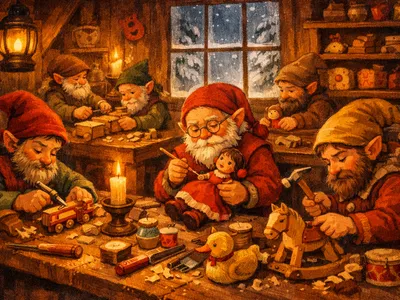
Julenissen is Norway's gift-bringer, a nisse (gnome) from Scandinavian folklore. He is depicted as a small, bearded figure in a red cap who lives on the farm and protects the household. Families leave a bowl of porridge for him on Christmas Eve.
Why do Norwegians hide their brooms on Christmas Eve?
An old folk belief holds that witches and evil spirits emerge on Christmas Eve and steal brooms for riding. Norwegians still hide their brooms on December 24. The tradition is now mostly maintained with humor, but it persists widely.
Traditions & Customs
Julenissen
Norway's gift bringer is a nisse, a small gnome-like creature from Scandinavian folklore. Families leave out a bowl of porridge (graut) for the nisse on Christmas Eve. In many homes, a family member dresses as Julenissen to deliver gifts.
Syv Slags Kaker (Seven Sorts of Cookies)
Norwegian tradition requires baking at least seven different types of Christmas cookies. Common varieties include krumkaker (waffle cones), berlinerkranser (wreath cookies), sandkaker (sand tarts), and pepperkaker (gingerbread). Some families bake fourteen or more varieties.
Julebord (Christmas Table)
Workplaces and friend groups hold julebord parties throughout December, featuring a lavish buffet of traditional food, aquavit toasts, and dancing. The julebord season is a major social event and a significant source of restaurant revenue.
Ribbe or Pinnekjott
Norway is divided on the main Christmas dish. Western Norway eats pinnekjott (dried, salted lamb ribs steamed over birch sticks). Eastern Norway prefers ribbe (roast pork belly with crispy crackling). The debate rivals Sweden's panettone/pandoro divide.
Hiding the Brooms
An old Norwegian tradition holds that witches and evil spirits come out on Christmas Eve to steal brooms for riding. Norwegians still hide their brooms on December 24, though today it is mostly done with a knowing smile.
Julaften (Christmas Eve)
The main celebration happens on December 24. Families attend church in the afternoon, share the Christmas meal, then gather around the tree to open gifts. Walking around the tree while singing carols is a common ritual before unwrapping presents.
Christmas Markets
Oslo Christmas Market
The main market fills the area around Karl Johans gate and Spikersuppa skating rink. Stalls sell Norwegian crafts, wool products, and traditional foods like lefse and glogg.
Bergen Christmas Market
Set at the historic Bryggen wharf, a UNESCO World Heritage Site. The wooden Hanseatic buildings provide a atmospheric backdrop for stalls selling local crafts, smoked salmon, and Bergen's famous pepperkaker.
Key Dates
Forste adventssoendag
The start of the Christmas season. Families light the first candle on the Advent wreath and begin baking the mandatory seven (or more) types of cookies.
Luciadagen
St. Lucia Day is celebrated with processions, especially in schools and kindergartens. The tradition was adopted from Sweden in the 20th century.
Lille julaften (Little Christmas Eve)
The day of final preparations. Many families decorate the tree and prepare food. Rice porridge (risengrynsgraut) is traditionally eaten, with a hidden almond that brings good luck to the finder.
Julaften (Christmas Eve)
The main celebration. Church services in the afternoon, the Christmas meal, walking around the tree, and gift exchange. Norwegian television broadcasts Disney cartoons, similar to the Swedish tradition.
Tjuendedag jul (Twentieth Day Christmas)
The official end of the Norwegian Christmas season. The tree is taken down and the holiday decorations are stored away.
Christmas Carols
A Child Is Born in Bethlehem
Et barn er fodt i BetlehemOne of Norway's oldest and most beloved Christmas hymns, dating to the medieval period. The carol is sung in churches across Norway on Christmas Eve.
On the Day Before Christmas
Dagen for julA popular Norwegian Christmas song about the anticipation and preparations on December 23. Its warm, nostalgic melody captures the excitement of the day before Jul.
I Am So Glad Each Christmas Eve
Jeg er sa glad hver julekveldWritten by Marie Wexelsen in 1859, this children's hymn is one of the most widely sung Christmas songs in Norway. It is often the first carol Norwegian children learn.