
 Italy
Italy 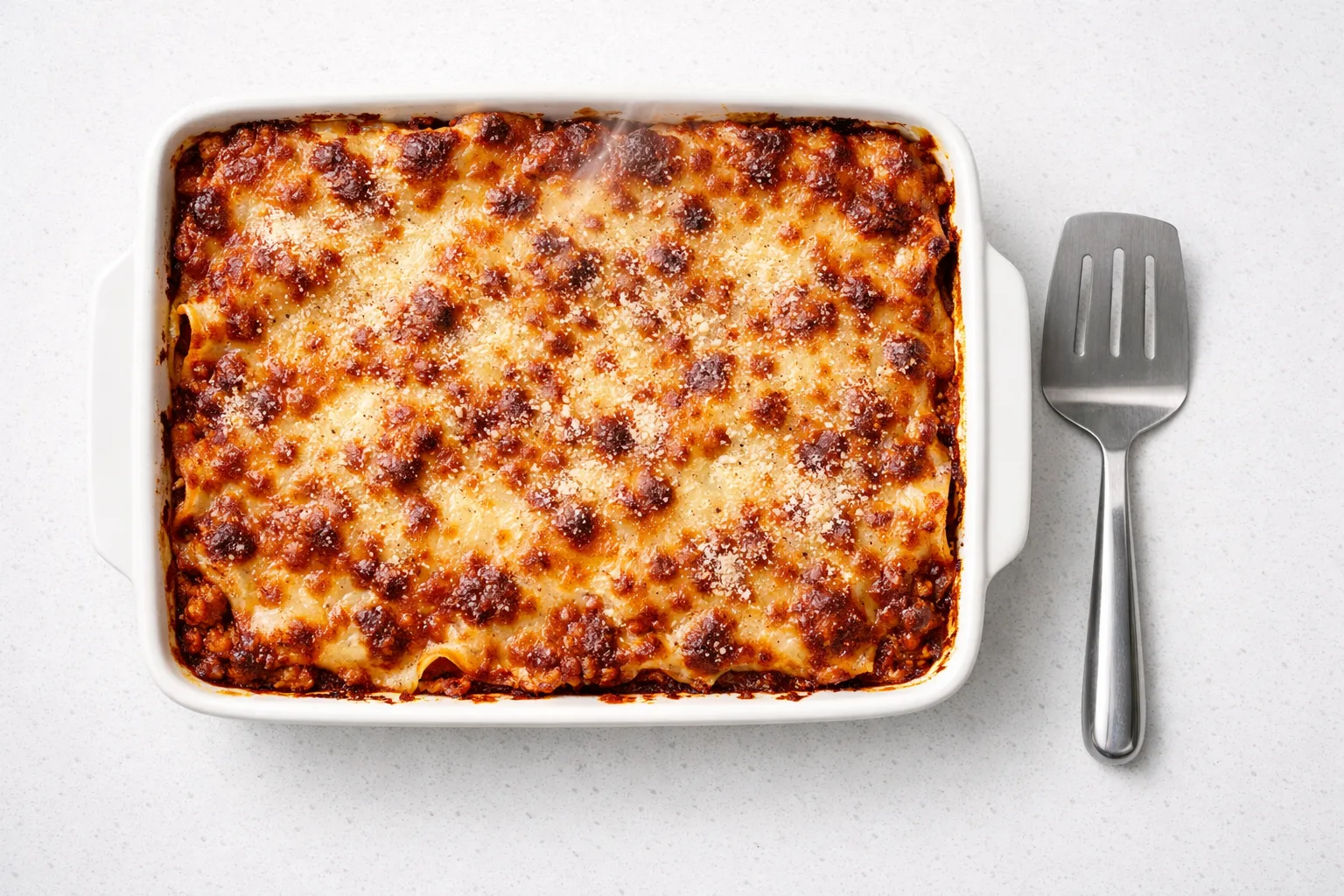
Christmas lasagna has become one of the most searched recipes of the holiday season, and it earns that attention on the table. Italian-American families have long made lasagna the centerpiece of Christmas Eve dinner, a tradition rooted in the Feast of the Seven Fishes but adapted over generations into a richer, meatier version that works just as well on Christmas Day. This recipe builds a slow-cooked beef and pork ragu, layers it with creamy bechamel, sauteed spinach, ricotta, and mozzarella, and finishes with a heavy hand of Parmesan. The result feeds 12 without stress because the whole thing is assembled the day before.
The make-ahead design is what makes this a genuinely useful holiday lasagna. Most of the work happens the day before: you make the ragu, the bechamel, and assemble all the layers. It goes into the fridge overnight, and you pull it out to bake while guests arrive. The extra rest time actually improves it; the layers compress and the flavors settle into each other. This is not the weeknight version with jarred marinara. It is the version worth making once a year.
Equipment
Instructions
Tap each step to track your progress
- 1
Make the ragu: Heat 2 tablespoons olive oil in a large, heavy-bottomed pot or Dutch oven over medium-high heat. Add the ground beef and pork. Cook, breaking up the meat with a wooden spoon, until well browned, about 8 to 10 minutes. Do not rush this step; proper browning builds the flavor base. Drain excess fat, leaving about 2 tablespoons in the pot.
- 2
Add the diced onion to the browned meat and cook over medium heat until softened and translucent, about 5 minutes. Add the minced garlic and tomato paste and cook for 2 more minutes until the paste darkens slightly and smells sweet.
- 3
Pour in the red wine and scrape up any browned bits from the bottom of the pot. Cook until the wine reduces by half, about 3 minutes. Add both cans of crushed tomatoes, oregano, basil, red pepper flakes, salt, and pepper. Stir to combine, reduce heat to low, and simmer uncovered for 30 to 40 minutes until the sauce is thick enough to mound on a spoon. Taste and adjust seasoning.
- 4
Make the bechamel: Melt butter in a medium saucepan over medium heat. Add the flour and whisk constantly for 1 to 2 minutes until the mixture smells faintly nutty and turns a pale golden color; this is the roux. Gradually pour in the warm milk in a slow stream, whisking the whole time to prevent lumps. Cook, stirring frequently, until the sauce thickens enough to coat the back of a spoon, about 5 to 7 minutes. Remove from heat, stir in salt, nutmeg, and Parmesan. Set aside.
- 5
Prepare the spinach: Heat 1 tablespoon olive oil in a large skillet over medium heat. Add the baby spinach in batches, tossing until wilted, about 2 to 3 minutes total. Transfer to a colander and press firmly with the back of a spoon to squeeze out as much liquid as possible. Roughly chop and set aside.
- 6
Make the ricotta mixture: In a large bowl, combine the whole-milk ricotta, eggs, 1/2 cup Parmesan, salt, pepper, and the drained chopped spinach. Mix until evenly combined. The mixture should be spreadable but not runny.
- 7
If using regular (not no-boil) lasagna noodles, cook them in a large pot of heavily salted boiling water for 2 minutes less than the package instructions. They should be flexible but still have some resistance. Drain, lay flat on oiled baking sheets to prevent sticking. If using no-boil noodles, they go in dry.
- 8
Assemble the lasagna: Spread a thin layer of meat ragu (about 1 cup) across the bottom of a 9x13 inch baking dish. Lay noodles over the ragu in a single layer, overlapping slightly if needed. Spread one-third of the ricotta-spinach mixture over the noodles. Ladle on one-quarter of the remaining ragu and drizzle with one-quarter of the bechamel. Scatter a handful of shredded mozzarella over the top.
- 9
Repeat the layering: noodles, ricotta-spinach mixture, ragu, bechamel, mozzarella. Do this for three full layers. For the final layer, place the last noodles, pour over the remaining ragu and bechamel, and top with all of the remaining mozzarella and the 1/2 cup of Parmesan for topping.
- 10
Cover the dish tightly with foil (tent it slightly so the foil doesn't touch the cheese) and refrigerate overnight, or for at least 4 hours, up to 24 hours.
- 11
Bake: Remove the lasagna from the fridge 30 minutes before baking. Preheat the oven to 375 F (190 C). Bake covered for 45 minutes. Remove the foil and bake for an additional 20 to 25 minutes until the top is deeply browned and bubbling at the edges. Let the lasagna rest for 15 to 20 minutes before cutting; this is not optional. Cutting too soon means the layers slide apart.
Tips & Tricks
Make the ragu a full day ahead
The meat sauce tastes significantly better on day two. Make it 24 to 48 hours before you plan to assemble the lasagna, refrigerate it, and skim off the solidified fat on top before using. This one step makes the flavor noticeably deeper.
Dry your ricotta if it seems wet
Supermarket whole-milk ricotta varies in moisture content. If yours looks watery, line a colander with cheesecloth or paper towels, pour in the ricotta, and let it drain in the fridge for 1 hour. Wet ricotta makes wet lasagna.
Build the top layer with a heavy hand on the cheese
The cheese on top forms a crust. If it is too sparse, the top layer of noodles dries out. Use all the mozzarella and Parmesan called for in the recipe; this is not the time to economize.
Rest the lasagna before cutting (really)
The 15 to 20 minute rest is not just about temperature. The gelatin from the meat and the starch from the noodles need time to firm up after coming out of the oven. Cut too early and every serving slides apart on the plate.
Use no-boil noodles for an easier assembly
No-boil noodles skip the pre-cooking step and absorb moisture from the sauce as they bake, which actually helps them integrate into the layers. Make sure you have plenty of sauce coverage so every noodle is in contact with moisture. This is the version to make if you are assembling late at night before Christmas.
Troubleshooting
The lasagna is watery when I cut into it
The spinach was not dried thoroughly enough, or the ragu was too thin. Spinach holds a surprising amount of water; after wilting and pressing in the colander, press again with a clean kitchen towel. The ragu should be thick enough to hold its shape when mounded on a spoon before assembly. If it looks thin, simmer it uncovered for another 10 minutes.
The top layer is burnt but the center is still cold
The lasagna went into the oven too cold. Always rest it at room temperature for at least 30 minutes before baking. If the top is browning too fast, tent with foil and continue baking at 350 F until a knife inserted in the center meets no resistance and comes out hot to the touch.
The noodles are gummy and stuck together
Regular noodles were not spread out immediately after cooking. After boiling, lay noodles flat on oiled baking sheets in a single layer; never pile them. If using no-boil noodles, make sure every noodle is fully covered by sauce on all sides during assembly or the dry edges will stay tough.
The bechamel has lumps
The milk was added too quickly to the roux. If it lumps, do not panic: pour the sauce through a fine-mesh strainer and press the lumps through, then return to the heat and whisk vigorously. Alternatively, use an immersion blender directly in the saucepan for 30 seconds.
The lasagna falls apart when serving
It did not rest long enough after baking. The rest time allows the filling to set and the layers to bond. 15 minutes is the minimum; 20 is better. Use a sharp spatula and cut decisively rather than sawing back and forth.
Variations
Vegetarian Christmas Lasagna
Omit the meat entirely. Double the spinach layer and add 2 cups of sliced cremini mushrooms, sauteed until they release their liquid and brown. Use a roasted vegetable tomato sauce in place of the ragu: roast diced zucchini, eggplant, and red pepper at 425 F until caramelized, then combine with canned tomatoes and simmer. The flavor is deep and satisfying without any meat.
White Christmas Lasagna (No-Red-Sauce Version)
Skip the tomato ragu entirely. Use a double batch of bechamel as the sauce base, layer with shredded rotisserie chicken, sauteed mushrooms, spinach, ricotta, and mozzarella. Finish the top with Gruyere instead of Parmesan. This is a richer, more luxurious version that works especially well for Christmas Day when guests want something different from the usual tomato-based dish.
Gluten-Free Adaptation
Use certified gluten-free rice lasagna noodles. For the bechamel, substitute the all-purpose flour with a 1:1 blend of rice flour and cornstarch (2 tablespoons each). The bechamel may be slightly thinner; cook it a minute or two longer to compensate. All other elements are naturally gluten-free.
Spicy Sausage Version
Replace the ground pork with hot Italian sausage, casings removed. Increase the red pepper flakes to 1 teaspoon. Add 1 cup of sliced roasted red peppers (from a jar, drained) to the ragu. This version skews more assertive in flavor and pairs especially well with the creamy bechamel to balance the heat.
Serving & Gifting
Serve the lasagna with a simple bitter green salad (arugula with lemon and olive oil works perfectly) to cut through the richness of the cheese and bechamel. A basket of crusty bread for mopping up the extra sauce is mandatory at any Christmas table. For a crowd, plan on 12 generous portions from one 9x13 dish; if feeding more than 14, bake a second smaller pan alongside it. Pour a mid-weight Italian red like Montepulciano d'Abruzzo or Barbera d'Asti.
Storage & Freezing
Leftover lasagna keeps refrigerated in an airtight container or tightly wrapped in the baking dish for up to 4 days. Individual portions reheat well in the microwave (2 to 3 minutes on medium power, covered with a damp paper towel to keep the noodles from drying out) or in a 350 F oven covered with foil for 20 minutes. The assembled unbaked lasagna freezes for up to 2 months; wrap tightly in two layers of foil. Thaw overnight in the refrigerator before baking, then add 10 to 15 minutes to the covered bake time.
Common Questions
Can I make christmas lasagna the day before?
Yes, and you should. Assemble the lasagna completely the day before, cover tightly with foil, and refrigerate. Pull it out 30 minutes before baking to take the chill off. The layers actually compress and meld overnight, so the baked result is better than one assembled and baked immediately.
How long does christmas lasagna take to bake?
Bake covered at 375 F (190 C) for 45 minutes, then uncover for 20 to 25 more minutes until the top is browned and bubbling. Total bake time is about 65 to 70 minutes. Add 10 to 15 minutes if it went into the oven straight from the fridge.
Can I freeze an unbaked lasagna?
Yes. Assemble the lasagna fully, wrap tightly in two layers of heavy-duty foil, and freeze for up to 2 months. Thaw overnight in the refrigerator before baking. Do not bake from frozen; the outside will overcook before the center heats through.
What is the best cheese to use in holiday lasagna?
Whole-milk ricotta gives the creamiest texture. Low-moisture whole-milk mozzarella (not fresh mozzarella packed in water) is essential for the top layer: it melts evenly and browns without making the lasagna watery. Finish with finely grated Parmigiano-Reggiano or a good Parmesan for flavor and crust on top.
How many does a 9x13 christmas lasagna feed?
A 9x13 inch pan cuts into 12 generous servings when it is the main course. If you are serving it alongside other dishes (a common approach at Christmas dinner), it can stretch to 14 to 16 smaller portions.
Is christmas lasagna gluten-free?
Not in its standard form, but it adapts well. Use certified gluten-free rice lasagna noodles and replace the all-purpose flour in the bechamel with rice flour or a 1:1 gluten-free flour blend. The rest of the recipe is naturally gluten-free.