
 Germany
  Austria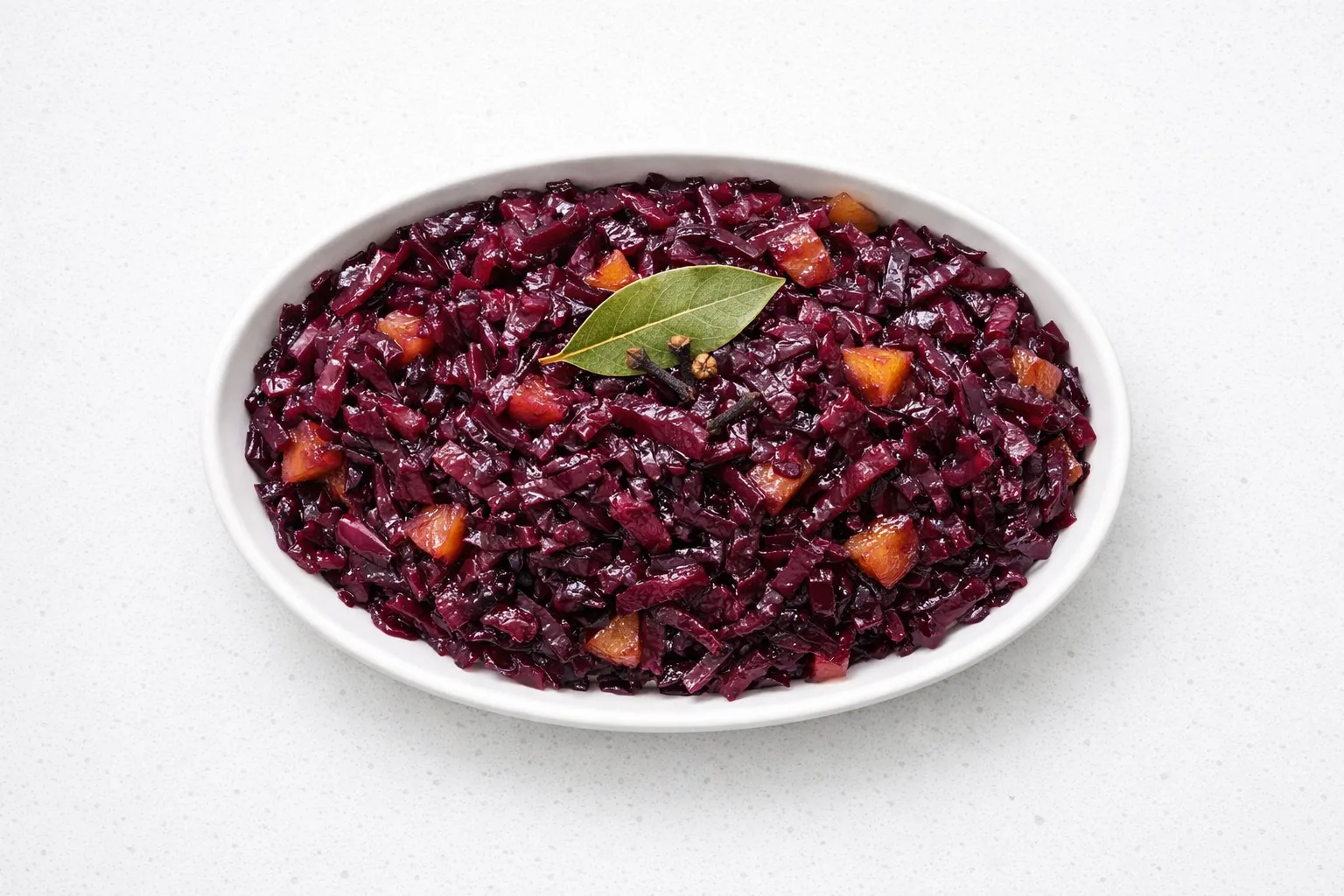
Rotkohl is the Weihnachtsbeilage, the Christmas side dish, that Germans will argue about more passionately than almost anything else on the holiday table. Every family claims their version is the only correct one. The constants are red cabbage, apple, and vinegar; the variables are wine versus water, lard versus oil, juniper berries or not. This recipe takes the sweet-sour Rhineland approach: red wine, a little brown sugar, apple, and just enough cloves and bay to smell unmistakably of Christmas.
Good Rotkohl is braised slowly enough that the cabbage collapses into silky, tender shreds while the liquid reduces to a glossy, concentrated sauce that clings to every strand. The vinegar does two things: it keeps the cabbage a vivid burgundy-purple (without acid, it turns an unappetizing blue-grey) and it balances the sweetness from the apple and sugar into a clean, bright finish. Rush it and you get crunchy cabbage in thin liquid. Give it 50 minutes on a low flame and you get something that tastes like it has been cooking for hours.
Equipment
Instructions
Tap each step to track your progress
- 1
Shred the cabbage as thinly and evenly as possible, about 1/8-inch strips. A mandoline is faster than a knife. Discard any thick core pieces. Set aside.
- 2
Heat the oil or lard in a large, heavy pot or Dutch oven over medium heat. Add the diced onion and cook, stirring occasionally, until softened and translucent, about 5 minutes. Do not let it brown.
- 3
Add the shredded cabbage to the pot. It will look like far too much, but it will wilt significantly. Stir to coat with the fat. Cook for 3 minutes, stirring, until the cabbage begins to soften at the edges.
- 4
Add the apple pieces, red wine vinegar, red wine, brown sugar, salt, cloves, bay leaves, cinnamon, and black pepper. Stir everything together.
- 5
Bring the mixture to a gentle simmer over medium heat. Cover the pot with a tight-fitting lid, reduce heat to low, and braise for 40 minutes, stirring every 10 to 15 minutes. The cabbage should be very tender and the liquid mostly absorbed.
- 6
Remove the lid and increase heat to medium. Cook uncovered for 8 to 12 minutes, stirring frequently, until any remaining liquid reduces to a glossy, syrupy coating on the cabbage. The cabbage should look shiny and concentrated, not soupy.
- 7
Taste and adjust: add more vinegar for tartness, a pinch more sugar for sweetness, or salt as needed. The flavor should be a clean sweet-sour with a distinct clove warmth underneath.
- 8
Remove and discard the bay leaves and whole cloves. Stir in the tablespoon of butter off the heat for extra gloss, if using. Serve immediately or reheat gently before serving.
Tips & Tricks
Make it 2 days ahead
Rotkohl genuinely tastes better after resting. Make it on December 23rd, refrigerate, and reheat on the day. The clove and cinnamon flavors deepen overnight in a way that fresh-cooked Rotkohl simply does not have.
Shred thin and even for the best texture
Thick, uneven shreds mean some pieces will be mushy while others stay tough. Aim for 1/8-inch strips. If using a knife, halve the cabbage, place it flat-side down, and slice across with long, steady strokes.
Use a tart apple, not a sweet one
Gala or Fuji apples will make the dish cloying. Granny Smith, Boskoop, or Braeburn hold their shape during braising and contribute the fruity tartness that keeps the sweet-sour balance sharp.
Do not rush the vinegar balance at the end
Taste Rotkohl only after the liquid has reduced; braising liquid is deceptively thin and the flavors concentrate significantly. What tastes bland with 10 minutes left often needs nothing at all once the liquid is gone.
Cloves are potent: count them out
Three whole cloves is the right amount for 2.5 lbs of cabbage. More than four and the dish starts to taste medicinal. Counting them in makes it easy to fish them out at the end.
Troubleshooting
My Rotkohl turned blue-grey instead of staying purple
You did not add the vinegar early enough, or skipped it. The anthocyanins in red cabbage turn blue in alkaline conditions and stay red in acidic ones. Always add the vinegar at the start of braising. If it has already turned, add a splash more vinegar and stir over heat; it will recover much of its color.
The cabbage is still crunchy after 40 minutes
Your heat was too low or the pot lid was not sealing well. Increase heat to medium-low, check that the lid fits snugly, and add a few tablespoons of water if the pot looks dry. Continue braising until the cabbage yields easily when pressed with a spoon.
The Rotkohl tastes flat or too sweet
It needs more acidity. Add vinegar one teaspoon at a time, stirring and tasting after each addition. Salt also amplifies acidity; a small pinch often brings the whole dish into balance without adding more vinegar.
There is too much liquid and the cabbage looks watery
Remove the lid and raise the heat to medium-high. Cook uncovered, stirring constantly, until the liquid evaporates and the cabbage looks glossy and concentrated. This usually takes 5 to 10 minutes.
The onions are browning before the cabbage goes in
The heat is too high. Reduce to medium-low and add a splash of water to cool the pan. Rotkohl should be braised, not fried; browned onions introduce a bitter note that clashes with the sweet-sour profile.
Variations
Vegan Version
Skip the lard and use neutral vegetable oil instead. Omit the optional butter finish or replace it with a teaspoon of coconut oil. The result is nearly identical since the braising liquid and spices carry the flavor.
Rotkohl mit Rotwein (Red Wine Version)
Increase the red wine to 3/4 cup and add a tablespoon of red currant jelly or grape jelly in the last 10 minutes. This gives a slightly more sophisticated, less sharp flavor profile that pairs particularly well with duck or goose.
Juniper and Orange Version
Add 4 lightly crushed juniper berries along with the spices, and replace the apple with the zest and juice of one orange plus one apple. The juniper gives a piney, gin-like edge that cuts through fatty meats beautifully.
Quick Weeknight Version
Use pre-shredded red cabbage from a bag to skip the prep. The result is acceptable but slightly less silky than freshly shredded cabbage because pre-cut cabbage loses some moisture. Reduce initial cooking time by 5 minutes and check for tenderness at the 30-minute mark.
Serving & Gifting
Rotkohl is the classic partner for <em>Sauerbraten</em>, roast goose, duck, or pork loin. At a German Christmas dinner, it always appears alongside potato dumplings (<em>Kartoffelkloesse</em>) and a rich pan gravy. Serve it in a wide, warm bowl or straight from the pot at the table. A small sprig of fresh thyme or a scatter of pomegranate seeds adds color on the plate without touching the flavor.
Storage & Freezing
Rotkohl keeps refrigerated in an airtight container for up to 5 days, and the flavor improves noticeably on days 2 and 3 as the spices meld. Reheat gently on the stovetop over low heat with a splash of water, stirring occasionally. Rotkohl also freezes exceptionally well for up to 3 months; portion it into freezer bags or containers before freezing and thaw overnight in the refrigerator before reheating. This makes it an ideal make-ahead dish for Christmas dinner.
Common Questions
What does Rotkohl taste like?
Rotkohl is sweet, sour, and warmly spiced, with a soft, silky texture. The apple adds gentle fruitiness, the vinegar provides a clean tang, and the cloves and cinnamon make it smell unmistakably of Christmas. It is nothing like raw red cabbage.
Can I make German Rotkohl without wine?
Yes. Replace the red wine with the same amount of water or unsweetened apple juice, and add an extra tablespoon of red wine vinegar to compensate for the acidity. The result is slightly less complex but still very good, and the recipe becomes entirely alcohol-free.
Is Rotkohl the same as pickled red cabbage?
No. Pickled red cabbage is raw and preserved in cold vinegar brine. Rotkohl is cooked, braised low and slow until tender. They have similar sweet-sour flavor notes but completely different textures and uses.
How do I keep red cabbage from turning grey when cooking?
Add vinegar at the very beginning of cooking. The acid keeps the natural pigments (anthocyanins) in their red-purple state. Skipping the vinegar or adding it late will result in dull, greyish-blue cabbage.
Can Rotkohl be made vegan?
Yes. Use neutral oil instead of lard, and skip the optional butter finish at the end. Every other ingredient is already plant-based. The flavor difference is minimal because the vinegar, apple, and spices carry the dish.
How far in advance can I make Rotkohl for Christmas dinner?
Up to 3 days in advance, refrigerated. It can also be frozen for up to 3 months. Reheat on the stovetop with a splash of water over low heat. This makes it one of the most practical make-ahead sides for a large Christmas meal.