
 United Kingdom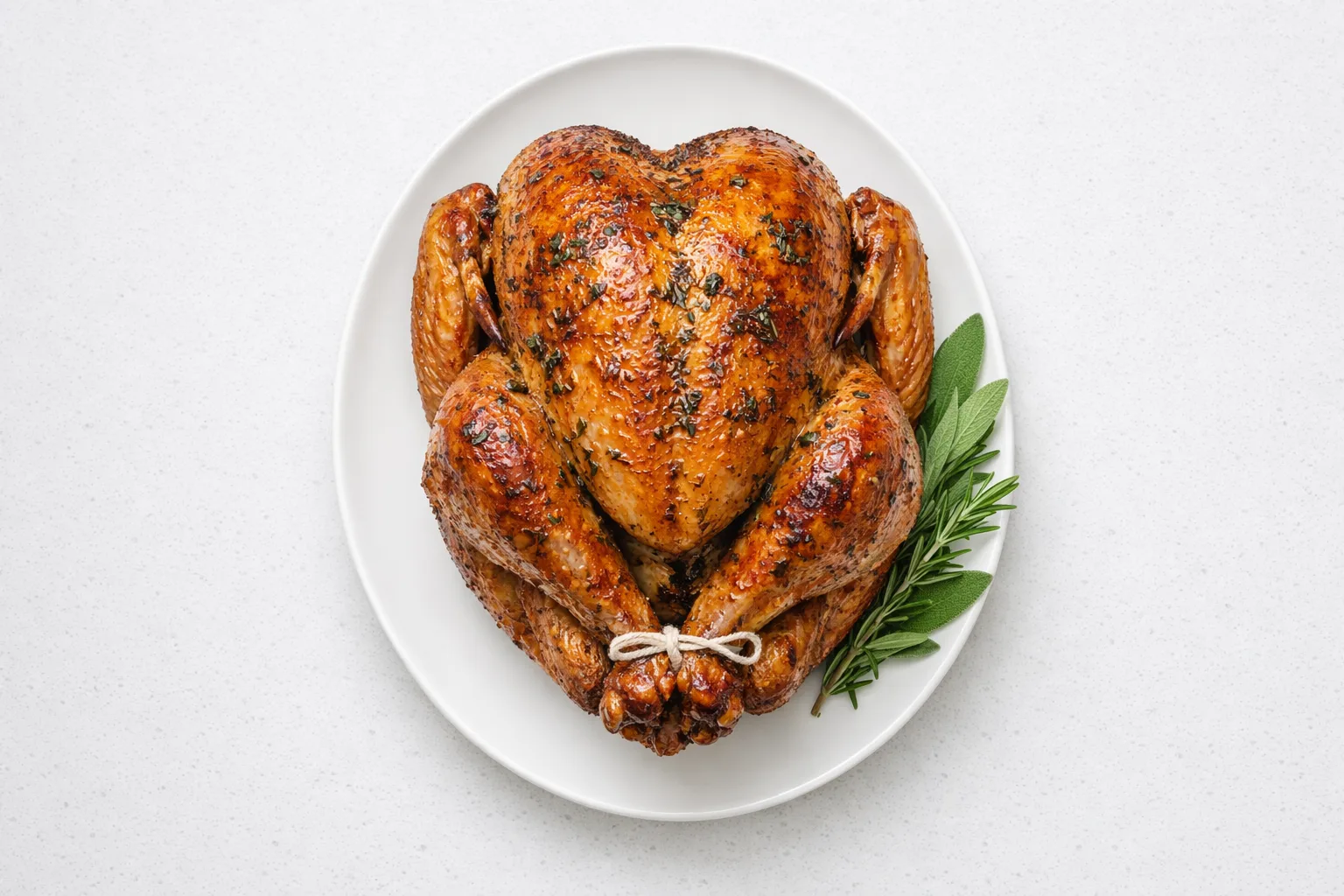
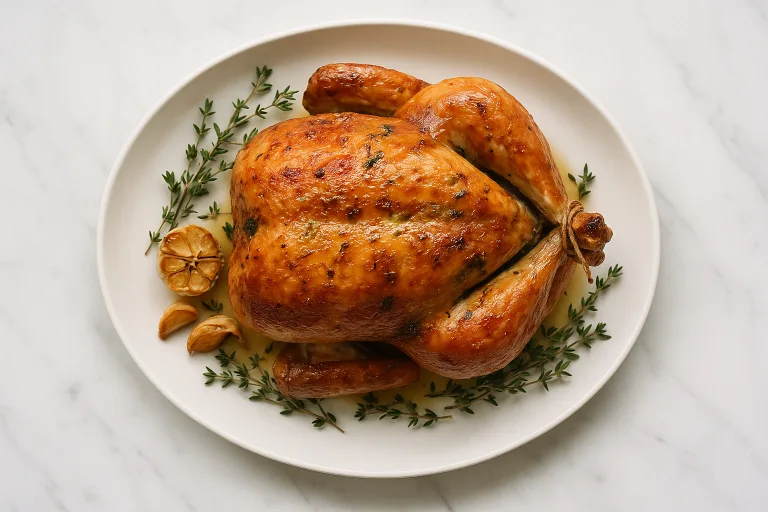
A roast turkey is the undisputed centerpiece of the Christmas dinner table across the United States and the United Kingdom. The tradition stretches back centuries, well before the Victorians cemented it as the standard holiday roast. Getting it right is mostly about understanding two things: heat management and fat distribution. This recipe solves both with a compound herb butter that goes directly under the skin, basting the breast from within as the bird cooks.
The method here is straightforward. No brining, no deep-frying, no overnight marinades. You make a batch of herb butter, loosen the skin, spread it generously over the breast and thigh meat, then roast at two temperatures: high heat first for bronze skin, lower heat to cook through gently. The result is a turkey with crisp, shattering skin and breast meat that stays moist to the last slice.
The pan drippings from the herb butter create a gravy so flavorful it barely needs seasoning. This is the turkey recipe to trust when you have twelve people at the table and no room for error.
Equipment
Instructions
Tap each step to track your progress
- 1
Remove the turkey from the refrigerator 1 hour before roasting to take the chill off. Pat it completely dry inside and out with paper towels. Thorough drying is essential for crisp skin.
- 2
Preheat the oven to 450 degrees F (230 degrees C). Position the rack in the lower third of the oven. Place a V-rack or flat rack inside a heavy roasting pan.
- 3
Make the herb butter by mashing together the softened butter, thyme, rosemary, sage, garlic, salt, pepper, smoked paprika, and lemon zest in a bowl until evenly combined. It should be a fragrant green paste.
- 4
Starting at the neck cavity, carefully slide your fingers between the turkey skin and the breast meat, working your way down both sides. Be gentle to avoid tearing the skin. Extend the loosened pocket down over the thigh meat as far as you can reach.
- 5
Spread about two-thirds of the herb butter directly onto the breast and thigh meat under the skin, pressing from the outside to distribute it evenly. Rub the remaining third over the outside of the entire bird, concentrating on the breast and legs.
- 6
Season the cavity with salt and pepper. Stuff it loosely with the quartered onion, lemon halves, thyme sprigs, and rosemary sprigs. These aromatics steam inside the bird and perfume the meat. Tuck the wing tips under the body and tie the legs together with kitchen twine.
- 7
Place the turkey breast-side up on the rack in the roasting pan. Drizzle with olive oil. Pour 1 cup of chicken broth into the bottom of the pan to prevent the drippings from burning during the initial high-heat blast.
- 8
Roast at 450 degrees F for 30 minutes. The high heat jump-starts the skin browning. After 30 minutes, reduce the oven temperature to 325 degrees F (165 degrees C) and continue roasting.
- 9
Roast at 325 degrees F for approximately 2 1/2 to 3 hours longer, until an instant-read thermometer inserted into the thickest part of the thigh (without touching bone) reads 165 degrees F (74 degrees C). The breast should read 160 degrees F; it will rise to 165 as it rests. If the skin browns too quickly, tent loosely with aluminum foil.
- 10
Transfer the turkey to a large cutting board. Tent loosely with foil and rest for 30 to 45 minutes. Do not skip this step. Resting lets the juices redistribute; cutting too early means dry meat and a flood of liquid on your cutting board.
- 11
While the turkey rests, make the gravy. Pour the pan drippings through a fat separator or into a measuring cup and skim off most of the fat, reserving 1/4 cup of the fat. Place the roasting pan over two burners on medium heat. Add the reserved fat and sprinkle in the flour, whisking constantly for 2 minutes until the roux is golden and smells nutty.
- 12
Pour in the wine (if using) and scrape up the browned bits from the pan bottom. Add the chicken broth gradually, whisking to prevent lumps. Simmer for 5 to 8 minutes until the gravy thickens enough to coat the back of a spoon. Season with salt and pepper. Strain through a fine-mesh sieve into a warm gravy boat.
Tips & Tricks
Dry the skin the night before
For the crispest skin, unwrap the turkey and place it on its rack in the roasting pan, uncovered, in the refrigerator overnight. The cold, dry air dehydrates the skin surface. This single step makes a bigger difference to skin texture than any basting technique.
Use a thermometer, not a timer
Turkey cooking times vary wildly based on the actual oven temperature, whether the bird was fully at room temperature, and how often the oven door was opened. An instant-read thermometer is the only reliable way to know when the turkey is done. Target 165 degrees F in the thigh and 160 in the breast.
Make the herb butter a day ahead
Prepare the compound butter up to 2 days in advance and store it wrapped in plastic in the refrigerator. Let it soften for 20 minutes at room temperature before applying. This spreads the prep work and reduces stress on the day.
Do not baste constantly
Every time you open the oven door, you drop the temperature by 25 to 50 degrees and extend the cooking time. The herb butter under the skin provides continuous internal basting. If you must baste for additional browning, do it no more than twice during the entire roast, and work quickly.
Rest the turkey longer than you think
Thirty minutes is the minimum; 45 minutes is better. The internal temperature actually continues to rise during resting, and the juices need time to be reabsorbed into the muscle fibers. A well-rested turkey is noticeably juicier than one carved immediately out of the oven.
Troubleshooting
The breast meat is dry but the thighs are perfect
The breast overcooked. Next time, use an ice pack on the breast for 15 minutes before roasting, which slows it down relative to the thighs. Alternatively, tent the breast with foil once it hits 145 degrees F and let the thighs catch up. Always measure temperature in both the breast and the thigh separately.
The skin is pale and flabby
The turkey was either too wet going into the oven or the oven temperature was too low during the initial blast. Pat the bird aggressively dry and verify your oven temperature with a separate thermometer. If your oven runs cool, extend the initial high-heat phase by 10 minutes before reducing.
The pan drippings burned
There was not enough liquid in the roasting pan during the high-heat phase. Always add at least 1 cup of broth to the pan bottom before roasting. If the drippings still look dark, add another 1/2 cup of broth partway through cooking. Burnt drippings make bitter gravy.
The gravy is lumpy
The flour was added too quickly or not whisked fast enough. Strain the gravy through a fine-mesh sieve to catch the lumps. To prevent this, add the flour to the hot fat first and whisk into a smooth roux before adding any liquid. Add the broth gradually, not all at once.
The turkey is done hours before dinner
This happens more often than undercooked turkey. A rested, foil-tented turkey holds its temperature well. Wrap it in foil and then in clean towels, and it will stay warm for up to 1 hour. Carve just before serving and pour warm gravy over the sliced meat to refresh it.
Variations
Citrus and Herb Turkey
Replace the lemon zest in the butter with the zest of 1 orange and add 2 tablespoons of fresh orange juice to the butter mixture. Stuff the cavity with orange halves instead of lemon. The citrus notes pair well with cranberry sauce and give the pan drippings a subtle brightness.
Smoky Bourbon Turkey
Add 2 tablespoons of bourbon and 1 tablespoon of maple syrup to the herb butter. Increase the smoked paprika to 1 teaspoon and add 1/2 teaspoon of chipotle powder. Brush the outside of the turkey with a thin coat of maple syrup during the last 30 minutes of roasting for a lacquered, smoky-sweet finish.
Dairy-Free Roast Turkey
Replace the butter with 1/2 cup of extra-virgin olive oil whisked with the same herbs, garlic, and seasonings. The olive oil version browns beautifully and keeps the breast meat moist, though the skin will be slightly less rich than the butter version. Use olive oil for the gravy roux as well.
Garlic and Herb Spatchcocked Turkey
Remove the backbone with kitchen shears and press the turkey flat. This cuts the roasting time nearly in half (about 80 to 90 minutes at 425 degrees F for a 12-pound bird) and gives you uniformly crisp skin across the entire surface. Apply the herb butter the same way. Best for cooks short on time or oven space.
Serving & Gifting
Carve the turkey at the table or on a large board and arrange the sliced breast, legs, and thighs on a warm platter. Serve with the pan gravy in a heated boat alongside. Classic accompaniments include roasted potatoes, cranberry sauce, stuffing (baked separately for food safety), roasted root vegetables, and steamed green beans. For a British Christmas table, add bread sauce, pigs in blankets, and roasted parsnips.
Storage & Freezing
Carved leftover turkey keeps in an airtight container in the refrigerator for up to 4 days. Store the gravy separately; it thickens as it cools and reheats well with a splash of broth. For freezing, pack sliced turkey in freezer bags with a spoonful of gravy to prevent drying out, and freeze for up to 3 months. Thaw overnight in the refrigerator and reheat gently in a covered dish at 300 degrees F with a little broth to keep it moist.
Common Questions
How long does it take to roast a turkey?
For a 12 to 14-pound turkey using this method, plan for about 3 to 3.5 hours total: 30 minutes at high heat plus 2.5 to 3 hours at 325 degrees F. The only accurate way to know when it is done is by using a meat thermometer. Target 165 degrees F in the thickest part of the thigh.
Can I use a frozen turkey?
You can, but it must be fully thawed first. A 12-pound turkey takes 3 full days to thaw in the refrigerator. Never roast a partially frozen bird, as the outside will overcook before the center reaches a safe temperature. Plan ahead and move the turkey from the freezer to the fridge at least 3 to 4 days before Christmas.
Is brining necessary for a juicy turkey?
Not with this method. The herb butter under the skin provides moisture and fat directly where the meat needs it most. Brining adds moisture but can make the texture spongy and dilutes the natural turkey flavor. This butter-under-skin technique gives you juicy results with better flavor and less hassle.
Can I stuff the turkey with bread stuffing?
It is safer and more practical to bake stuffing in a separate dish. A stuffed turkey takes significantly longer to cook because the center of the stuffing must reach 165 degrees F, by which time the breast meat is often dry. The aromatic vegetables and herbs stuffed in the cavity in this recipe add flavor without the food safety concern.
What size turkey do I need per person?
Plan for 1 to 1.5 pounds of whole turkey per person. A 12-pound turkey comfortably serves 10 to 12 people with some leftovers. If you want generous leftovers for sandwiches and soup, go with 1.5 pounds per person or choose a 14-pound bird.
How do I know if my turkey is done without a thermometer?
A thermometer is strongly recommended, but in a pinch, pierce the thickest part of the thigh with a skewer. The juices should run completely clear with no pink tinge. The leg should also feel loose when wiggled. These cues are less precise than a thermometer, so invest in one if you roast turkey regularly.