
 Germany
  Austria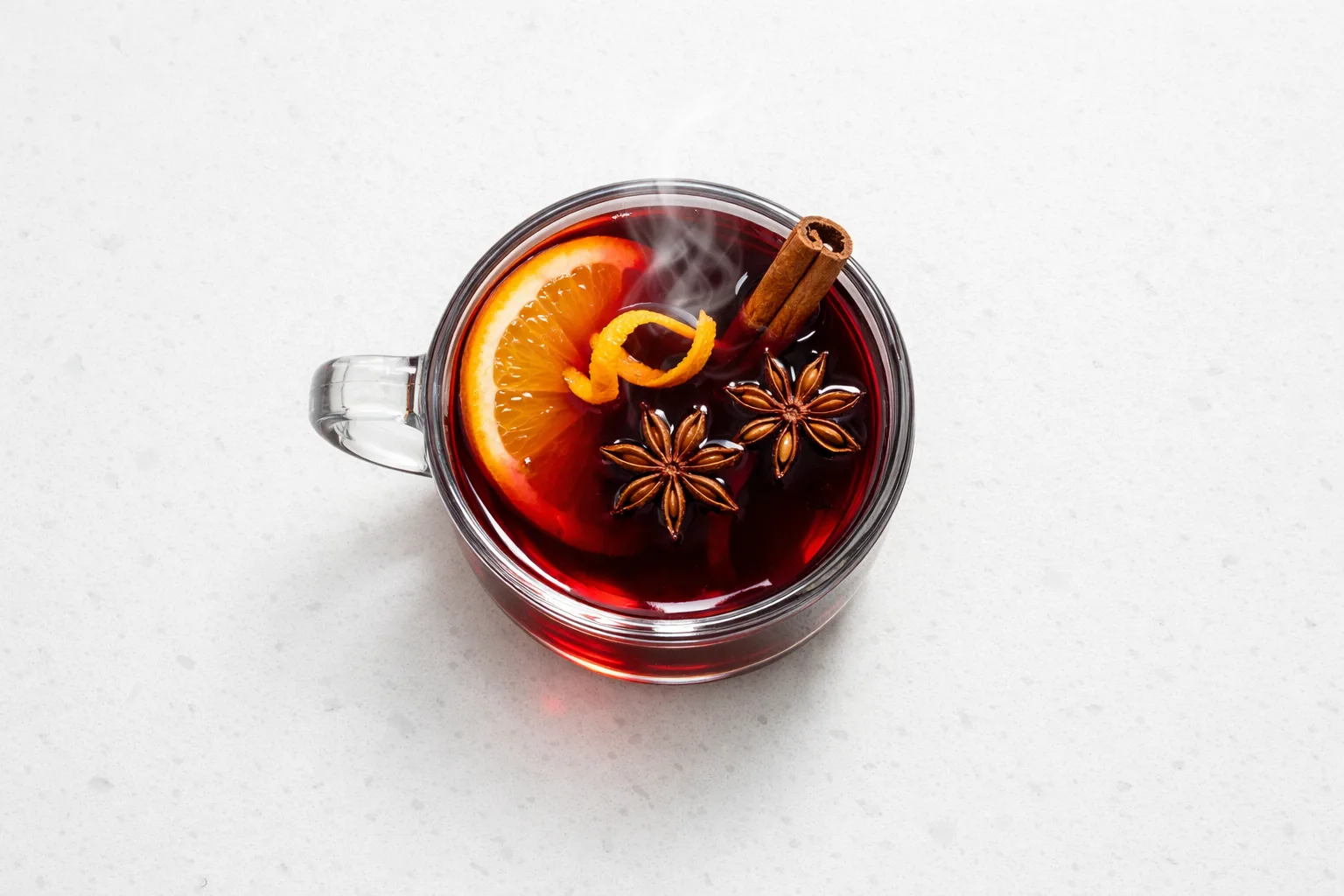
Gluehwein, or German mulled wine, is the signature drink of every Weihnachtsmarkt from Berlin to Munich. The name translates to "glow wine," a reference to the hot irons once plunged into the drink to heat it, and to the warm flush it puts across your cheeks on a freezing December evening. This is not a complicated recipe. Good dry red wine, whole spices, fresh citrus, and a measured hand with the sugar are all it takes.
Most mulled wine recipes overload the pot with sweetener or cook the wine at a rolling boil, which drives off the alcohol and leaves a flat, syrupy drink. The key is restraint: bring the wine just to steaming (never above 170F/76C), use whole spices so you can pull them before they turn bitter, and let the orange and lemon do most of the sweetening alongside a modest amount of sugar. This version produces a spiced wine that still tastes like wine, not like a candle melted into grape juice.
Equipment
Instructions
Tap each step to track your progress
- 1
Pour both bottles of wine into a large heavy-bottomed pot or Dutch oven over medium-low heat. Add the sugar and stir gently until dissolved.
- 2
Add the orange slices, lemon quarters, cinnamon sticks, cloves, star anise, allspice berries, and sliced ginger to the pot.
- 3
Heat the wine slowly until you see the first wisps of steam rising from the surface. This should take about 10 minutes. If you have an instant-read thermometer, aim for 160-170F (71-76C). Do not let the wine simmer or boil.
- 4
Once steaming, reduce the heat to the lowest setting. Let the wine steep with the spices for at least 15 minutes. The longer it sits (up to 45 minutes on very low heat), the deeper the spice flavor. Taste after 15 minutes and add more sugar if needed, a tablespoon at a time.
- 5
If using brandy or rum, remove the pot from heat and stir it in. The alcohol in spirits evaporates fast at high temperatures, so always add it off the burner.
- 6
Strain the mulled wine through a fine-mesh strainer into a warmed serving vessel or ladle directly into mugs, using the strainer to catch the solids. Garnish each mug with a fresh orange slice and a cinnamon stick.
Tips & Tricks
Pick the right wine
Use an inexpensive, fruit-forward dry red. Spanish Garnacha, Chilean Merlot, or Australian Shiraz all work well. Avoid anything heavily oaked (American Cabernet, barrel-aged Malbec) because the oak tannins turn harsh when heated. There is zero reason to use an expensive bottle here.
Do not boil the wine
This is the single most important rule. Alcohol begins evaporating rapidly above 172F (78C), and boiling strips the wine of both alcohol and flavor, leaving an acidic, flat liquid. Keep the heat on the lowest setting once the wine starts steaming. If you don't trust your stove, use a thermometer.
Toast the whole spices first
Dry-toast the cinnamon sticks, cloves, star anise, and allspice in a small skillet over medium heat for about 90 seconds until fragrant. This blooms the essential oils and gives the finished Gluehwein a more rounded, complex spice flavor without needing a longer steep time.
Make the spice blend ahead
Combine all the dry spices in a small jar or cheesecloth sachet up to a month in advance. When it's time to make Gluehwein, drop the sachet in and pull it out when the flavor is right. This also makes cleanup easier and prevents rogue cloves from ending up in someone's mug.
Troubleshooting
My mulled wine tastes flat and thin
The wine boiled. Once red wine hits a full simmer, the alcohol evaporates rapidly and the acidity concentrates, leaving a sour, watery result. Keep the heat low and watch for steam, not bubbles. If it happens, a splash of brandy stirred in off heat can rescue the batch somewhat, but prevention is better than cure.
The spices are bitter and overpowering
The spices steeped too long or the wine was too hot, which extracts harsh tannins from the cinnamon and cloves. Strain the wine immediately. For the next batch, start tasting at 15 minutes and strain as soon as the spice level tastes right to you. Whole cloves are the most common offender; use fewer next time if bitterness persists.
It's too sweet
Add fresh lemon juice, a tablespoon at a time, until the balance shifts. Acidity is the fastest counter to excess sweetness. For future batches, start with half the sugar and add more after tasting the steeped wine, since the orange and spices contribute their own sweetness.
The wine looks cloudy or murky
Bits of citrus pith or spice sediment are floating in the liquid. Strain through a finer mesh or line your strainer with cheesecloth. Using the outer peel of the orange (removed in strips with a vegetable peeler, avoiding the white pith) instead of full slices also produces a clearer result.
Variations
White Mulled Wine (Weisser Gluehwein)
Replace the red wine with a dry Riesling or Pinot Grigio. Swap the cinnamon sticks for 2 tablespoons of fresh lemon juice and add 1/4 cup of apple cider. White Gluehwein is lighter and a little tart, popular at markets in the Mosel region. Use the same spice mix but reduce the cloves to 4 to keep them from overpowering the more delicate wine.
Non-Alcoholic Kinderpunsch
Replace the wine with equal parts red grape juice and apple juice. Add all the spices as written and heat the same way. This is the classic German children's version served at every Christmas market alongside the adult Gluehwein. Add a splash of fresh lemon juice at the end to balance the sweetness of the juices.
Scandinavian Glogg Style
Add 1/4 cup each of raisins and blanched slivered almonds to the pot during the final 10 minutes of steeping. Use port wine for one of the two bottles. Serve the raisins and almonds in the mug, eaten with a spoon. This richer, sweeter version is traditional across Sweden, Denmark, and Norway.
Slow Cooker Method
Combine all ingredients in a slow cooker set to low. Heat for 2-3 hours, then switch to the "warm" setting for serving. This is the best method for parties because it holds temperature without supervision. Keep the lid slightly ajar so the wine doesn't overheat, and stir occasionally.
Serving & Gifting
Serve mulled wine in heat-proof glass mugs or sturdy ceramic cups with a fresh cinnamon stick and thin orange half-moon in each. It pairs well with the salty-sweet snacks you find at Christmas markets: roasted almonds, <em>Lebkuchen</em>, or a simple plate of aged cheese and dark bread. For a party, keep the pot on the stove's lowest setting or transfer to a slow cooker on warm so guests can serve themselves throughout the evening.
Storage & Freezing
Mulled wine keeps in a covered container in the refrigerator for up to 3 days; always remove the whole spices before storing or they will continue to intensify and turn bitter. Reheat gently on the stove over low heat, never in the microwave, which creates hot spots that can boil portions of the wine. Leftover mulled wine that has gone too soft for drinking works well reduced into a syrup for drizzling over vanilla ice cream or poached pears.
Common Questions
Can I make mulled wine ahead of time?
Yes. Prepare the full recipe, strain out the spices, and refrigerate in a sealed container. Reheat gently on the stove when ready to serve. It holds well for 2-3 days. The flavor often improves after resting overnight as the spices meld further into the wine.
What is the best red wine for mulled wine?
Use a dry, fruit-forward red in the $5-10 range. Spanish Garnacha, Cotes du Rhone, Chilean Merlot, or Australian Shiraz are all reliable choices. Avoid anything heavily oaked or tannic, as those flavors turn harsh when heated. Save the good bottles for drinking on their own.
How do I make mulled wine without alcohol?
Replace the wine with equal parts red grape juice and apple juice. Follow the same method: heat gently with the spices and citrus, steep for 15-20 minutes, and strain. This non-alcoholic version is called <em>Kinderpunsch</em> in Germany and is a Christmas market staple for children and anyone avoiding alcohol.
Is Gluehwein the same as mulled wine?
<em>Gluehwein</em> is the German name for mulled wine. The method is essentially the same across Europe: red wine heated with spices and citrus. Regional variations exist in the spice blend and sweetener (Scandinavian <em>glogg</em> adds raisins and almonds; British mulled wine sometimes uses port), but the core technique is universal.
How many calories are in a glass of mulled wine?
A standard 6-ounce serving of this recipe contains roughly 210 calories, most of which come from the wine's natural alcohol and the added sugar. Using less sugar or substituting a sugar-free sweetener can reduce this. The non-alcoholic Kinderpunsch version is lower in calories since grape juice has fewer calories than wine per ounce.
Can I use white wine instead of red for mulled wine?
Absolutely. White mulled wine, or <em>Weisser Gluehwein</em>, is popular in Germany's wine-growing regions. Use a dry Riesling or Pinot Grigio and follow the same spice blend, reducing the cloves slightly since their flavor is more prominent against a lighter wine. The result is brighter and more citrus-forward than the red version.