
 United Kingdom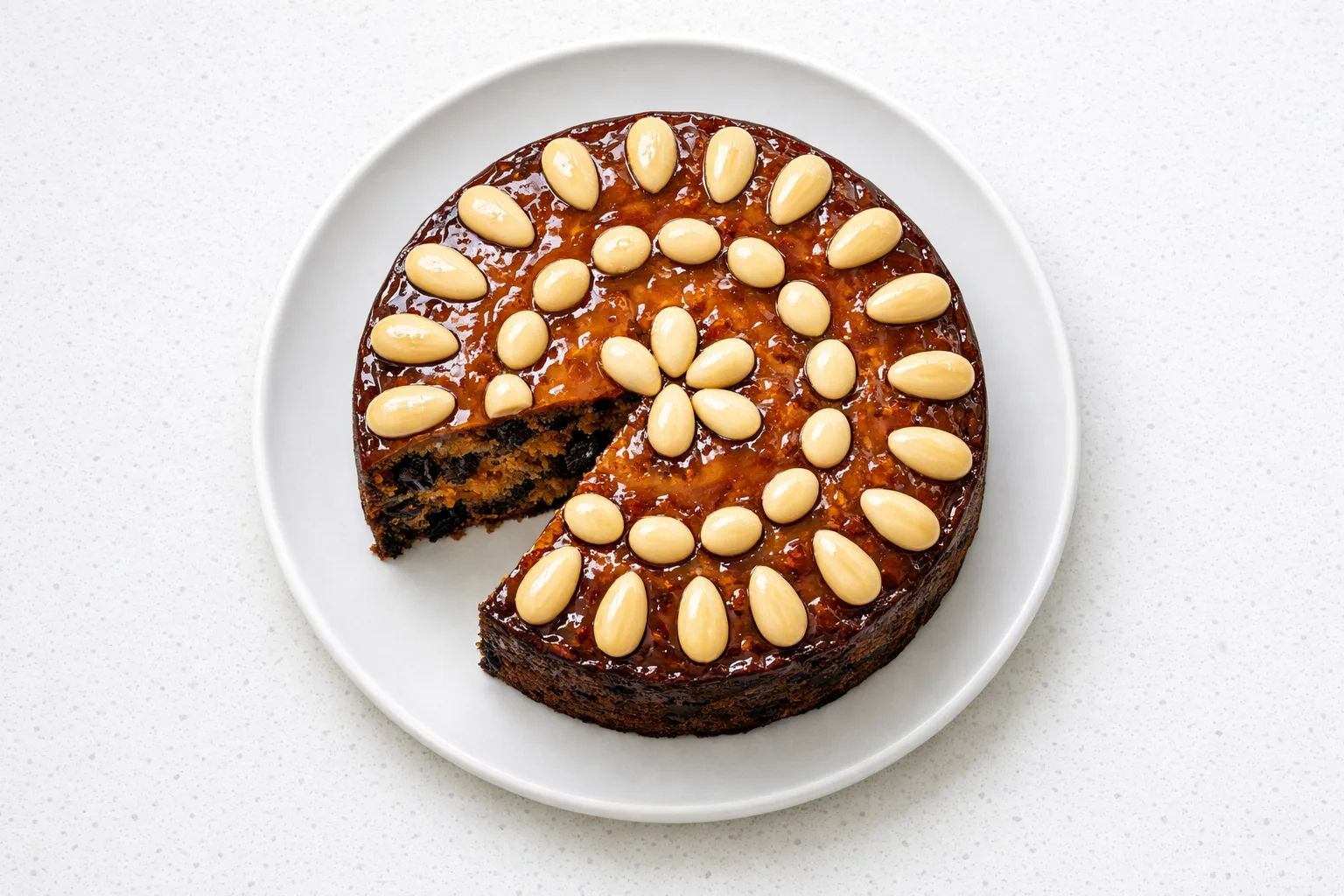
The British Christmas fruitcake is one of the oldest holiday baking traditions still in regular rotation. Versions of this dense, fruit-packed cake have appeared on tables across the United Kingdom since at least the 16th century, when dried fruits, spices, and spirits were luxuries reserved for celebrations. The cake became inseparable from Christmas during the Victorian era, often decorated with marzipan and royal icing for a finish as formal as the holiday itself.
What separates a good fruitcake from the stale doorstop of American jokes is technique: soaking the dried fruit in brandy overnight, baking at a low temperature for even moisture, and "feeding" the finished cake with more brandy over several weeks. This recipe produces a dark, aromatic cake with a tight crumb, where every slice is packed with fruit and warm spice. Made properly, it keeps for months and genuinely tastes better with time.
Equipment
Instructions
Tap each step to track your progress
- 1
Combine the raisins, sultanas, currants, mixed peel, and glacé cherries in a large bowl. Pour the brandy over the fruit, add the orange and lemon zest, and stir well. Cover tightly with cling film and leave at room temperature for at least 12 hours, or up to 48 hours. Stir once or twice during soaking.
- 2
Preheat the oven to 300°F (150°C). Grease a deep 8-inch (20 cm) round cake tin and line the base and sides with a double layer of parchment paper, letting the paper extend about 2 inches above the rim. Wrap the outside of the tin with a double layer of brown paper or newspaper secured with kitchen twine. This insulation prevents the edges from overbaking during the long bake.
- 3
Whisk together the flour, baking powder, salt, cinnamon, nutmeg, cloves, and allspice in a medium bowl. Set aside.
- 4
In a stand mixer fitted with the paddle attachment, cream the butter and dark brown sugar on medium speed for 4 to 5 minutes until light and fluffy. Scrape down the sides halfway through.
- 5
Add the eggs one at a time, beating well after each addition. If the mixture starts to curdle, add a tablespoon of the flour mixture to bring it back together. Beat in the black treacle until just combined.
- 6
Fold in the flour mixture and ground almonds on low speed or by hand with a large spatula, mixing only until no dry streaks remain. Do not overwork the batter.
- 7
Add the soaked fruit along with any liquid remaining in the bowl. Fold gently until the fruit is evenly distributed throughout the batter. The mixture will be thick and heavy.
- 8
Scrape the batter into the prepared tin and smooth the top with a wet spatula. Arrange the whole blanched almonds in concentric circles on the surface, pressing them lightly into the batter.
- 9
Bake in the center of the oven for 2 1/2 to 3 hours. The cake is done when a skewer inserted into the center comes out clean or with just a few moist crumbs. If the top browns too quickly, cover loosely with foil after the first 90 minutes. The cake should feel firm to the touch and have pulled away slightly from the sides of the tin.
- 10
Let the cake cool completely in the tin on a wire rack. Once cool, remove from the tin but leave the parchment paper on. Pierce the top all over with a thin skewer and spoon 2 tablespoons of brandy evenly over the surface. Wrap tightly in a fresh layer of parchment paper, then in foil.
- 11
For the glaze, warm the apricot jam with 1 tablespoon of water in a small saucepan, strain through a sieve, and brush over the top and sides of the cake before serving.
Tips & Tricks
Soak the fruit for as long as possible
A 12-hour soak is the minimum, but 24 to 48 hours produces noticeably plumper, more flavorful fruit. Some bakers soak their fruit for a full week, topping up the brandy as it absorbs. The longer soak also prevents the fruit from drawing moisture out of the batter during baking.
Line and insulate the tin properly
The double layer of parchment inside and brown paper outside is not optional. Without it, the edges of the cake will dry out and harden over a 3-hour bake. The paper collar above the rim also protects the top from direct heat. This is the single most important step for a moist result.
Use a thermometer, not a timer
Oven temperatures vary wildly. Set a timer for 2 hours 15 minutes as a check-in, then test with a skewer every 15 minutes after that. The skewer should come out with a few moist crumbs but no wet batter. The cake's internal temperature should reach about 200°F (93°C) when done.
Feed the cake consistently
The brandy feeding process is what transforms a good fruitcake into a great one. Pierce the top with a skewer in about 20 places, spoon the brandy over, and rewrap. This keeps the cake moist and develops a complex, mellow flavor over time. Start feeding the day after baking and continue weekly.
Make it at least a month before Christmas
Fruitcake needs time for the flavors to marry. A cake baked in late October or early November and fed weekly will taste significantly better by Christmas than one baked the week before. The spices mellow, the fruit softens further, and the brandy integrates into the crumb.
Troubleshooting
My fruitcake is dry and crumbly
The oven temperature was too high or the cake baked too long. Fruitcake needs low, slow heat. Check your oven with a thermometer, as many ovens run 10 to 25 degrees hotter than the dial suggests. If the cake is already baked and dry, pierce it generously and feed with brandy. Wrap tightly and let it sit for a week, and the moisture will redistribute.
The fruit sank to the bottom
The batter was too thin to support the weight of the fruit. Toss the drained fruit in a tablespoon of flour before folding it in. Also make sure the batter itself is thick; if the eggs curdled the creamed butter, the batter loses its ability to hold heavy ingredients in suspension.
The top is burnt but the inside is raw
This happens when the oven is too hot or the tin is not insulated. Always wrap the outside of the tin with brown paper. Cover the top loosely with foil once it reaches a deep golden brown, usually around 90 minutes in. The long bake at 300°F requires patience and insulation.
The cake tastes bitter or too boozy
Bitter flavors come from too much treacle or scorched edges. Use exactly 2 tablespoons of treacle. For an overly boozy cake, you have likely been feeding too generously. Two tablespoons of brandy per feeding, once a week, is enough. Let the cake breathe unwrapped for an hour before serving to let excess alcohol evaporate.
Variations
Light Christmas Fruitcake
Use golden raisins and dried apricots instead of dark raisins and currants. Replace the treacle with golden syrup and use light brown sugar. The result is a paler, milder cake that appeals to those who find traditional fruitcake too intense. Reduce the spices by half for an even lighter profile.
Rum and Tropical Fruit Version
Swap the brandy for dark rum and replace half the traditional dried fruits with chopped dried mango, pineapple, and papaya. Keep the cherries and mixed peel. The tropical fruit adds brightness and pairs especially well with rum. Popular in Caribbean-influenced baking.
Gluten-Free Fruitcake
Replace the all-purpose flour with a 1:1 gluten-free baking blend and increase the ground almonds to 3/4 cup. Add 1/2 teaspoon of xanthan gum to help with structure. The higher proportion of ground almonds actually suits fruitcake well, producing a dense, moist crumb that is hard to distinguish from the wheat-based original.
Alcohol-Free Version
Replace the brandy with fresh orange juice mixed with 1 tablespoon of vanilla extract. The cake will not keep as long (2 to 3 weeks versus months), but the flavor is still rich and the fruit will absorb the juice nicely. Skip the feeding process and store in the refrigerator instead.
Serving & Gifting
Slice the fruitcake thinly; its density means a little goes a long way. Serve at room temperature alongside a wedge of sharp cheddar or Wensleydale cheese, which is the traditional Northern English pairing. For a more formal presentation, top with a layer of marzipan and royal icing before glazing. Fruitcake also pairs well with a glass of port, sherry, or strong tea.
Storage & Freezing
Wrapped in parchment and foil, a properly fed fruitcake keeps at room temperature in a cool, dark place for up to 3 months. Feed it with 1 to 2 tablespoons of brandy every week for the first month, then every two weeks after that. The cake can be frozen, tightly wrapped, for up to 6 months. Thaw overnight at room temperature while still wrapped to prevent condensation from making the surface soggy. An alcohol-free version should be refrigerated and consumed within 3 weeks.
Common Questions
Can I make Christmas fruitcake without alcohol?
Yes. Replace the brandy with fresh orange juice mixed with a teaspoon of vanilla extract for both soaking and feeding. The cake will still be flavorful and moist, but it will not keep as long. Refrigerate the alcohol-free version and plan to eat it within 2 to 3 weeks.
How far in advance should I make my fruitcake?
For the best flavor, bake at least 4 to 6 weeks before you plan to serve it. Many British bakers make theirs on "Stir-up Sunday," the last Sunday before Advent, which falls in late November. The weekly brandy feeds allow the flavors to develop and deepen over time.
What is the best brandy for fruitcake?
A decent VS or VSOP Cognac works well, but any brandy you would drink on its own is fine. Avoid cooking brandy, as it lacks depth. Some bakers use whisky, dark rum, or sherry instead. Each spirit gives a slightly different character: rum adds caramel sweetness, while whisky leans smoky.
Can I use different dried fruits in my fruitcake?
Absolutely. The total weight of dried fruit should stay around 4 cups. Dried cranberries, chopped dried apricots, dried figs, or chopped dates all work well as partial substitutions. Avoid freeze-dried fruit, which will absorb too much moisture from the batter and leave dry pockets.
How do I know when the fruitcake is done baking?
Insert a thin metal skewer into the center of the cake. It should come out clean or with a few moist crumbs clinging to it. The top should feel firm when gently pressed, and the cake will have pulled slightly away from the sides of the tin. If the skewer comes out with wet batter, continue baking in 15-minute intervals.
Does fruitcake really taste better with age?
It does. The brandy feeding process keeps the crumb moist while the spices, fruit, and alcohol meld together over weeks. A freshly baked fruitcake will taste sharply of individual spices and raw spirit. After a month of feeding, those flavors smooth out into something richer and more unified. Most fruitcake enthusiasts consider 6 to 8 weeks the sweet spot.