
What Religions Don't Celebrate Christmas?
Christmas is the world's most widely observed holiday, yet more than five billion people belong to faiths that have no theological reason to celebrate it. Here's what those traditions actually believe about December 25.
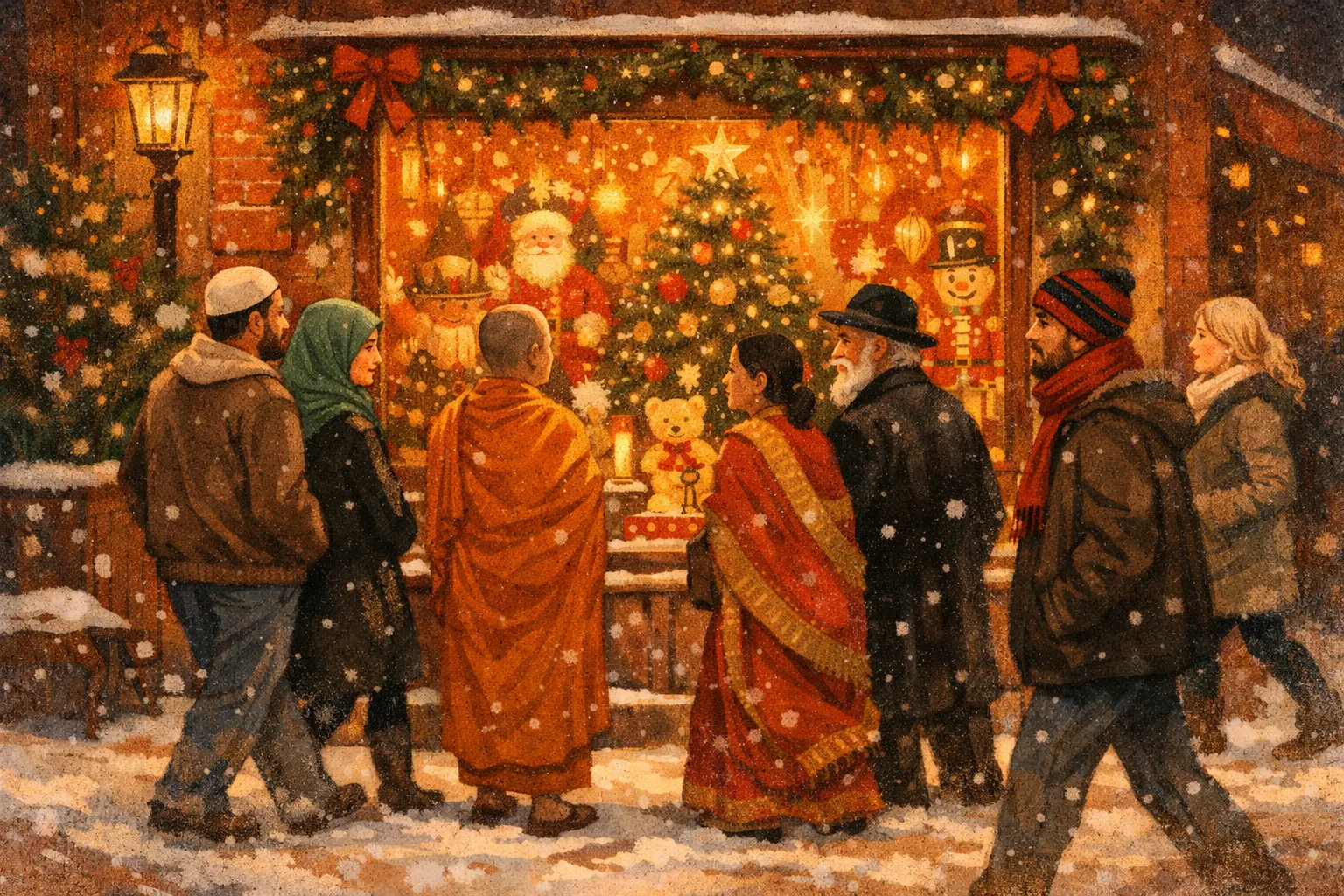
Christmas dominates December in much of the Western world. It fills shop windows, radio playlists, and entire television schedules. But for roughly five billion people on the planet, December 25 carries no special religious significance at all. The question of what religions don't celebrate Christmas has a straightforward answer: most of them.
Contents
Christianity is the only major world religion that treats Christmas as a holy day. That makes sense, given the holiday marks the birth of Jesus Christ, a figure whose divine status is specific to Christian theology. Judaism, Islam, Hinduism, Buddhism, Sikhism, and dozens of smaller faith traditions have their own calendars, their own sacred days, and their own reasons for not observing Christmas.
Some of these religions acknowledge Jesus as a historical figure or even a prophet. Others have no connection to him whatsoever. And a few groups within Christianity itself refuse to celebrate the holiday. The reasons vary widely, and they reveal as much about Christmas as they do about the faiths that skip it.
Do Jews Celebrate Christmas?
No. Judaism does not celebrate Christmas. Jesus is not recognized as the Messiah in Jewish theology, so the holiday marking his birth holds no religious meaning for Jewish communities. The anticipated Messiah in Judaism has not yet arrived, according to Jewish belief.
The timing of Christmas does overlap with Hanukkah, the eight-day Jewish Festival of Lights, which commemorates the rededication of the Second Temple in Jerusalem around 165 BCE. But the two holidays are theologically unrelated. Hanukkah is a relatively minor holiday in the Jewish calendar, far less significant than Yom Kippur, Passover, or Rosh Hashanah. Its cultural prominence in countries like the United States has more to do with its December timing than its religious importance.
In Israel, where roughly 74% of the population is Jewish according to the Central Bureau of Statistics, Christmas is largely invisible outside of Christian-majority areas like Nazareth and parts of Jerusalem. December 25 is a regular working day for most Israelis.
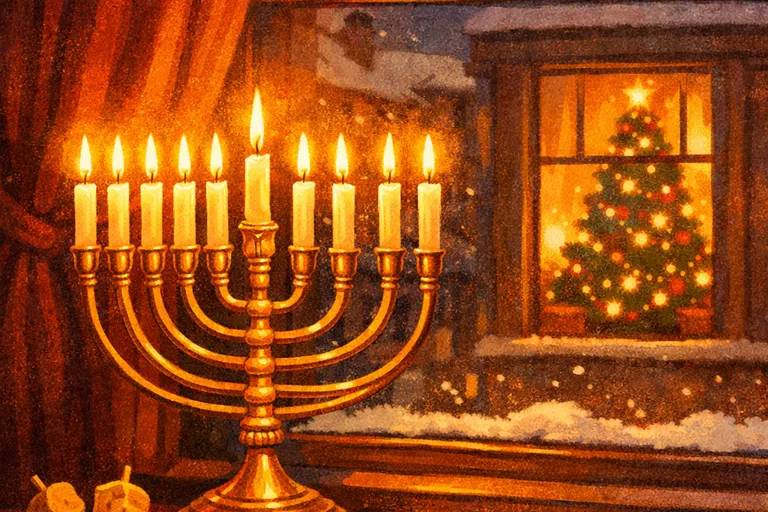
That said, plenty of secular and culturally Jewish families in the United States and Europe engage with certain Christmas customs, exchanging gifts, putting up decorations, or attending holiday gatherings. The Pew Research Center found in 2013 that about 32% of American Jews reported having a Christmas tree in their home. This is a cultural practice, not a religious one, and the distinction matters.
Do Muslims Celebrate Christmas?
Islam does not celebrate Christmas, but the relationship between Islam and Jesus is more complex than many people realize. The Quran mentions Jesus (known as Isa in Arabic) by name 25 times. He is considered one of the most important prophets in Islam, born to the Virgin Mary (Maryam), who has an entire chapter of the Quran named after her.
The key theological difference is that Islam does not regard Jesus as the Son of God or as divine. He is a revered human prophet, not God incarnate. Celebrating his birthday as a holy occasion would contradict core Islamic monotheistic principles, specifically the concept of tawhid, the absolute oneness of God.
Muslims observe their own major holidays. Eid al-Fitr marks the end of Ramadan's month-long fast. Eid al-Adha commemorates Abraham's willingness to sacrifice his son and coincides with the Hajj pilgrimage to Mecca. These are the two primary celebrations in the Islamic calendar.
In Muslim-majority countries, the attitude toward Christmas varies enormously. In Turkey and the United Arab Emirates, Christmas decorations appear in malls and hotels that cater to tourists. In Saudi Arabia, public Christmas celebrations were officially prohibited until 2018, when the government relaxed some restrictions as part of broader social reforms. In Indonesia, the world's largest Muslim-majority country, Christmas is a national public holiday because the state recognizes six official religions, including Christianity.
Why Don't Jehovah's Witnesses Celebrate Christmas?
This is one of the more interesting cases because Jehovah's Witnesses are Christians. They accept the Bible as scripture and believe in Jesus Christ. Yet they are among the most visible groups that actively refuse to celebrate Christmas.
Their objections are specific and theological. First, they point out that the Bible never records Jesus' actual birth date or instructs followers to celebrate it. Second, they argue that December 25 was adopted from pre-Christian pagan winter solstice festivals, particularly the Roman celebration of Saturnalia and the birthday of the sun god Sol Invictus, which Emperor Aurelian established on December 25 in 274 CE. Third, they consider customs like Christmas trees, gift exchanges, and holiday feasts to have pagan origins that Christians should avoid.
The Watch Tower Bible and Tract Society, the governing organization of Jehovah's Witnesses, officially dropped Christmas celebrations in 1928, calling the holiday a "pagan custom." Before that, the group's founder Charles Taze Russell and early followers had celebrated Christmas. The shift was decisive. Today, the approximately 8.7 million active Jehovah's Witnesses worldwide treat December 25 as an ordinary day.
They aren't alone among Christian-adjacent groups. Some Quaker communities also de-emphasize Christmas, based on the belief that every day should be treated as equally sacred. Certain ultra-Orthodox and Messianic Jewish Christians have complicated relationships with the holiday as well.
Do Hindus and Buddhists Celebrate Christmas?
Neither Hinduism nor Buddhism has any theological connection to Christmas. Jesus does not appear in Hindu scripture or Buddhist teachings. These traditions have entirely separate cosmologies, calendars, and sacred figures.
Hinduism, with roughly 1.2 billion adherents worldwide, has its own extensive festival calendar. Diwali (the Festival of Lights), Holi (the Festival of Colors), and Navaratri are among the most prominent. Christmas falls during a relatively quiet period in the Hindu religious calendar, though in India it coincides with the winter season and school holidays.
In India specifically, Christmas has a notable cultural presence despite Hindus comprising about 80% of the population. India's Christian minority numbers around 30 million people, concentrated in states like Kerala, Goa, and Meghalaya. In those regions, Christmas is celebrated with full religious observance, including midnight Mass. In major cities like Mumbai and Delhi, secular Christmas festivities, such as shopping sales and parties, have grown in popularity across religious lines.
Buddhism, practiced by an estimated 500 million people globally, similarly has no Christmas tradition. The major Buddhist holidays center on events in the life of Siddhartha Gautama: Vesak (Buddha's birth, enlightenment, and death), Magha Puja, and Asalha Puja. In Japan, however, something genuinely unusual has happened.
Japan's Secular Christmas
Japan is roughly 1-2% Christian, yet Christmas is one of the country's most popular commercial events. The tradition took hold during the post-World War II American occupation and evolved in distinctly Japanese ways. On Christmas Eve, couples go on romantic dates. Families eat Kentucky Fried Chicken for dinner, a tradition that began with a successful 1974 KFC marketing campaign called "Kurisumasu ni wa Kentakkii" ("Kentucky for Christmas"). KFC Japan now takes Christmas orders weeks in advance.
Japanese Christmas is almost entirely secular. There is no religious observance, no church attendance, and no theological meaning attached to the day. It functions more like Valentine's Day than like a religious holiday. This makes Japan a useful example of how Christmas customs can spread completely detached from Christianity.
What Religions Do Celebrate Christmas?
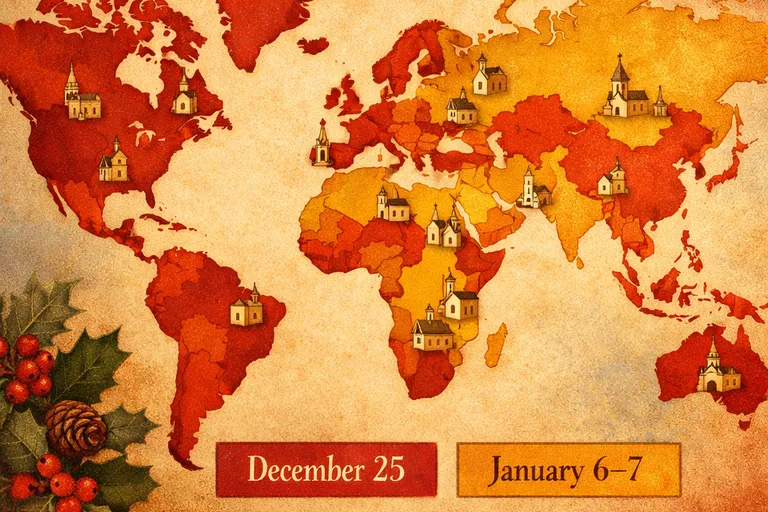
Christmas is observed across virtually all branches of Christianity, but the dates and customs differ. Roman Catholics, Protestants, and many Anglican churches celebrate on December 25, following the Gregorian calendar. Most Eastern Orthodox churches, including those in Russia, Serbia, and Ethiopia, celebrate Christmas on January 7, which corresponds to December 25 on the older Julian calendar.
The Armenian Apostolic Church celebrates Christmas on January 6, combined with the Feast of the Epiphany. This is actually the oldest known date for celebrating the Nativity, predating the December 25 tradition. The Coptic Orthodox Church of Egypt also uses January 7.
Within Christianity, the celebration styles range from solemn liturgical services to exuberant street festivals. Ethiopian Orthodox Christians observe a 43-day fast before Christmas (called Ganna), then attend an all-night church service. Filipino Catholics hold Simbang Gabi, a series of nine dawn Masses leading up to Christmas Day. German Lutherans lit the first Advent wreaths in the 19th century, a custom that has since spread worldwide.
Other Faiths and Traditions That Skip Christmas
Several other religious communities don't observe Christmas, each for their own reasons.
Sikhs follow a calendar centered on Gurpurabs, the birth and death anniversaries of the ten Sikh Gurus. The faith was founded by Guru Nanak in the Punjab region in the late 15th century and has no connection to Christian theology. Sikhism's roughly 30 million adherents have their own winter celebration: the birthday of Guru Gobind Singh, the tenth Guru, which usually falls in December or January.
Baha'is recognize Jesus as a Manifestation of God but follow their own calendar of holy days. The Baha'i Faith, founded in 19th-century Persia, has its own New Year (Naw-Ruz) and celebrates the births of its founders, the Bab and Baha'u'llah. Christmas is not a Baha'i observance.
Traditional and indigenous religions across Africa, the Americas, Asia, and Oceania have their own seasonal celebrations tied to local agricultural cycles, solstices, and ancestral traditions. Many of these predate Christianity by centuries or millennia.
Atheists and the non-religious make up a growing share of the global population, estimated at roughly 1.2 billion people by the Pew Research Center. Many participate in secular Christmas customs, gift-giving, family meals, holiday parties, without any religious observance. Others deliberately opt out.
Frequently Asked Questions
What major religions don't celebrate Christmas?
Judaism, Islam, Hinduism, Buddhism, and Sikhism are the largest religions that do not celebrate Christmas. The holiday is specific to Christianity, as it marks the birth of Jesus Christ, who holds unique theological significance only within Christian faith. Some groups within Christianity, like Jehovah's Witnesses, also refuse to celebrate it.
Do Jehovah's Witnesses celebrate any holidays?
Jehovah's Witnesses do not celebrate Christmas, Easter, birthdays, or most national holidays. The only annual observance they maintain is the Memorial of Christ's Death, held on the date corresponding to Nisan 14 in the Jewish calendar. They believe this is the only event Jesus instructed his followers to commemorate.
Is it disrespectful to wish someone Merry Christmas if they don't celebrate?
Most people from non-Christian backgrounds are not offended by a "Merry Christmas" greeting, though preferences vary by individual. If you're unsure about someone's background, "Happy Holidays" or "Season's Greetings" are widely accepted alternatives. In professional settings, a more inclusive greeting is generally the safer choice.
Do any non-Christian countries celebrate Christmas as a public holiday?
Yes. Indonesia (Muslim-majority), India (Hindu-majority), and Japan (largely non-religious) all recognize Christmas or treat it as a significant cultural event. In these countries, the celebration is often more commercial and secular than religious. Japan's Christmas traditions, including KFC dinners and romantic date nights, have almost no connection to Christianity.
Why is Christmas on December 25 if that's not Jesus' actual birthday?
The Bible does not specify Jesus' birth date. December 25 was adopted by the early Christian church in the 4th century, likely to coincide with existing Roman winter solstice festivals, including Saturnalia and the feast of Sol Invictus. The earliest known reference to December 25 as Jesus' birthday appears in a Roman document from 336 CE.
Can you celebrate Christmas without being religious?
Millions of people do exactly that. In many Western countries, Christmas has become a largely secular cultural holiday involving gift-giving, family gatherings, and festive decorations. The Pew Research Center has found that a majority of Americans who celebrate Christmas consider it more of a cultural holiday than a religious one. The customs many associate with Christmas, including trees, gift exchanges, and festive meals, predate or exist independently of Christian theology.