 United Kingdom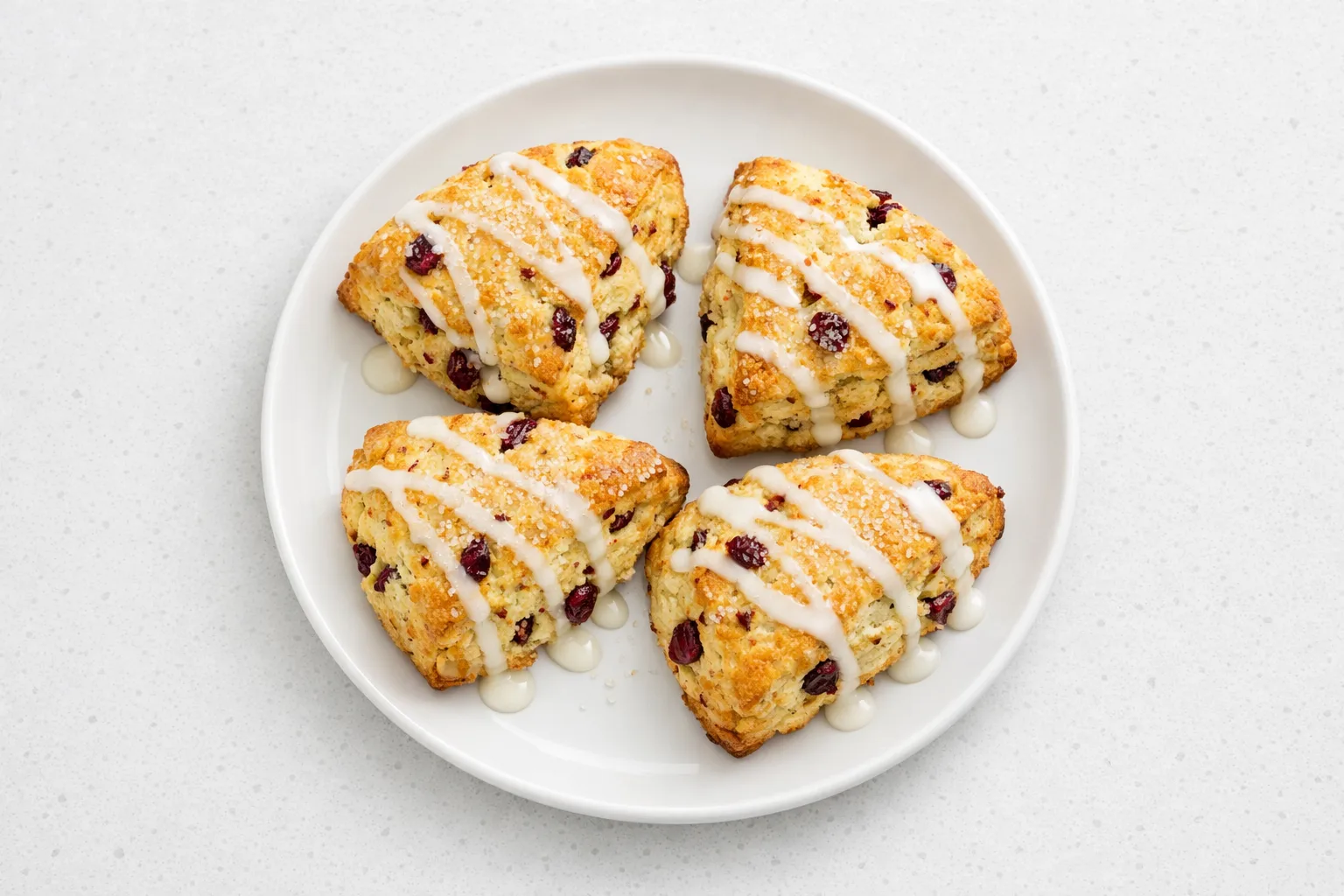
Cranberry orange scones sit at the intersection of two British baking traditions: the classic teatime scone and the festive use of dried fruit that defines Christmas baking across the UK and North America. The combination works because the tartness of dried cranberries cuts through the richness of the butter, while orange zest provides a brightness that carries the whole thing. These are not the dry, dense wedges you get from a chain bakery. Handled properly, the dough produces a scone that is flaky at the edges, tender in the center, and aromatic enough to fill the kitchen.
The key to a good scone is cold fat and a light hand. Overworked dough develops gluten and turns tough. Warm butter fails to create the steam pockets that produce flaky layers. Follow the method below and you will get scones worth eating on Christmas morning without spending more than 40 minutes start to finish.
Equipment
Instructions
Tap each step to track your progress
- 1
Preheat the oven to 400F (205C). Line a baking sheet with parchment paper.
- 2
Whisk together the flour, sugar, baking powder, and salt in a large bowl. Add the orange zest and work it briefly into the flour mixture with your fingertips until fragrant, about 30 seconds.
- 3
Add the cold butter cubes to the flour mixture. Using a pastry cutter or your fingertips, cut the butter into the flour until the mixture resembles coarse crumbs with some pea-sized pieces of butter remaining. Those butter chunks matter for flakiness; do not overwork.
- 4
Stir in the dried cranberries and toss to distribute them through the flour.
- 5
In a small bowl, whisk together the heavy cream, egg, and vanilla extract. Pour the wet ingredients over the dry ingredients and fold gently with a rubber spatula until the dough just comes together. It will look shaggy and slightly sticky. A few dry streaks are fine; stop mixing before the dough looks smooth.
- 6
Turn the dough out onto a lightly floured surface. Pat it gently into a circle about 3/4 inch thick and 8 inches in diameter. Use a sharp knife or bench scraper to cut the circle into 8 equal wedges.
- 7
Transfer the wedges to the prepared baking sheet, spacing them at least 1 inch apart. Brush the tops lightly with heavy cream and sprinkle with coarse sugar.
- 8
Bake for 16 to 18 minutes, until the tops are golden and the edges look set and dry. The bottoms should be a deep golden brown. Transfer to a wire rack and cool for at least 10 minutes before glazing.
- 9
While the scones cool, whisk together the powdered sugar, orange juice, and orange zest until smooth. Drizzle over the warm scones using a spoon or squeeze bottle. The glaze will set in about 5 minutes.
Tips & Tricks
Grate the frozen butter
If you find it difficult to cut cold butter into flour without it softening, freeze the butter for 20 minutes and then grate it on the large holes of a box grater directly into the flour. The shards coat in flour instantly and stay cold much longer than cubes worked by hand.
Rub the zest into the sugar first
Before adding the sugar to the flour, combine the orange zest with the sugar and rub together with your fingertips for 30 seconds. This releases the citrus oils into the sugar and distributes the flavor far more evenly throughout the finished scone.
Cut straight down with the bench scraper
When dividing the dough into wedges, press straight down with a bench scraper or sharp knife. Do not drag or saw through the dough. Dragging seals the layers at the cut edge and reduces rise at the sides.
Make the dough the night before
Pat the dough into a disk, wrap in cling film, and refrigerate overnight. Cut and bake directly from the fridge the next morning. The overnight rest actually improves the flavor slightly, and you get fresh Christmas morning scones with minimal effort.
Troubleshooting
My scones came out dense and tough
The dough was overworked. Once the cream and egg go in, the mixing time should be minimal; 10 to 12 folds with a spatula at most. Every additional fold develops more gluten. If you are mixing by hand and the dough feels like it has snapped back with elasticity, it has been overworked.
The scones spread flat in the oven
The butter was too warm, or the dough warmed up too much during shaping. If your kitchen is above 70F (21C), refrigerate the shaped wedges for 15 minutes on the baking sheet before putting them in the oven. Cold dough going into a hot oven is what creates lift.
The cranberries are burning on top
Dried cranberries that poke above the surface can scorch. When patting out and cutting the dough, gently press any exposed cranberries back into the surface. You can also tent the baking sheet loosely with foil for the first 10 minutes if the top is browning faster than the inside is cooking through.
My glaze is too runny
Add more powdered sugar, 1 tbsp at a time, until the glaze falls from the spoon in a slow ribbon rather than a stream. The right consistency coats the back of a spoon and holds a line when you run your finger through it.
The scones are dry inside
They were over-baked. Scones continue to dry out as they cool, so pull them when the tops are golden and the edges are set even if the center looks slightly underdone. Also check your baking powder; if it is more than 6 months old and has been stored in a humid kitchen, it may have lost potency, which affects rise and texture.
Variations
Dairy-Free Adaptation
Replace the unsalted butter with an equal weight of cold vegan butter (such as Miyoko's or Earth Balance sticks, not spread). Substitute the heavy cream with full-fat coconut cream. The scones will be slightly less flaky but still hold good structure. Use oat milk for the glaze instead of orange juice if you prefer a milder glaze, though orange juice is naturally dairy-free.
Fresh Cranberry Version
Replace the dried cranberries with 3/4 cup of fresh or frozen cranberries, halved. Fresh cranberries add more moisture and a sharper tartness. Add an extra 1 tbsp of sugar to the dry ingredients to compensate for the lack of sweetness that dried cranberries provide. Do not thaw frozen cranberries before adding them to the dough.
Spiced Holiday Scones
Add 1/2 tsp cinnamon and 1/4 tsp cardamom to the dry ingredients. Swap the vanilla extract for almond extract. The spices deepen the flavor and make these feel closer to a traditional Christmas bake. The almond note pairs particularly well with the orange zest.
Lemon Cranberry Scones
Replace the orange zest with lemon zest and use fresh lemon juice in the glaze. The result is sharper and brighter than the orange version. Use the same quantities; lemon zest is slightly more intense so you can reduce to 2 tsp if you want a subtler flavor.
Serving & Gifting
Serve warm, about 10 minutes out of the oven, with the glaze just set and still slightly tacky. A pot of clotted cream or creme fraiche alongside is traditional British form, though these are rich enough to eat plain. They are substantial enough for a Christmas morning breakfast alongside coffee or tea, but light enough to serve as part of an afternoon spread without the cooked breakfast trimmings.
Storage & Freezing
Store leftover scones in an airtight container at room temperature for up to 2 days. After that they dry out noticeably. To refresh a day-old scone, wrap in foil and warm in a 300F (150C) oven for 8 minutes. Unglazed scones freeze well for up to 2 months; wrap each individually in cling film and place in a freezer bag. Thaw at room temperature for an hour or warm in the oven from frozen at 325F (165C) for 12 minutes. Do not freeze glazed scones; the glaze turns watery when thawed.
Common Questions
Can I use fresh orange juice in the dough instead of zest?
The zest is what you want for flavoring the dough. Orange juice adds liquid without much flavor impact and can make the dough sticky and hard to handle. Use the zest in the dough and save the juice from the same orange for the glaze.
How do I keep cranberry orange scones from spreading?
Keep everything cold. Cold butter, cold cream, cold hands if possible. After shaping, if the dough feels soft or your kitchen is warm, refrigerate the cut wedges for 15 minutes before baking. The colder the fat going into the oven, the more the scones rise up instead of spreading out.
Can I make cranberry orange scones ahead of time?
Yes. You can shape and freeze the unbaked wedges on a baking sheet, then transfer to a bag once solid. Bake from frozen at 400F (205C) for 20 to 22 minutes with no thawing needed. Alternatively, mix and refrigerate the dough overnight and bake fresh in the morning.
What can I substitute for heavy cream?
Full-fat sour cream or creme fraiche works well and adds a slight tang that pairs nicely with the cranberry. Whole milk produces a denser scone. Avoid low-fat alternatives; the fat content in heavy cream is what makes the scone tender rather than bread-like.
Are these scones the same as British scones?
British scones are typically round, risen, and served plain with jam and clotted cream. These are the triangular American-style scone, which is richer, more buttery, and less dependent on accompaniments. The inspiration is British in spirit but the technique and format are American.
Can I use white chocolate chips instead of cranberries?
You can add white chocolate chips alongside the cranberries rather than replacing them. Use 1/3 cup chips and 1/2 cup cranberries. The sweetness of white chocolate against the tart fruit works well. Use good-quality chips that melt cleanly, not compound chocolate chips.