
Santa Claus: The True Origin of Christmas Biggest Icon
A fourth-century bishop, a New York cartoonist, and a soft drink company walk into history. Here's how Santa Claus actually became the most recognized Christmas figure on Earth.
Santa Claus is the most recognized Christmas figure on the planet. More children can identify his red suit than can name their own country's head of state. Yet the plump, bearded, chimney-descending gift-giver we picture today is barely 150 years old. Before that, he was a stern Dutch bishop. Before that, a Greek saint from a Turkish port town. The Santa Claus story isn't one of slow, natural evolution. It's a series of sharp reinventions by specific people at specific moments, each one overwriting whatever came before.
Contents
Who Was the Real Santa Claus?
The man behind Santa Claus was Nicholas, a Greek Christian bishop born around 270 AD in Patara, a harbor town on the southern coast of what is now Turkey. He became Bishop of Myra before he turned 30, which was unusual even by the loose standards of early Christianity. He died on December 6, around 343 AD.
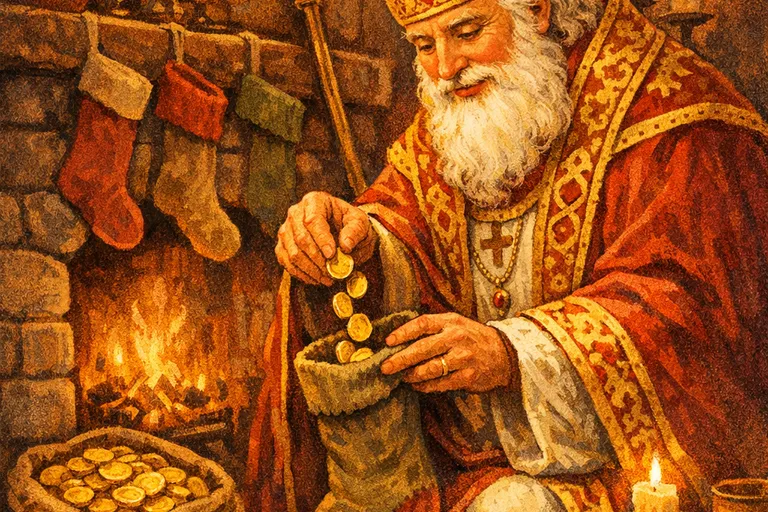
The stories about Nicholas center on secret generosity. The most famous involves a poor father with three daughters who couldn't afford dowries and faced being sold into servitude. Nicholas allegedly threw three bags of gold through the family's window on three separate nights. One version claims a bag landed in a stocking hung by the fire to dry. That detail, true or not, may be the origin of the Christmas stocking tradition.
After his death, Nicholas became one of the most venerated saints in both Eastern and Western Christianity. Sailors, merchants, children, and even thieves claimed him as their patron saint. His feast day, December 6, became a gift-giving occasion across medieval Europe. In the Netherlands, this tradition crystallized into Sinterklaas: a tall, serious bishop in red and gold vestments who arrived by steamship from Spain each November, carrying a large book listing which children had behaved and which had not.
Dutch colonists brought Sinterklaas to New Amsterdam in the 1600s. When the English seized the colony and renamed it New York, the tradition didn't disappear. It merged with English Christmas customs and German folk traditions already present in the colonies. By the late 18th century, "Sinterklaas" had been anglicized into "Santa Claus." The bishop's robes were fading from memory, but the core idea of a gift-giving figure who rewards good children held firm.
Who Created Santa Claus?
No single person invented Santa Claus, but three individuals reshaped him so completely that without any one of them, he'd be unrecognizable.
Washington Irving started it. In his 1809 book "Knickerbocker's History of New York," Irving described a pipe-smoking St. Nicholas who flew over rooftops in a wagon, dropping gifts down chimneys. The whole thing was satirical, a parody of New York's Dutch heritage. Readers took it seriously and adopted the image wholesale.
Fourteen years later, Clement Clarke Moore published "A Visit from St. Nicholas," known today as "'Twas the Night Before Christmas." Moore gave Santa a sleigh pulled by eight named reindeer, a round belly that shook "like a bowlful of jelly," and a habit of laying a finger aside his nose before vanishing up the chimney. He also shrunk Santa from a full-sized bishop to a "jolly old elf." The poem spread through newspapers across the country and became the single most influential text in Santa's transformation.
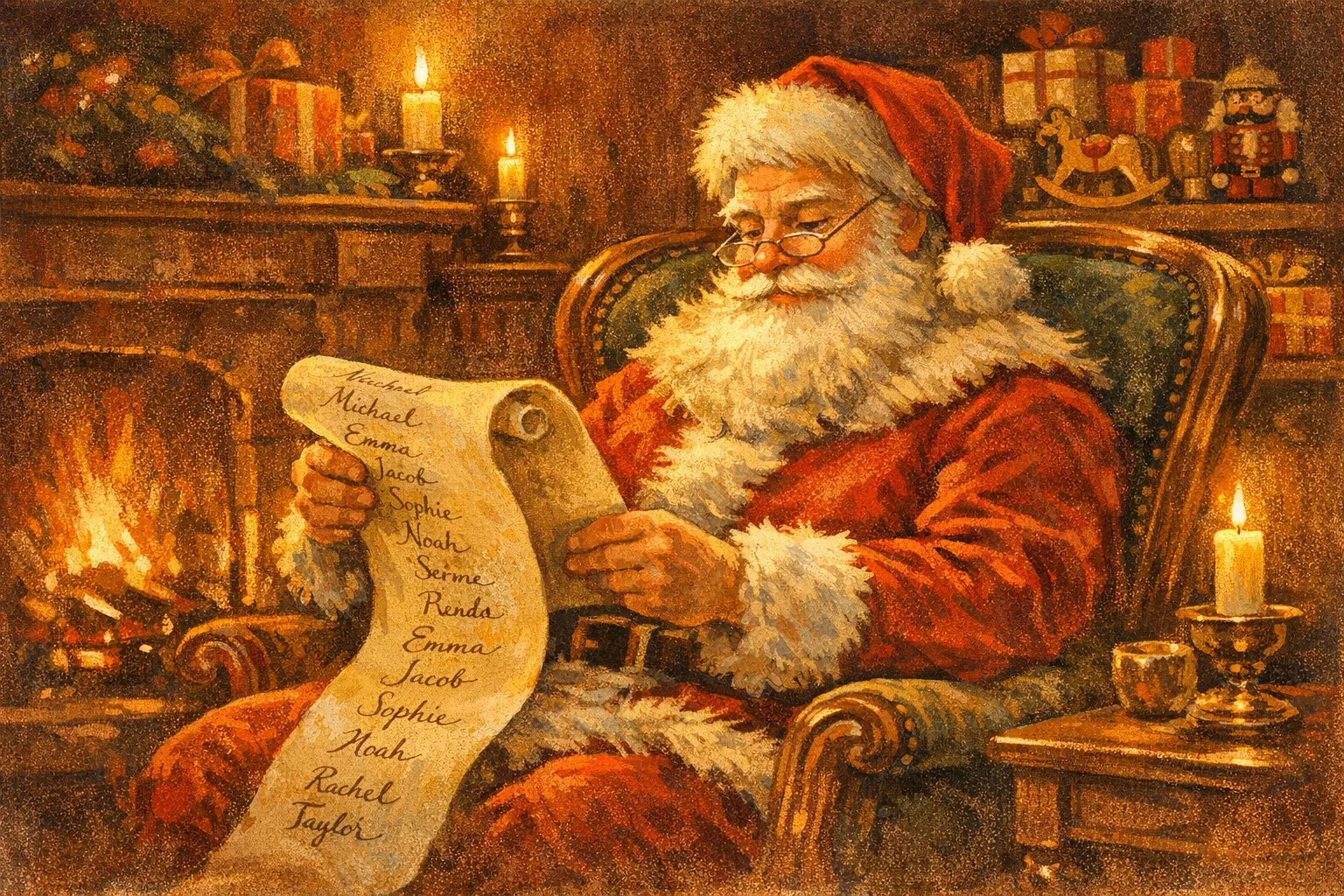
Then Thomas Nast made him visible. Starting in 1863, the German-born political cartoonist drew Santa Claus for Harper's Weekly every Christmas season for more than 20 years. Nast gave Santa the fur-trimmed suit, the broad leather belt, the toy-filled workshop, the army of elves, and the naughty-and-nice list. He placed Santa's home at the North Pole. He drew him as a full-sized, heavyset man rather than the tiny elf of Moore's poem.
Before Nast, every artist imagined Santa differently. After two decades of his illustrations reaching millions of readers, the argument was settled. What's striking about this whole sequence is how American it is. A Greek bishop venerated across Europe arrived in New York and got completely reinvented by three New Yorkers within about 50 years.
How Coca-Cola Changed Santa Forever
The most persistent myth about Santa Claus is that Coca-Cola invented his red suit. They didn't. Thomas Nast and dozens of other illustrators had dressed Santa in red since the 1860s. What Coca-Cola actually accomplished was something more effective than inventing a color. They made one specific version of Santa impossible to forget.
In 1931, Coca-Cola hired Michigan-born illustrator Haddon Sundblom to create Santa paintings for their winter advertising campaigns. Sundblom's Santa was different from previous commercial depictions. He was life-sized, not elfin. He looked like somebody's grandfather, not a cartoon character. He had ruddy cheeks, a genuine smile, and held a bottle of Coke with the relaxed ease of a man enjoying a break. Sundblom initially used a retired salesman named Lou Prentiss as his model. After Prentiss died, Sundblom used his own face as reference.
These paintings ran annually from 1931 to 1964 in magazines with circulations in the tens of millions: Saturday Evening Post, National Geographic, The New Yorker. Before Sundblom, Santa still appeared in brown, green, blue, and white in various publications. After three decades of Coca-Cola's campaign saturating the American market and then spreading worldwide, the red-and-white Santa became the only version most people could picture.

Where Is Santa Claus' House?
Thomas Nast placed Santa's home at the North Pole in an 1866 Harper's Weekly illustration, and the idea stuck permanently. The actual geographic North Pole sits on drifting Arctic sea ice, averages minus 40 degrees in winter, and supports no permanent structures of any kind.
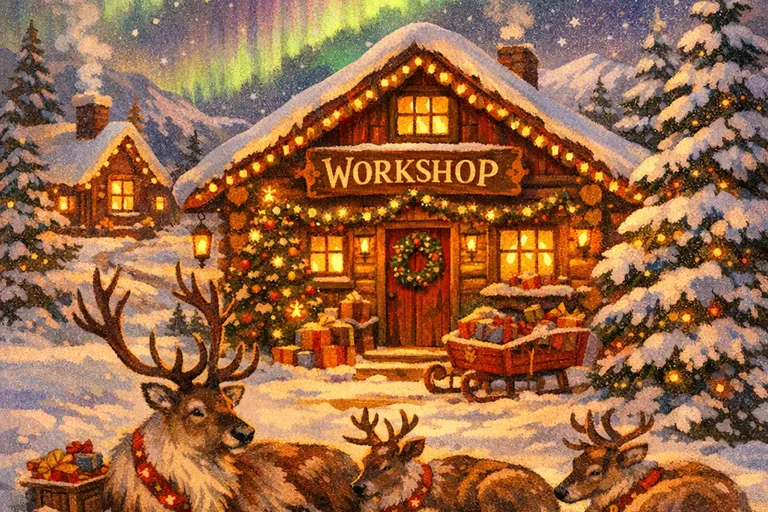
That hasn't stopped several places from staking a serious claim. The most successful is Rovaniemi in Finnish Lapland. The Santa Claus Village there straddles the Arctic Circle line and draws over 500,000 visitors per year. Finland's postal service routes roughly half a million letters addressed to Santa through Rovaniemi's Santa Claus Main Post Office annually, where volunteer elves answer every single one. Finland officially declared Rovaniemi as Santa's hometown in 2010, a move that did not go over well in Norway and Sweden.
North Pole, Alaska, a small city about 14 miles southeast of Fairbanks, renamed itself in 1953 hoping to attract a toy manufacturer who wanted a "North Pole" address on his products. The factory never came, but the town committed to the theme. Street names include Snowman Lane, Santa Claus Lane, and St. Nicholas Drive. The streetlights are shaped like candy canes year-round.
Santa Claus, Indiana, has been answering children's letters since 1914, when local postmaster James Martin started responding to the mail that arrived each December addressed simply to "Santa Claus." Volunteers with the Santa Claus Museum continue the tradition today. The town also hosts Holiday World, a theme park that opened in 1946 as "Santa Claus Land," one of the earliest themed amusement parks in the world.
Canada took a different approach entirely. In 1982, Canada Post assigned Santa Claus the postal code H0H 0H0 (a nod to "ho ho ho") and began accepting letters addressed to Santa in over 30 languages. Postal workers and volunteers answer roughly one million letters every year, making it the largest Santa mail operation on Earth.
Frequently Asked Questions
Is Santa Claus based on a real person?
Yes. Santa Claus is based on Saint Nicholas of Myra, a Greek Christian bishop born around 270 AD in what is now Turkey. Nicholas was known for his anonymous generosity, particularly toward children and the poor. The modern Santa Claus character evolved from his legend through centuries of European folklore, American literature, and commercial advertising.
Who created the modern Santa Claus?
Three people shaped the modern Santa Claus most directly. Clement Clarke Moore's 1823 poem "'Twas the Night Before Christmas" gave him a sleigh, reindeer, and jolly personality. Thomas Nast's illustrations from 1863 onward established his visual appearance, including the red suit and North Pole workshop. Haddon Sundblom's Coca-Cola paintings from 1931 to 1964 then made this specific image globally dominant.
Did Coca-Cola invent Santa's red suit?
No. Santa Claus appeared in red clothing in illustrations decades before Coca-Cola's first Santa advertisement in 1931. Thomas Nast and other 19th-century artists regularly depicted Santa in red. Coca-Cola's real contribution was standardizing one consistent image of Santa through massive advertising campaigns, making it the version everyone recognizes today.
Where does Santa Claus live?
In Christmas tradition, Santa lives at the North Pole, an idea popularized by cartoonist Thomas Nast in 1866. Several real locations claim to be Santa's official home, including Rovaniemi in Finnish Lapland (which hosts the Santa Claus Village on the Arctic Circle), North Pole in Alaska, and the town of Santa Claus in Indiana.
How old is Santa Claus?
If counting from the birth of Saint Nicholas around 270 AD, the figure behind Santa Claus is over 1,750 years old. The modern character we recognize today, the jolly man in a red suit with a sleigh and reindeer, took shape in the mid-1800s through American writers and illustrators, making that version roughly 160 years old.
What is Santa Claus real name?
The historical figure behind Santa Claus was Nicholas of Myra. The name "Santa Claus" derives from "Sinterklaas," the Dutch name for Saint Nicholas. Different cultures use their own names: Father Christmas in the UK, Pere Noel in France, Weihnachtsmann in Germany, and Joulupukki in Finland.